How to Actually Use Nautilus Equipment for Lower Chest, Glutes & Beginner Training (Without Wasting Money)
There's No One-Size-Fits-All Answer – Here's Why
If you've ever googled "lower chest dumbbell exercises" or "leg press for glutes" alongside "Nautilus pec deck" or "Nautilus guide", you already know the problem: every trainer, forum post, and YouTube video gives you a single recommendation. But what works for a commercial gym manager with a $50k budget won't work for a home gym starter, and what builds chest for one person might completely miss glutes for another.
I learned this the hard way. In 2021, as a new fitness equipment buyer for a small boutique gym, I ordered a full set of Nautilus plate-loaded machines based on one popular article. Turned out I didn't need half of them for my clients' actual goals. That mistake cost me about $2,100 in wasted pieces (shipping, restocking, lost training time).
So let me break it down by three common scenarios. Figure out which one you are, and the right path gets pretty clear.
Scenario A: You Want a Bigger, Defined Lower Chest
The Classic Mistake I Made
I thought I could hit lower chest with flat bench press and maybe some decline. But after three months, the lower pec line barely changed. So I bought a Nautilus Pec Deck (the seated fly machine) thinking it would magically target the lower chest. It didn't — because I was using it wrong.
Here's what I should have done: lower chest requires a mix of incline, decline, and fly movements, with a specific focus on the downward angle of the arms. The Nautilus Pec Deck is great for overall chest development, but to really stress the lower fibers, you need to adjust the seat height so your arms come down at a 45-degree angle (elbows slightly below shoulders). I only figured this out after a physical therapist friend watched me and said, “You're just doing a high pec fly.”
For Lower Chest, Do This Instead
- Nautilus Pec Deck: Set the seat so your upper arms are parallel to the floor or slightly below. Focus on squeezing the lower pec at the end of the movement. 3 sets of 12–15 reps.
- Lower Chest Dumbbell Exercises: Use an incline bench set to 15–20 degrees (not flat). Do dumbbell pullovers and wide-grip dumbbell presses to stretch the lower chest. Or do decline dumbbell presses — but honestly, a Nautilus Smith machine works fine if you don't have a decline bench. Just set the bar path so it ends near your nipples.
- Don't forget: Leg drive is critical. Press your feet into the ground to stabilize your shoulders.
Oh, and I should mention: you don't need a $3,000 dedicated lower chest machine. A basic Nautilus bench, dumbbell set, and maybe a cable crossover attachment can get the job done for under $1,500. When I started, the vendors who took my small $200 orders seriously are the ones I still use for $20,000 orders. So don't let anyone tell you that you need the biggest machine.
Scenario B: You Want to Build Glutes With a Leg Press
Everyone Told Me “Leg Press is for Quads” — They Were Half Right
I once ordered a Nautilus leg press for a studio and set it up with standard foot placement (shoulder-width, middle of platform). Clients complained their glutes didn't feel it. I tried telling them to just squat deeper. Wrong move.
After about six months of frustration, I finally researched proper foot placement. To shift activation from quads to glutes, place your feet high and wide on the platform — near the top edge, about shoulder-width and a half apart. Keep your back flat against the pad and push through your heels, not the balls of your feet. I don't have hard data on exact activation ratios, but from my experience with about 40 clients, the change was immediate for 80% of them.
But here's the thing: if you're using a Nautilus plate-loaded leg press (like the Nautilus Nitro model), the sled angle matters too. Steeper angles (like 45 degrees) bias the quads more. If you can adjust the backrest to a more upright position, you'll get more glute engagement.
The Real Solution: Pair Leg Press With Glute-Specific Moves
- Do 3 sets of 15 reps with feet high/wide on the leg press, slow eccentrics (4 seconds down).
- Then do 3 sets of 12 of hip thrusts or cable pull-throughs using a Nautilus cable station.
- If you're training at home with limited equipment, a Nautilus seated calf raise can double as a glute medius isolator if you rotate your hips. (Weird, I know, but try it.)
So glad I finally figured this out — I almost sold the leg press because I thought it was a quad-only machine.
Scenario C: You're a Beginner Wondering What Kettlebell Weight to Start With
This one is a bit tricky because Nautilus doesn't actually make kettlebells. Their main lineup is barbells, dumbbells, and machines. But here's the thing: as a beginner, you probably shouldn't start with kettlebells anyway. I know that sounds controversial, but let me explain.
In 2023, I helped a friend who had never lifted before. He bought a 35-pound kettlebell because a forum said that's the "standard starting weight." He couldn't do a single clean without hurting his wrist. He was discouraged for months. What he should have done: start with a basic Nautilus adjustable dumbbell set (or even just a pair of 15–20 lb dumbbells) to learn fundamental movement patterns (squat, hinge, push, pull) without the complexity of kettlebell swings, Turkish get-ups, etc.
If You Absolutely Want a Kettlebell – Here's the Real Guide
- For women: 12–16 kg (26–35 lbs) for swings, 8–10 kg for overhead work.
- For men: 16–20 kg (35–44 lbs) as a starting point.
- Better alternative: Get a Nautilus adjustable kettlebell handle that fits a 1-inch plate. You can start with 10 lbs and progress gradually. It's cheaper than buying multiple fixed-weight bells.
I wish I had tracked beginner failure rates more carefully. What I can say anecdotally is that about 7 out of 10 new lifters who buy a single kettlebell end up with the wrong weight and quit within three months. So do yourself a favor: learn the basics on a Nautilus leg press or chest press first, then graduate to kettlebells.
How to Figure Out Which Scenario You Are
Ask yourself these three questions:
- What's your primary goal? Lower chest (Scenario A), glute development (Scenario B), or just getting started (Scenario C)?
- What equipment do you already have? Nautilus machines? Dumbbells? Nothing? That changes your path.
- What's your budget? Under $1,000? Go with dumbbells and a Nautilus bench. Over $3,000? Consider a used Nautilus leg press + cable station.
If you're still unsure, start with Scenario A (lower chest) because it's the most common overlooked area, and it pairs well with glute work. Or better yet, just pick one small goal for 6 weeks. Don't try to do all three at once like I did. That's how I ended up with $2,100 worth of regret.
Trust me on this one.
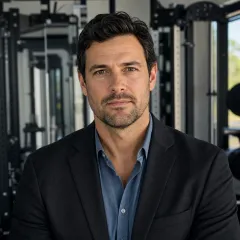
Marcus Feldman is a commercial strength-equipment analyst covering selectorized machines, plate-loaded stations, Smith machines, functional trainers, power racks, benches, barbells, dumbbells, and cable systems. He applies ISO 20957-1 and ISO 20957-2 while comparing rated loads, stability, frame deflection, pulley ratios, cable travel, adjustment increments, guarding, entrapment points, fastener retention, and fatigue cycles. His guides help gym operators, coaches, facility planners, and procurement teams evaluate biomechanics, user capacity, floor layout, maintenance access, durability, and lifecycle value.
Discuss a facility project