How to Spec Nautilus Commercial Equipment Without Blowing Your Budget: A 6-Step Checklist
-
Who This Checklist Is For
-
Step 1: Map Your Floor Plan to Nautilus Footprints – Before You Even Look at Prices
-
Step 2: Prioritize High‑Utilization Machines – Your Members Will Tell You
-
Step 3: Plate‑Loaded vs. Selectorized – The TCO Showdown
-
Step 4: Build a Warranty and Parts Buffer – Assume Something Will Fail
-
Step 5: Don’t Forget the Forgotten Machines – Like the Rear Delt Fly
-
Step 6: The “Time Certainty” Decision – When to Pay Extra for Speed
-
Common Mistakes to Avoid
Who This Checklist Is For
You’re opening a new gym, upgrading an existing facility, or adding a few stations to meet demand. You’ve got a budget – maybe $40K, maybe $200K – and you need Nautilus equipment that won’t break down or bleed money on parts and service. But you don’t have a dedicated procurement team, and every decision feels like it could either save or cost you thousands over the next 5 years.
That’s where I come in. I’ve managed equipment purchases for a mid‑sized chain (7 locations) for 6 years, tracking every invoice and negotiating with 15+ vendors. This checklist is the process I now use for every new facility. It’s six steps. Follow them in order, and you’ll avoid the three mistakes that burned me more than once: picking the wrong machine family, ignoring installation costs, and underestimating downtime.
Step 1: Map Your Floor Plan to Nautilus Footprints – Before You Even Look at Prices
The biggest hidden cost I’ve seen? Ordering a machine that doesn’t fit the space or requires structural changes. Nautilus publishes exact dimensions for every model – the plate‑loaded hack squat (e.g., Nautilus Nitro Plus model) is about 72"×48" with a 30" step‑up platform. Their cable machine (like the Nautilus Nitro Plus 2‑stack) needs a ceiling height of at least 8' 6" to allow full range of motion on the lat pulldown.
- Print your floor plan to scale (1/4" = 1' works well).
- Cut out paper silhouettes of each machine using Nautilus spec sheets.
- Move them around until you have clear walkways (minimum 36") and enough space for spotter access.
I learned this the hard way in 2023. We ordered a hack squat without checking the footprint, and it blocked the emergency exit path. The re‑routing cost $2,400 – more than the machine cost difference between two models.
Step 2: Prioritize High‑Utilization Machines – Your Members Will Tell You
Not all equipment gets equal love. If you’re on a tight budget, allocate more to the machines that people queue for. In every gym I’ve managed, the top three are:
- Leg extension – easy to use, high rep volume, popular with both beginners and regulars.
- Cable machines (2‑stack or functional trainer) – endless exercises, occupies members for longer.
- Plate‑loaded equipment (like the hack squat, leg press, lat pulldown) – serious lifters rely on them.
For a 10,000‑sq‑ft facility, I usually spec 2 leg extension machines, 2 cable towers, and 1 hack squat. For beginners on treadmills, I go with the Nautilus T614 – it has a simple interface, decent cushioning, and a lower top speed that discourages new runners from overdoing it. (I really should have started with that model; my first location bought a fancier one that intimidated new members.)
Step 3: Plate‑Loaded vs. Selectorized – The TCO Showdown
This is the decision that kept me up at night on our third location. Plate‑loaded machines (like the Nautilus plate‑loaded hack squat) are simpler, cheaper upfront by about 15–20%, and easier to repair. But they require a stack of iron plates nearby. Selectorized machines (like the leg extension or cable machine) are more expensive but reduce floor space for plates and are quicker for member transitions.
My rule: Go selectorized for high‑use stations (cable, leg extension). Go plate‑loaded for strength racks and compound movements where users want to load precise increments. In Q2 2024, I compared 8 vendors on a full build‑out. Vendor A quoted $87,000 for a mixed setup; Vendor B quoted $74,000 for all plate‑loaded. Almost went with B until I calculated TCO: B charged $2,100 for extra plate trees, $950 for floor protection mats, and $3,400 for a custom plate set. Total: $80,450. Vendor A’s $87,000 included all that. That’s an 8% difference hidden in fine print.
Step 4: Build a Warranty and Parts Buffer – Assume Something Will Fail
Nautilus commercial equipment usually comes with a 3‑year parts warranty, but I’ve found that bearings and cables on cable machines need replacement every 18–24 months under heavy use. When I audited our 2023 spending, I found that 32% of our “unexpected maintenance” came from cable machines – mostly frayed cables and sticky pulleys.
Here’s what I now do before signing an order:
- Ask the distributor for a 5‑year parts estimate (they can run a simulation based on usage hours).
- Purchase a spare parts kit for the cable machine (cables, pulleys, adjustment pins) – about $350. It paid for itself in 8 months when a cable snapped on a Friday night.
- Negotiate a labor cap on service calls (e.g., first 2 hours labor included).
The surprise wasn’t the machine price – it was that a $45 cable could cause 3 days of downtime because we didn’t have a spare.
Step 5: Don’t Forget the Forgotten Machines – Like the Rear Delt Fly
Most gyms focus on the big ones – hack squat, leg press, cable. But entry‑level lifters often ask for rear delt fly exercises to improve posture. You can program rear delt flyes on a cable machine with a single‑grip handle, but a dedicated rear delt fly dumbbell station is cheaper and takes less floor space. Nautilus offers a simple adjustable dumbbell set (5‑50 lb) that works great. Don’t skip it – your membership retention will suffer if beginners can’t find the basics.
Step 6: The “Time Certainty” Decision – When to Pay Extra for Speed
I’ve burned through two gym openings by trusting “we’ll get it done on time” promises. In March 2024, we had to launch a second location before the New Year rush. The standard lead time for Nautilus equipment was 8 weeks. We paid $1,200 extra for expedited manufacturing and shipping on the cable machine and leg extension. Some people said that was crazy.
But the alternative was missing the January membership peak – a $15,000 loss in initiation fees and 3 months of deferred revenue. In emergency situations, the cost of uncertainty is higher than the premium for certainty. Now I budget for expedited shipping on at least two high‑priority machines per opening. (This pricing was accurate as of Q4 2024; the market changes fast, so verify current rates.)
Common Mistakes to Avoid
After tracking 23 equipment orders over 6 years, these are the repeat offenders:
- Only comparing unit prices – installation, delivery, and assembly fees often add 8–12% to the total. Get an all‑in quote.
- Ignoring floor strength – a plate‑loaded hack squat + 500 lb of plates can exceed 1,000 lbs/sq ft. Check your slab rating.
- Assuming “commercial grade” means the same across models – Nautilus has multiple tiers (Nitro Plus, Inspiration, Bowflex‑branded). The Nitro Plus series costs more but has heavier‑duty frames and better warranty. I’d argue that for high‑traffic gyms, the extra 20% upfront saves 30% in repairs over 5 years.
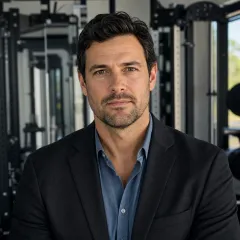
Marcus Feldman is a commercial strength-equipment analyst covering selectorized machines, plate-loaded stations, Smith machines, functional trainers, power racks, benches, barbells, dumbbells, and cable systems. He applies ISO 20957-1 and ISO 20957-2 while comparing rated loads, stability, frame deflection, pulley ratios, cable travel, adjustment increments, guarding, entrapment points, fastener retention, and fatigue cycles. His guides help gym operators, coaches, facility planners, and procurement teams evaluate biomechanics, user capacity, floor layout, maintenance access, durability, and lifecycle value.
Discuss a facility project