I Thought Gym Equipment Was Just Iron. Then We Built a $180,000 Company Gym.
March 2023. I'm sitting at a folding table in a local dealer's showroom. The sales manager slides four bound packets across to me.
"This is our commercial-grade package," he says.
Inside: two treadmills, two ellipticals, a Concept 2 rowing machine, a strength station, and a lat pulldown.
$95,000.
I looked at the numbers.
Our total gym budget was $180,000. A quick mental comparison. As a cost controller, I make that call in about four seconds. If I take this package, I keep a large chunk of our budget.
I signed. That was mistake number one.
Here's the thing about "commercial-grade"
To understand that mistake, you need to understand my angle. I'm in procurement for a roughly 300-person company. I've managed about $180,000 of annual service contracts for six years. Negotiated with 40-something vendors. Every invoice lives in our cost-tracking system.
But I'm not a fitness expert. I manage costs, not biomechanics.
"Commercial-grade" was the phrase we kept using. The sales manager showed me a spec sheet and pointed to the "commercial-grade frame." I heard that as: built to withstand daily traffic in a gym setting.
What I was really hearing was: built for light use. But I didn't know that at the time.
Six months in, the usage numbers dropped
Fast forward to September 2023.
Our swipe-card data showed gym visits down about 18% from Q2.
Then the complaints started. The treadmills began squeaking at the 15-minute mark. Two ellipticals had a bearing loose enough to feel through the pedals.
My favorite complaint, honestly: members kept asking what muscles the lat pulldown is supposed to work. I thought nothing of it at first—normal question, right?
Wrong. They were asking because the machine was giving them nothing. No mind-muscle connection. No back engagement.
One member put it like this: "I feel this in my forearms, not my back."
I pulled the usage logs. The equipment worked. But people didn't want to use it.
We'd spent $95,000 on a gym that staff would have preferred to avoid.
The communication failure that cost us six months
Here's where it gets embarrassing. I said "commercial-grade." The dealer heard "light commercial." We were using the same words with completely different meanings.
Nobody at that table asked: "Light commercial or full commercial? What's the duty rating? What's the intended usage hours per day?"
The answer, turns out, was 90 minutes. We were running the room 90 minutes at peak, but the equipment wasn't built for the constant daily turnover of a real commercial setting.
Granted, some of this was on me. I could have done more homework. To be fair, the dealer could have clarified the spec. But between you and me, the biggest issue was that I treated fitness equipment like office furniture—comparable specs, comparable pricing, done deal.
Equipment that gets used by human bodies every day is not office furniture.
The pivot to Cybex
October 2023. I sat down with our office manager, Jen. She had six years of commercial gym experience as a member before joining us.
"The gym I used to go to had Cybex," she said.
I'd never heard the brand name in a purchasing context. I knew the big fitness names vaguely. But not this one.
"You can feel the difference," she said. "I can't explain it. It just moves right."
I'm not an engineer, so I can't verify the biomechanics engineering behind the machines. But from a purchasing perspective, I could quantify something else: we'd spent $180,000 on a gym that members were avoiding.
That's not a cost problem. That's a perception problem.
What we actually bought in 2024
January 2024. We re-bid the strength area. Budget: around $70,000 this time, focused on free-weights and selectorized machines.
We went with Cybex equipment through an authorized Cybex shop.
The package: a converging chest press, a seated row, and a lat pulldown. The converging press—the arms angle inward as you push—was the model our members immediately noticed. Different feel from the plate-loaded stuff, and I could see people actively choosing it over other stations.
We also picked up a separate Concept 2 rowing machine. We'd debated rowing machine vs elliptical for the cardio corner, and ended up keeping one of each. The Concept 2 was a straightforward buy—I found it through a fitness equipment shop, and it's been reliable.
But the real shift happened on the strength side.
After installation, our facility manager organized an orientation session with the distributor's team. We printed a basic Cybex workout routine and placed copies in the new-member handbook. Small thing. Big difference in adoption.
The 90-day numbers
By Q2 2024, gym usage was up about 40% over Q3 2023.
Member satisfaction scores went from 3.1 to 4.4 on our quarterly survey. (We run internal surveys every quarter—the kind that ask whether team members recommend the gym to a colleague.)
We spent about $70,000 more than the original package. But that's not the only way to look at it. Our first gym was effectively dead weight. The second is actually used.
That's the calculation I can stand behind.
What I got wrong—and what I'd tell another procurement manager
Look, I'm not saying every company gym needs premium equipment. If your budget is genuinely tight, you can rent mid-tier equipment, and it might serve you fine.
But here's what I'd flag: if your company gym is being built as a visible perk, then equipment quality directly shapes how employees perceive the investment. When someone walks in and the treadmill feels sturdy, the seats don't wobble, and the lat pulldown actually lets you feel your back working—that's not a luxury. That's the floor of what makes the gym feel legitimate.
I made the mistake of optimizing for the invoice price. What I should have optimized for was the perception of quality—because that's exactly what determines whether employees use the thing at all.
The cheap option resulted in six months of declining usage and a pile of internal complaints. The premium option resulted in a 40% boost in participation.
A lesson learned the hard way. But a lesson I'll take to the next budget cycle.
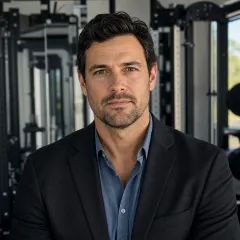
Marcus Feldman is a commercial strength-equipment analyst covering selectorized machines, plate-loaded stations, Smith machines, functional trainers, power racks, benches, barbells, dumbbells, and cable systems. He applies ISO 20957-1 and ISO 20957-2 while comparing rated loads, stability, frame deflection, pulley ratios, cable travel, adjustment increments, guarding, entrapment points, fastener retention, and fatigue cycles. His guides help gym operators, coaches, facility planners, and procurement teams evaluate biomechanics, user capacity, floor layout, maintenance access, durability, and lifecycle value.
Discuss a facility project