What a Broken Leg Press Taught Me About 'Budget' Gym Equipment
It was a Tuesday in February 2025, snowing sideways, and the strength floor was busier than usual because nobody could run outside. I was in my office reconciling Q4 invoices when Marcus, our head trainer, walked in with the expression that means something expensive just happened.
"Leg press cable snapped," he said. "No one was hurt. A pair of Beats Flex headphones somebody left on the weight stack went across the room, though."
That was the moment I stopped defending the lowest quote on my own spreadsheet.
Quick context: I'm the procurement manager at a 40,000-square-foot fitness facility. I've managed our equipment budget—roughly $180,000 a year in capital purchases plus repairs—for about six years. I track every invoice in a cost-control system, which means I have plenty of evidence of my own bad decisions.
A quick note about the name
When I say Nautilus, I mean the strength equipment company. Not the pool cleaner. This mix-up is more common than you'd think. Google "nautilus" on any given day and you'll find a Nautilus leg press, a Nautilus treadmill, and also the Dolphin Nautilus CC automatic robotic pool cleaner. We have a small lap pool in our building, so my actual browser history has included "nautilus leg press starting weight" and, no joke, "dolphin nautilus cc automatic robotic pool cleaner" in the same afternoon. Our maintenance manager wanted a quote on the pool cleaner. I wanted a quote on the strength package.
Different companies. Different products. Only the name overlaps.
What "commercial grade" really meant
The broken leg press wasn't a Nautilus. It was part of a strength line a previous manager bought in 2021, and the manufacturer called it "commercial grade." I assumed that phrase meant something standardized across the industry. It doesn't. On paper, all the major lines list similar steel tubing and similar warranties. In practice, the cheaper machines cut corners in places that don't show up on a spec sheet.
Between 2023 and 2024, that "budget-friendly" line cost us about $14,300 in replacement cables, service calls, and a pulley bracket that had to be welded. That doesn't include the week the leg press was down while we waited for parts. Members noticed. They don't read your maintenance log; they just know the machine they wanted is taped off again.
To be fair, the line looked fine for the first eighteen months. Then the cables stretched, the pads cracked at the corners, and the seat adjustment handles started getting loose. I learned the hard way that "commercial grade" is mostly a marketing phrase. I also learned never to assume two vendors mean the same thing by it.
Three quotes and a whole lot of fine print
When the owners finally approved a strength floor refresh, I sent specs to three vendors: a budget import line, Nautilus, and a premium European brand we ruled out after the first email. The budget quote came in around $154,000. Nautilus was about $198,000. That gap is real, and I almost signed the cheaper one.
Those numbers are from Q4 2024 quotes, by the way. Prices change. Verify current rates before you build a budget around mine.
The reason I didn't sign was total cost of ownership, but it took me a while to admit that. The $44,000 difference looked like a lot of money. Then I layered in the repair history I already had, the five-year warranty Nautilus offered on key parts, and the fact that the budget line's parts came from a supplier who took six days to answer emails. Suddenly the gap narrowed to maybe $16,000 over the expected life of the equipment. I'd have paid that again just for fewer angry phone calls from Marcus.
One question I asked the Nautilus rep was the one everyone asks: what's the leg press starting weight? On a plate-loaded leg press, the starting weight is the resistance before you put any plates on the sled—meaning the weight of the carriage and the mechanics of the machine itself. It matters more than you'd think. We have members ranging from competitive athletes to a 74-year-old woman rebuilding strength after knee surgery. If the starting weight is too high, she can't use the machine comfortably. If it's too low, it's great for controlled, joint-friendly work.
Don't hold me to the exact spec because Nautilus updates models faster than I can write about them, but the number that came back was lower than I expected. Low enough that our older members could do knee-friendly reps without loading a single plate. That's the kind of detail that never appears on a budget quote.
The budget option, by comparison, was plate-loaded with a heavy carriage. It would have been fine for strong lifters and almost useless for the people who actually needed a leg press. That's a hidden limitation, not a hidden fee, but it's still a cost.
What Marcus kept telling me
Through all of this, Marcus was patient with me, which is more than I deserved. He said something during the equipment planning that I've repeated to every vendor since:
"Don't buy me a fancy leg press and then take away the floor space I need to teach barbell squat form. A machine won't fix a squat."
He wasn't wrong. There are members who can leg press an impressive number but still can't descend into a below-parallel barbell squat without their knees caving in. The leg press is an accessory, not a substitute. If you build a strength floor around machines and forget the coaching space, you're just making an expensive room full of expensive furniture.
We ended up making room for an extra rack and keeping a small open area for coaching. Marcus started a weekend workshop focused on barbell squat form, and it filled up for a month. I almost cut that rack out of the budget to save about $8,000. In hindsight, that would have been a false economy. (Mental note: never cut the rack again.)
The treadmill stress test side quest
While we were at it, we replaced two aging treadmills. That part of the project taught me a similar lesson from a different direction.
A member—a 50-something executive who was not what you'd call a natural gym-goer—asked Marcus how to pass a treadmill stress test before an annual physical. He was nervous, thinking it was a pass/fail exam he could study for. Marcus told him the truth: the test is a diagnostic tool, not a grade. But then he spent two weeks helping the guy get comfortable on the treadmills, practicing steady pacing and normalizing the feeling of a belt moving under his feet.
What struck me was that the conversation happened on the old, cheaper treadmill, which had a belt that stuttered slightly at low speed. Marcus chose the newer machine for the practice sessions because it felt smooth and trustworthy. You can't fake that with a lower quote. If a member who's anxious about a medical test can't trust the machine, the machine has already failed its real job.
What changed when we stopped buying cheap
We installed the Nautilus strength package in March 2025. Six weeks later, our internal member survey showed equipment quality ratings up from about 3.7 out of 5 to 4.4. That's not a scientific study, just 300-ish responses, but the direction was clear. The repair ticket costs have trended down, and the strength floor looks less like a storage room and more like a place where serious training happens.
This is where I have to add a boundary. This approach worked for us, but we're a mid-size independent facility with a 10-year equipment horizon. If you're a hotel gym replacing two machines on a five-year plan, maybe a direct-import line will serve you fine. I'm not going to pretend that buying Nautilus is the only rational choice. It's not. It's a choice about what your equipment says about you.
A club's equipment is the first trainer a member meets. If the bench wobbles, they assume the coaching wobbles. If the frame flexes under a heavy load, they sense it even if they can't explain why. Quality perception isn't vanity. It's brand. The $44,000 I almost saved by going cheap would have come back to haunt us in membership renewals and repairs.
These days, my browser history is a little less chaotic. We quoted the pool cleaner from one supplier and the leg press from another. The Beats Flex headphones, by the way, are still in our lost-and-found drawer. No one ever claimed them.
If you're comparing commercial strength equipment and the only number you're looking at is the sticker price, I'd suggest running the long math. Ask about the starting weight. Ask the trainers what they'd teach on it. And don't forget the hidden cost of a member's first impression.
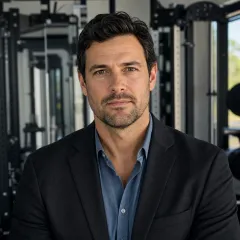
Marcus Feldman is a commercial strength-equipment analyst covering selectorized machines, plate-loaded stations, Smith machines, functional trainers, power racks, benches, barbells, dumbbells, and cable systems. He applies ISO 20957-1 and ISO 20957-2 while comparing rated loads, stability, frame deflection, pulley ratios, cable travel, adjustment increments, guarding, entrapment points, fastener retention, and fatigue cycles. His guides help gym operators, coaches, facility planners, and procurement teams evaluate biomechanics, user capacity, floor layout, maintenance access, durability, and lifecycle value.
Discuss a facility project