A Buyer’s Checklist for Commercial Strength Equipment: Why Nautilus Xpload Chest Press and Total Cost of Ownership Matter
-
Who This Checklist Is For
-
Step 1: Define Your Core Equipment List — With Model Numbers
-
Step 2: Get All-In Pricing, Not Just Unit Cost
-
Step 3: Estimate Lifecycle Costs — Maintenance, Parts, Downtime
-
Step 4: Factor in the Non-Obvious — Training, Space, Power
-
Step 5: Compare Service and Warranty on Paper
-
Step 6: Use the TCO Scorecard — Then Decide
-
Common Mistakes (I've Made All of Them)
Who This Checklist Is For
You're outfitting a commercial gym, a fitness center, or a rehab facility. You've seen the brochures for Nautilus commercial gym equipment, maybe circled the Nautilus Xpload chest press and a few plate-loaded stations. The quotes are in your inbox. Now you need to decide — not just which machine, but which purchase path won't haunt you later.
This checklist is for anyone who wants to compare equipment on total cost of ownership (TCO), not just sticker price. I've been a facility manager handling equipment orders for five years. I've made 12 documented mistakes totaling roughly $18,000 in wasted budget. This list exists so you don't repeat them.
Below are six steps. Follow them in order. Each step has a checkpoint. Skip none of them.
Step 1: Define Your Core Equipment List — With Model Numbers
Write down each piece you actually need, not what looks good in a catalog. Specifics matter. Instead of “a chest press,” write “Nautilus Xpload chest press” or “Nautilus Smith machine.” If you're eyeing a Ritfit Smith machine as a budget alternative, put that down too — you'll evaluate later.
Checkpoint: Do you have exact model numbers for at least 80% of your strength training lineup? If not, pause and get them. (I once approved a quote that said “commercial lat pulldown.” The vendor delivered a home-grade unit. $1,200 mistake.)
Side note: I've seen buyers get distracted by unrelated items — bose portable speaker for the lobby, billiard table vs pool table decision for the lounge. Keep that separate. Stay on core equipment first.
Step 2: Get All-In Pricing, Not Just Unit Cost
A common rookie error: comparing $2,500 for a Nautilus xpload chest press vs. $2,100 from another brand. But the $2,500 quote might include delivery, installation, and a warranty. The $2,100 quote may have $400 shipping and $300 assembly — now it's $2,800. Higher.
Ask every vendor for a fully loaded quote: unit price + freight + rigging + assembly + tax + any applicable permits. Put them in a spreadsheet. The difference will surprise you.
Checkpoint: Do you have a line-by-line breakdown from each vendor? If anyone says “we'll send a blanket quote,” push back.
Step 3: Estimate Lifecycle Costs — Maintenance, Parts, Downtime
Here's the part most buyers skip. A machine that lasts eight years with one annual lube is cheaper than one that needs cable replacements every 18 months. Nautilus commercial gym equipment typically has published maintenance intervals and widely available replacement parts — factor that in.
I once ordered 12 units of a cheaper brand. Within two years, six needed cable assemblies. The labor alone ate the initial savings. Now I calculate TCO using a simple formula:
TCO = Initial All-In Cost + (Annual Maintenance × Expected Years) + (Expected Downtime Cost × Days of Lost Revenue)
Checkpoint: Have you asked each vendor for a recommended maintenance schedule and part pricing? If they dodge, that's a red flag.
Step 4: Factor in the Non-Obvious — Training, Space, Power
Honestly, I'm not sure why some facilities ignore these until move-in day. A few examples:
- Staff training: If your team needs to be certified on a specific plate-loading system, that's time and money. Nautilus Xpload chest press uses a straightforward self-spotting mechanism — training might take 15 minutes. Less complex = lower hidden cost.
- Floor space: A Smith machine takes about 50 sq ft. Two dedicated free-weight benches take more. Draw your actual floor plan.
- Power and data: Cardio machines need outlets. Some strength equipment (like digital display benches) also need power. Unexpected electrical work can run $2,000–$5,000.
Checkpoint: Have you walked through the facility with a tape measure and a floor plan? Have you confirmed power availability at each machine location?
Step 5: Compare Service and Warranty on Paper
I said “as soon as possible” once. The vendor heard “within two weeks.” We discovered this when the machine failed on day 2 and no one showed up for 10 days. Communication failure cost us member complaints.
Write down exactly what service response time is guaranteed. Get it in writing. Does the warranty cover labor? Travel? Loaner units? A standard Nautilus commercial warranty is usually 10 years on frame, 2 years on parts, 1 year on labor — but verify because it changed in 2024 for some lines.
Checkpoint: Do you have a signed service-level agreement (SLA) with response-time commitments? If not, request one before you sign the purchase order.
Step 6: Use the TCO Scorecard — Then Decide
Now you have data. Fill in this mental scorecard for each vendor (or use a real spreadsheet):
- Initial all-in price (lower is cheaper now, but not always better)
- Estimated 5-year maintenance cost
- Estimated downtime cost (hours expected per year × cost per hour of closed equipment)
- Service support rating (late response = higher real cost)
- Expected resale value after 5 years (some brands hold better)
The question isn't “which quote is lowest?” It's “which equipment gives me the lowest total cost over the time I plan to own it?” For many operators, Nautilus commercial gym equipment ends up competitive once you factor in durability and available parts. But I'm not here to sell you a brand — I'm here to help you calculate.
Common Mistakes (I've Made All of Them)
1. The rookie error: assuming “standard” means the same to every vendor. I once ordered “Nautilus plate loaded” expecting a universal rack. The vendor delivered a specialty unit that didn't fit our storage. Cost me $680 in return shipping and a two-week delay.
2. Forgetting the soft costs. The bose portable speaker we put in the weight room seemed like a nice touch. Then we needed a waterproof case, a mount, and someone to plug it in every day. That “$350” item ended up costing $650 installed. Not a huge number, but it's an example of how small extras add up.
3. Ignoring the “billiard table vs pool table” discussion in the lounge. I'm serious — I once spent two hours picking a table for the waiting area. Meanwhile, I had not yet verified the warranty terms on the Ritfit Smith machine we were evaluating. Prioritize core equipment. The lounge can wait.
4. Not double-checking measurement units. I told the architect “8-foot clearance.” He heard “2.44 meters.” That was correct, but the machine was specified in inches. We caught it when the shipment arrived. A $0 mistake thanks to a watchful crew — but don't rely on luck.
Final thought: This checklist has caught 47 potential errors for our team in the past 18 months. Print it. Use it. And if you have a better TCO method you'd share, I'd love to hear it — honestly, I'm still learning.
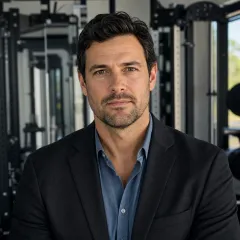
Marcus Feldman is a commercial strength-equipment analyst covering selectorized machines, plate-loaded stations, Smith machines, functional trainers, power racks, benches, barbells, dumbbells, and cable systems. He applies ISO 20957-1 and ISO 20957-2 while comparing rated loads, stability, frame deflection, pulley ratios, cable travel, adjustment increments, guarding, entrapment points, fastener retention, and fatigue cycles. His guides help gym operators, coaches, facility planners, and procurement teams evaluate biomechanics, user capacity, floor layout, maintenance access, durability, and lifecycle value.
Discuss a facility project