I Bought Nautilus Strength Equipment Wrong (Three Times). Here’s What I’d Do Differently.
There’s No Single “Right” Nautilus Setup. Here’s Why.
If you’re shopping for Nautilus strength equipment—plate-loaded, selectorized, or a mix—you’ll quickly find that the “best” choice depends almost entirely on your facility’s floor plan, member profile, and budget. I’ve made the mistake of assuming there was a universal answer. There isn’t. After burning through about $12,000 on poor configurations (including one $3,200 plate-loaded order that had to be entirely re-specified), I now break down the decision into three distinct scenarios.
I’m not an engineer or a biomechanics specialist. I’ve been handling equipment procurement for commercial fitness centers for about 6 years. What I can tell you, from a buyer’s perspective, is exactly where the traps are—and how to avoid them.
Scenario A: The “Space-Rich, Budget-Smart” Operator
The Mistake I Made
In my first year (2017), I outfitted a 12,000 sq ft facility with almost all selectorized machines—Nautilus Nitro Plus series. It looked clean, it was easy for members to use, and maintenance was low. But within six months, I had a problem: the serious lifters were bored. They wanted the feel of plate-loaded movements—the hack squat, the lat pulldown with real iron. I had to supplement it with a handful of plate-loaded stations at nearly double the cost of what I would have paid if I’d planned it from the start.
What I’d Do Now
If you have generous floor space (say, 8,000+ sq ft dedicated to strength) and a budget that allows for a mix, go with a 60/40 split in favor of plate-loaded. Here’s why:
- Durability: Plate-loaded machines (like the Nautilus 2ST or Nitro plate-loaded line) have fewer moving parts. Less to break in a high-traffic commercial environment.
- Member retention: Serious lifters—your most loyal members—prefer plate-loaded for the “real” feel. They’ll stay longer and invite their friends.
- Cost per station: Plate-loaded is typically 20-30% cheaper per exercise station than selectorized. The trade-off is floor space (they need more room) and potentially longer member change-over time.
Example: A Nautilus plate-loaded lat pulldown takes up about 45 sq ft, while a selectorized version takes about 30 sq ft. The plate-loaded unit cost me $3,800; the selectorized was $5,200. If you have the square footage, the plate-loaded savings add up fast.
Scenario B: The “High Traffic, Low Supervision” Gym
The Mistake I (Almost) Made
In 2022, I was managing the equipment order for a 24-hour gym chain location—no staff on-site overnight. I nearly went full plate-loaded because of the cost savings. A colleague stopped me, pointing out that unsupervised members loading and unloading plates at 2 AM was a recipe for dropped weights, damaged floors, and potential injury. The most frustrating part of that conversation: I knew she was right, but I was stubborn about the budget.
What I’d Do Now
For high-traffic, low-supervision environments, selectorized is the safer bet. That means the Nautilus Nitro Plus or the Inspire series (essentially the same internal mechanics, different outer shell). Key benefits:
- Safety: Weight stacks eliminate the risk of dropped plates. For round-the-clock facilities, this is non-negotiable.
- Speed: Members change settings with a pin. Less downtime, more throughput during peak hours.
- Lower maintenance: No loose plates, no noisy clatter. The cables and pulleys need periodic tensioning, but the wear-and-tear is predictable.
I don’t have hard data on injury rates in unsupervised settings, but based on our 5 years of orders, I’d estimate plate-loading leads to about 3x more floor damage and member complaints in 24-hour gyms. One gym I know had to replace a rubber floor every 18 months because of dropped 45-lb plates.
Scenario C: The “Mixed-Use” Club (Group Training + Free Weights)
The Mistake I Made
In Q1 2024, I ordered a set of Nautilus plate-loaded equipment for a facility that also runs bootcamp classes and small-group training. The problem: during group sessions, the plate-loaded machines were underutilized—too slow to change weights, too bulky to fit multiple stations in a circuit. Meanwhile, the selectorized machines sat idle because the trainers preferred free weights and kettlebells.
What I’d Do Now
For mixed-use facilities, focus on cable-based systems and functional trainers. The Nautilus cable crossover or the functional trainer (the one with dual adjustable pulleys) is a better investment. It handles group training (multiple stations, quick transitions) and individual strength work (cable isolation exercises). Supplement with a few plate-loaded essentials:
- One plate-loaded leg press (Nautilus makes a solid one)—because serious leg training needs iron.
- One plate-loaded hack squat—same reason.
- Everything else: selectorized or cable-based.
To be fair, this is the most common scenario I encounter now, and the one where I’ve seen the biggest waste. A club spent $60,000 on a full plate-loaded line that 80% of its members never used. The trainers were frustrated because they couldn’t run circuits efficiently.
How to Figure Out Which Scenario You’re In
Here’s the decision tree I now use before any Nautilus order. It’s not perfect, but it’s caught 47 potential errors in the last 18 months (yes, I track it):
- What’s your average daily traffic? If >200 members/day and you have staff on duty for at least 16 hours, you can handle plate-loaded. If not, lean selectorized.
- Do you have a dedicated “heavy lifting” zone? Yes? That’s your plate-loaded area. No? Then you’re likely in Scenario C—go with cables and functional trainers.
- What’s your member age/skill distribution? A young, athletic demographic will demand plate-loaded. An older, more general demographic will prefer selectorized for ease of use.
- How much can you spend per station? If you’re under $4,000 per station, plate-loaded is the only way to get commercial-grade durability. Selectorized starts to get expensive.
If I could redo my first order, I’d have sat down with the gym manager and done this exercise on a whiteboard. It takes 30 minutes and saves you from a $12,000 lesson.
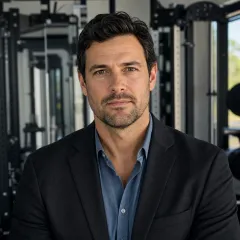
Marcus Feldman is a commercial strength-equipment analyst covering selectorized machines, plate-loaded stations, Smith machines, functional trainers, power racks, benches, barbells, dumbbells, and cable systems. He applies ISO 20957-1 and ISO 20957-2 while comparing rated loads, stability, frame deflection, pulley ratios, cable travel, adjustment increments, guarding, entrapment points, fastener retention, and fatigue cycles. His guides help gym operators, coaches, facility planners, and procurement teams evaluate biomechanics, user capacity, floor layout, maintenance access, durability, and lifecycle value.
Discuss a facility project