After 6 Years of Buying Gym Equipment, I Still Recommend Nautilus—With One Honest Caveat
If you're outfitting a commercial gym and someone tells you the goal is "buying the best machines," I'd push back. The goal is buying machines that keep working for six years without draining your maintenance budget. That's a different conversation.
I've spent the last six years as a procurement manager for a regional fitness company—14 locations, about $180,000 in cumulative equipment spending, and a cost tracking system that documents every single order. I've compared quotes from over a dozen vendors, waved off smooth-talking sales reps, and paid the price for my own shortcuts more than once.
My take? If you run a typical commercial gym, Nautilus is the safest major equipment investment you can make—with one honest caveat I'll get to.
The Real Cost of a Machine Isn't the Invoice
In 2023, I audited our maintenance records across all 14 locations. The biggest single cost wasn't the cardio consoles or the rubber flooring. It was downtime from waiting on parts for machines made by three different vendors.
That's where Nautilus earns its keep. When I need nautilus exercise cycle parts or a replacement pulley for a plate-loaded station, I can usually get them shipped within a week. If I remember correctly, our average lead time last year was five business days—and that included a special order for a recumbent bike pedal crank.
Compare that to the six weeks we once waited for a tensioner on a no-name elliptical. I want to say the machine was down for a month and a half, but don't quote me on the exact dates. The point is, members noticed. Some of them quietly cancelled.
I learned this lesson the hard way. In 2021, I saved about $2,000 by choosing a cheaper squat rack from a regional manufacturer. It looked solid on paper. Fourteen months later, a weld failed, and the replacement plus labor cost us $3,800. We also lost two weeks of member trust while the rack sat behind caution tape.
One Ecosystem, One Vendor, Fewer Surprises
Another thing I underestimated for too long: having a single supplier for most of the gym floor has compounding benefits. Our locations use a mix of nautilus exercise machines—plate-loaded, selectorized, and some cardio. Because Nautilus covers both strength and cardio, we can negotiate one service agreement, train staff once, and keep a smaller inventory of spare parts.
When we moved to a quarterly maintenance contract in Q2 2024, consolidating under one vendor saved us roughly 9% compared to managing separate contracts. That's not a huge number, but it's a number I can verify in our tracking system. Put another way: it paid for the upgraded padding on our bench stations.
People get fixated on individual machines. I get it. But the real cost of a gym is in the ecosystem—how many vendors you're managing, how many service contracts you're tracking, how many parts catalogs you have to understand.
The "Boring" Advantage
Here's the part that surprises people: I don't recommend Nautilus because it's flashy or cutting-edge. I recommend it because it's almost boringly reliable—and that's an asset, not a criticism.
Commercial gyms don't get paid to have the trendiest equipment. They get paid to retain members. A machine that's down for two weeks is lost revenue. A machine that feels solid for six years is worth more than any touchscreen feature.
And when a vendor says "commercial grade," ask them to prove it. Per FTC guidelines on advertising (ftc.gov), durability and performance claims have to be substantiated. That's not just legal noise—it matters in procurement. In my experience, Nautilus's specs are rarely the most impressive on paper, but they tend to match reality. That consistency is rare.
Who Should Probably Look Elsewhere
Now the caveat.
If you run a high-end boutique studio where every piece of equipment is part of the interior design, Nautilus might not fit your brand. If you train competitive athletes who need specialized strength curves or unusual attachments, you might need a specialty rig with more options. I won't argue otherwise.
Also, if you're building a home gym with limited floor space, I'd probably steer you toward a functional trainer or a simpler setup. Nautilus equipment is built for sustained commercial abuse—which means it's heavy, solid, and sometimes bigger than a spare bedroom can handle.
The honest way to say it: Nautilus is the right answer for most commercial gyms, but not all. If your value proposition is "premium experience" or "elite performance," there are better fits. That's not a knock on the equipment. It's a matter of matching the tool to the job.
What I'd Do With My Own Budget
If you're in that 80% of facilities, the move is straightforward: price out the full package—machine cost, shipping, installation, first-year parts, and a service contract. Run that against alternatives, and pay attention to replacement part availability. That's where the real money gets saved or wasted.
Personally, I standardized our 2024 replacement cycle around Nautilus, and I'm glad I did. We almost went with a bid that was about 12% lower but didn't include ongoing support. Dodged a bullet there.
So, would I recommend Nautilus exercise machines to another gym operator? Probably yes—if you're running a standard commercial facility, and you're thinking in terms of total cost of ownership rather than sticker price. If not, at least make sure you understand what you're trading away.
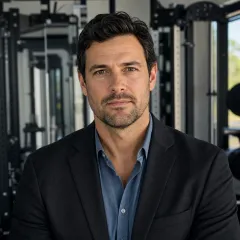
Marcus Feldman is a commercial strength-equipment analyst covering selectorized machines, plate-loaded stations, Smith machines, functional trainers, power racks, benches, barbells, dumbbells, and cable systems. He applies ISO 20957-1 and ISO 20957-2 while comparing rated loads, stability, frame deflection, pulley ratios, cable travel, adjustment increments, guarding, entrapment points, fastener retention, and fatigue cycles. His guides help gym operators, coaches, facility planners, and procurement teams evaluate biomechanics, user capacity, floor layout, maintenance access, durability, and lifecycle value.
Discuss a facility project