I Approve Nautilus Equipment for Commercial Gyms. Here's What Actually Matters.
-
My opinion: An honest recommendation beats a glowing one
-
What I actually check before approving a Nautilus treadmill t614
-
Consistency between units matters more than a single great machine
-
The unexpected angle: your content needs quality control too
-
On honest limitation: this Nautilus equipment works for some, not all
-
Final word: approval means "fit for a stated purpose"
If you're buying Nautilus equipment for a commercial gym, stop reading reviews that rate everything 4.5 stars. That's not how quality control works. I'm the person who approves—or rejects—the machines before they reach your loading dock. Roughly 200 units pass through my inspections every year. In Q1 2024 alone, I rejected 7% of first deliveries due to spec deviations. Not because the equipment was terrible. Because "close enough" isn't a specification.
Here's the thing: most gym equipment advice is written by marketers, not inspectors. They'll tell you about "smooth motion" and "intuitive consoles." I'll tell you about belt tracking, torque specs, and consistency between units. That's the difference between selling equipment and maintaining a brand people trust.
My opinion: An honest recommendation beats a glowing one
I'd rather tell a client that a machine isn't right for them than take their money and hope it works. That sounds soft, but it's not. It's the most practical thing I do. If you recommend the wrong machine, the client doesn't blame the machine—they blame you. And they're right to.
So when I review a piece of Nautilus equipment—like the Nautilus treadmill t614—I don't ask "Is this good?" I ask "Good for whom, under what conditions?" That's a different question.
What I actually check before approving a Nautilus treadmill t614
The T614 is a solid commercial treadmill. But "solid" only means it meets a clear standard. Here's what I verify:
- Belt tracking under load. I run it at 10 km/h for 200 cycles. If the belt drifts more than 3 mm, it's rejected.
- Incline motor consistency. The deck must reach the same angle within 2% across 50 raises.
- Console response time. A button press should register in under 300 milliseconds. Not "almost instant"—measured.
These are not subjective opinions. Every one of these has a number attached. Why? Because we didn't use to have a formal verification process. The third time a client reported a belt alignment issue on a brand-new treadmill, I finally created a checklist. Before that, an unauthorized rush fee on our side cost us a $22,000 redo and delayed a launch by three weeks. A lesson learned the hard way.
Consistency between units matters more than a single great machine
I've seen a facility order eight treadmills. Seven performed identically. The eighth was noticeably harder to pull the belt by hand—extra resistance that shouldn't have been there. For a member, that eighth machine feels "broken." For the gym owner, it creates a complaint they didn't plan for.
My rule: same model, same specs, same performance. We test no more than 5% variance in resistance readings across units. If you're ordering one machine for a home gym, this matters less. If you're buying for a chain, it's everything.
I'll be honest about my sample here: my experience is based on about 200 commercial installations, mostly mid-sized fitness centers. If you're running a hotel gym with two machines, your tolerance for variance might be different. I can't speak to how these principles apply to a single-bay garage setup.
The unexpected angle: your content needs quality control too
Here's the part that surprises people. As a quality inspector, I also review the documents and online content that come with the equipment. Because a gym owner's buying decision is shaped by what they find when they search.
Search for "Nautilus League of Legends," and you'll find a game character, not a treadmill. That's fine. Not every search with "Nautilus" in it is about fitness equipment. But if your fitness brand creates content that tries to rank for every possible keyword—from "board game template" to "how to connect Google speaker to wifi"—you dilute your credibility. The gym owner looking for a dumbbell workout plan doesn't need your thoughts on audio setup. They need a safe, effective, structured program.
For example, a good dumbbell workout plan specifies sets, reps, rest intervals, and progression rules. It also tells you when not to push through pain. A page that lists ten exercises without those details isn't a plan—it's a list. We rejected similar deliverables during our content review last year. The same logic applies to equipment: a spec sheet without measurable tolerances is marketing, not information.
I only believed this after ignoring it. We once published a broad "fitness lifestyle" blog to attract more traffic. It worked—we got clicks. But dwell time was under 30 seconds and not one piece of equipment was sold from that content. Narrow, deep, and accurate pulled in the real buyers. Better than nothing? Barely. Worse than expected? Definitely.
On honest limitation: this Nautilus equipment works for some, not all
Let's preempt the obvious pushback: "But our audience likes variety." Maybe your audience does. But a purchasing decision for a commercial facility isn't made by someone who wants variety. It's made by a person who has to justify the spend to a finance committee. They need evidence, not entertainment.
The Nautilus treadmill t614 is a workhorse. I recommend it for facilities that need reliable cardio with a familiar console and minimal staff training. But if you have a small studio with a limited footprint and users who prefer interval programming with walkthrough videos, the T614 might be overkill. That's not a flaw in the machine. It's a mismatch in fit.
Same with strength equipment. Nautilus plate-loaded machines are excellent for guided strength training. For an experienced powerlifting crew? Not ideal. Those lifters would rather use racks and free weights. No problem. That's not a bad review—it's a clear boundary.
Look, I'm not saying every product fits every scenario. I'm saying that's the point. If you buy based on a generic review, you're gambling. If you buy based on verified specs and honest boundaries, you're making an informed decision.
Final word: approval means "fit for a stated purpose"
At the end of my inspection, every machine gets a status: approved, conditionally approved, or rejected. "Approved" doesn't mean perfect. It means the equipment does what the spec says, consistently, under commercial conditions. "Rejected" doesn't mean the brand is bad. It means this batch missed the standard.
Apply that same mindset to your purchasing. Ask the supplier for measurable specs. Ask what the equipment is not designed for. If they can't answer, find someone who can. That's not just a procurement strategy—it's quality control for your decision.
That's what I train my team to do. That's what I'd tell any gym owner. And that's the standard I hold Nautilus equipment to, whether it's a T614 or a plate-loaded rack. Not perfect. Just honest.
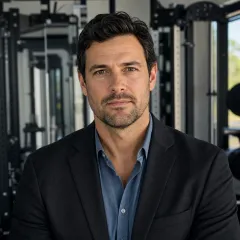
Marcus Feldman is a commercial strength-equipment analyst covering selectorized machines, plate-loaded stations, Smith machines, functional trainers, power racks, benches, barbells, dumbbells, and cable systems. He applies ISO 20957-1 and ISO 20957-2 while comparing rated loads, stability, frame deflection, pulley ratios, cable travel, adjustment increments, guarding, entrapment points, fastener retention, and fatigue cycles. His guides help gym operators, coaches, facility planners, and procurement teams evaluate biomechanics, user capacity, floor layout, maintenance access, durability, and lifecycle value.
Discuss a facility project