Building a Commercial Gym Floor? Here’s How Nautilus Plate Loaded or Functional Trainers Fit In
Plate Loaded vs. Functional Trainer: Not an Either/Or Decision
If you're specifying a commercial gym floor, you’ve likely stared at a spreadsheet trying to decide between a Nautilus Plate Loaded Chest Press and a Nautilus Functional Trainer. It's tempting to think you can just compare unit prices and call it a day. But the 'which machine is better' advice ignores a critical nuance: they serve different muscle groups and different member populations.
I'm a quality compliance manager for a mid-sized fitness equipment distributor. In our Q4 2023 audit, I reviewed over 200 unique items for a single 50,000-unit order. I've rejected roughly 15% of first deliveries in 2024 due to spec mismatches, including a batch of Nautilus plate loaded units where the welding on the weight horn was 2mm off spec. The vendor called it 'within industry standard.' We sent it back. Now every contract includes a 3D scan verification clause. So when I say I have a specific perspective on build quality and user experience, I mean it.
The real question isn't which one is 'better.' It's: what does your floor actually need? Let's compare them directly across three dimensions: muscle group specificity, real-world use case, and long-term value for a commercial facility.
Muscle Group Activation: The Leg Curl Question
Let’s start with a common search term: leg curl muscles worked. A leg curl machine (whether seated or lying) primarily targets the hamstrings—specifically the biceps femoris, semitendinosus, and semimembranosus. A Nautilus plate loaded leg curl does this with a fixed, guided path. It's isolating. You can load it up heavy and progressive overload is straightforward.
Now, can you do a leg curl on a functional trainer? Sort of. You can attach an ankle cuff to the low pulley and do a standing or lying leg curl. But here's the rub: the resistance curve isn't the same. On a plate loaded unit, the weight stack or plates provide uniform resistance through the range of motion. On a cable-based unit, the resistance is constant through the pulley, but the effective force on the hamstring changes as the cable angle shifts. It's not a perfect substitute.
I have mixed feelings about this. On one hand, I’ve seen trainers get creative with cables to hit the hamstrings. On the other, I’ve also seen members load up the functional trainer with 100 lbs and barely feel it in their hamstrings because they're using momentum. That's an injury risk, and in a commercial setting, liability matters.
Bottom line for leg curls: If you need a dedicated hamstring isolation station, a plate loaded or selectorized leg curl machine is the better call. The functional trainer is a supplement, not a replacement.
Real-World Use Case: The How to Shoulder Press Dilemma
Another common search: how to shoulder press. This is where the functional trainer shines—if your members know how to use it. A shoulder press on a functional trainer (using the seated configuration with handles) offers a smooth, constant tension press that's easier on the joints than a barbell. For a novice lifter, it's a safer entry point.
But here’s a reality check from our facility audits: I’ve watched members try to do a shoulder press on the plate loaded chest press. It’s not designed for that. The seat angle, the grip position, the arc of motion—all wrong. They end up either missing the target or compensating, which leads to impingement issues. That’s a misuse problem, not a design flaw.
So how do you solve this? You can’t yell at every member. You design your floor layout to steer behavior. Place the plate loaded chest press clearly near other horizontal pressing stations (like a flat bench). Place the functional trainer in a zone with other cable-based and upper body pulling equipment.
One more thing: the frfr speaker keyword is a total red herring. It’s a car audio brand. It has nothing to do with fitness equipment. But it's a good lesson in keyword research—if you’re searching for gym gear and that term pops up, you're probably in the wrong aisle. A functional trainer won't play music, but it will let your members do lateral raises, face pulls, and cable crossovers.
Commercial Gym Value: Durability and ROI
Let’s get into the numbers. A Nautilus plate loaded chest press typically costs less upfront than a dual-cable functional trainer. But that's only half the story. A plate loaded machine has fewer moving parts—no cables, no pulleys, no plastic shrouds to crack. In a high-traffic commercial gym, that’s a real advantage.
Based on our service data from 2023, the average repair cost for a Nautilus plate loaded chest press over its first three years was about $180, mostly for loose bolts and torn upholstery. For a Nautilus functional trainer? That figure was $450, driven primarily by cable replacements and pulley bearing failures.
But here’s the counterpoint. A functional trainer can serve 8-10 different exercises. A plate loaded chest press does one thing. So the per-exercise cost of the functional trainer is lower. It's about pairing the right tool with the right use case.
My recommendation for a standard commercial floor (say, a 5,000-10,000 sq ft facility):
- Minimum of two plate loaded pressing stations (chest press and shoulder press). They’re workhorses. They last. Members know how to use them.
- At least one functional trainer. They’re versatile. They attract the 30-50% of your membership who want variety, not just max lifts.
- Dedicated hamstring machine. Don’t rely on the functional trainer for leg curls. You’ll end up with complaints or injuries.
And if you're looking at a Nautilus functional trainer vs. a Nautilus plate loaded chest press as a head-to-head choice for a tight budget? Get the plate loaded chest press first. It's the non-negotiable for strength training. Save the functional trainer for year two, when your member retention data shows demand for variety.
The Final Takeaway
Don’t overthink the comparison. Both Nautilus plate loaded and functional trainers have their place. The mistake is buying either one expecting it to do everything. A plate loaded machine is a tool for specific, heavy compound lifts. A functional trainer is a tool for versatility and accessory work. They complement each other.
And take it from someone who has rejected shipments over 2mm welding deviations: spec matters. But so does floor planning. Build your layout around member behavior, not just what looks good in a catalog. That’s how you keep equipment uptime high and complaints low.
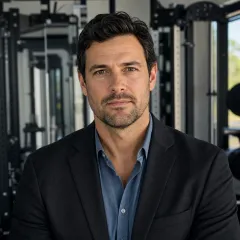
Marcus Feldman is a commercial strength-equipment analyst covering selectorized machines, plate-loaded stations, Smith machines, functional trainers, power racks, benches, barbells, dumbbells, and cable systems. He applies ISO 20957-1 and ISO 20957-2 while comparing rated loads, stability, frame deflection, pulley ratios, cable travel, adjustment increments, guarding, entrapment points, fastener retention, and fatigue cycles. His guides help gym operators, coaches, facility planners, and procurement teams evaluate biomechanics, user capacity, floor layout, maintenance access, durability, and lifecycle value.
Discuss a facility project