Nautilus vs. Boutique Equipment: A Commercial Buyer's Guide to Total Cost of Ownership
-
Comparing Nautilus to the Competition: A Procurement Perspective
-
The Comparison Framework: Two Paths to the Same Goal
-
Dimension 1: Initial Procurement Cost (The Easy Trap)
-
Dimension 2: Long-Term Maintenance & Uptime (The Deciding Factor)
-
Dimension 3: Resale & Depreciation (The Final Check)
-
The Verdict: A Contextual Choice
Comparing Nautilus to the Competition: A Procurement Perspective
Let's be direct about this. You're likely comparing Nautilus against some established names in commercial fitness. Maybe you've got a quote from a specialized vendor offering a flashy, highly-specific machine, and you're wondering if the premium is worth it. I'm a procurement manager who's been tracking fitness equipment costs for over 7 years, and I've managed budgets that cover everything from plate-loaded racks to cardio decks. I won't pretend to be neutral—I've seen too many hidden costs blow budgets. So, here's how I break it down.
My experience is based on commercial facilities with 3,000+ square feet of training space. If you're kitting out a boutique studio with 5 machines, your mileage may vary. But the principles of value remain the same.
The Comparison Framework: Two Paths to the Same Goal
We're comparing two approaches to equipping a commercial gym floor. On one side, you have Nautilus—a company known for broad, integrated product lines that cover strength and cardio. Their machines, like the Nautilus plate-loaded line or the T614 treadmill, are designed for durability and consistent user experience. On the other side, you have the 'boutique' approach: picking specialized equipment from various manufacturers, often with a higher upfront price, claiming superior ergonomics or biomechanics.
The question isn't which is better. It's which is more cost-effective over the life of the equipment. To answer that, we need to compare them across three key dimensions: Initial Procurement Cost, Long-Term Maintenance & Uptime, and Resale & Depreciation.
Dimension 1: Initial Procurement Cost (The Easy Trap)
When I first started in procurement, I'd just compare unit prices. A Nautilus plate-loaded lat pulldown might list around $3,500. A boutique equivalent from a niche manufacturer could be $5,500. Simple choice, right? Wrong.
The initial cost isn't just the sticker price. With Nautilus, you're buying a known commodity. I know what the installation costs are, what the warranty covers (and doesn't), and what the replacement parts cost. With a boutique vendor, you're often buying into a smaller ecosystem. In 2023, we nearly went with a specialized cable machine. The quote was $4,200. But when I asked about setup (not included) and the warranty's fine print (which only covered the motor for 2 years vs. Nautilus's standard 5), the real cost hit $5,100. A comparable Nautilus machine, with all shipping and a 5-year warranty, was $4,800.
The assumption is that a higher-priced specialist machine is better. The reality is that its higher price often reflects a smaller production run and a less mature distribution network, not superior quality (i.e., you pay for the R&D of a small company, not for better steel).
Dimension 2: Long-Term Maintenance & Uptime (The Deciding Factor)
This is where the real differences show up. Over the past 6 years, I've tracked every service call in our system. Nautilus equipment, across their strength and cardio lines, is remarkably standardized. When a cable snaps on a Nautilus machine, I can order a replacement from a dozen distributors, and it takes 2 days. The repair is simple, and any technician can do it. The cost-per-repair is low, and downtime is minimal.
With boutique equipment, you're often at the mercy of a single supplier. In Q2 2024, we had a motor fail on a specialist elliptical. The manufacturer was the only source for the part, it took 3 weeks to arrive, and the service fee was $450 because their tech had to come from a different city. That machine sat idle for a month. In a commercial gym, lost revenue from a machine is real. You can calculate it: $10 per member per visit, 10 lost sessions = $100 in lost direct revenue, plus the frustrated member who might not renew.
People think expensive equipment is cheaper to maintain. Actually, equipment from a large, standardized manufacturer like Nautilus is cheaper to maintain because parts are abundant and repair knowledge is widespread. The causation is the opposite: the boutique equipment's price isn't a promise of lower long-term cost; it's a reflection of its niche status.
Dimension 3: Resale & Depreciation (The Final Check)
This is the dimension most buyers ignore. When you're done with a piece of equipment, what's it worth? I recently helped a facility sell off their old fleet. Nautilus plate-loaded machines sold for 35% of their original value in 2 weeks. A specialty functional trainer from a small brand? We couldn't give it away. We actually had to pay a disposal fee.
The commercial fitness market is built on trust and volume. Brands like Nautilus, Life Fitness, and Precor have massive installed bases. Buyers of used equipment know they can get parts and service. This creates a floor for resale value that boutique equipment simply doesn't have. That's a hidden cost—or benefit—that only appears when you're ready to upgrade.
The Verdict: A Contextual Choice
So, who should choose Nautilus, and who should go boutique?
Choose Nautilus if:
- You're running a general-purpose commercial gym where you need reliable, serviceable equipment.
- You value standardization across your entire facility (strength & cardio from one ecosystem).
- You're planning for the long term and care about resale value.
- Your maintenance team isn't specialized (i.e., they need easily accessible parts).
Consider boutique equipment if:
- You're running a highly specialized studio (e.g., only kettlebells, only kettlebells) where the equipment is a core part of your brand identity.
- You have your own in-house service technician who can handle unique parts.
- You don't plan to resell the equipment (or you're prepared to take a total loss on it).
- You have the budget to absorb higher maintenance costs and the patience to handle longer downtime.
For me, the math is usually clear. It's not about which machine has the fanciest engineering. It's about which machine costs the least to own over 5 years. And in that calculation, Nautilus consistently wins. The cheaper initial cost, the lower maintenance burden, and the higher resale value make it the financially responsible choice for any commercial operator who treats their facility like a business, not a hobby.
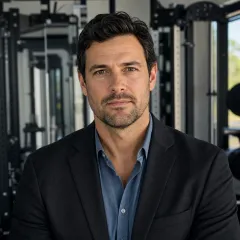
Marcus Feldman is a commercial strength-equipment analyst covering selectorized machines, plate-loaded stations, Smith machines, functional trainers, power racks, benches, barbells, dumbbells, and cable systems. He applies ISO 20957-1 and ISO 20957-2 while comparing rated loads, stability, frame deflection, pulley ratios, cable travel, adjustment increments, guarding, entrapment points, fastener retention, and fatigue cycles. His guides help gym operators, coaches, facility planners, and procurement teams evaluate biomechanics, user capacity, floor layout, maintenance access, durability, and lifecycle value.
Discuss a facility project