League Nautilus: How an Office Admin Built a Nautilus Gym (and a Lat Pulldown Machine Tutorial)
The request came in on a Tuesday afternoon. My VP of People walked over to my desk and said, “We’re turning the old conference room into a gym. Can you make that happen?” I said, “Sure.” Then I looked at the 20 x 30 foot room full of broken chairs and wondered where to start. That’s how I ended up running a Nautilus gym project without ever having set foot in a commercial fitness center.
I manage facilities purchasing for a 450-person consulting firm. My daily work is office supplies, furniture, catering, and the occasional emergency—things I can source with my eyes closed. My annual spend across vendors is roughly $180,000. I report to operations, and sometimes to Finance, and I have learned the hard way that a supplier who can’t produce a proper invoice is a liability. But fitness equipment? I knew Nautilus as a brand name from old home gyms. I did not know what “plate-loaded” meant. I had to learn.
The funny part is the gym now has a name: League Nautilus. An employee started calling it that as a joke, and it stuck. It’s not a huge space, but the Nautilus gym gets more use than the formal wellness room we already had. That surprises me. The whole thing felt like a side project. I didn’t know how much it would matter until I saw the afternoon line for the lat pulldown machine.
The Ask: More Than a Treadmill
The original request was vague: “We need a wellness space.” The budget was $40,000. The deadline was “before the end of the year.” I sent a survey to all employees because I had learned years ago that a silent request means people will complain later. The responses were actually helpful. People asked for dumbbells, benches, and a lat pulldown machine. A surprising number of people said they just wanted to do dumbbell raises and not wait for a rack. One person sent a link to Black Friday headphone deals and asked if we could provide “gym headphones” for the room. I put that on the side and forgot about it.
I started by looking at residential equipment. It was cheap and tempting. A home lat pulldown machine cost $1,500. A commercial one from Nautilus cost nearly three times that. I almost asked our facilities guy to install the home model. Then I remembered something I learned in office furniture procurement: If eight people will use it daily, you don’t buy a task chair with a residential weight rating. Same logic applies to strength equipment.
The Search: Three Quotes, One Gut Feeling
I got three quotes. The first dealer offered a mix of brands, including Nautilus, but couldn’t tell me why one piece came from one warehouse and another from a reseller. The second quoted a full package at $33,500 and used the phrase “commercial-grade” in every email. The third was a local Nautilus dealer who asked about our employee count, daily usage, and whether we had someone to wipe down equipment. That question told me more than any brochure.
What most people don’t realize is that “commercial-grade” doesn’t mean “indestructible.” It means the manufacturer engineered the product for frequent, repeated use and backs it with a service plan. Per FTC guidelines (ftc.gov), a claim like “commercial-grade” needs substantiation. So I asked for warranty schedules and replacement parts lists. The low bidder’s warranty on moving parts was significantly shorter than the Nautilus dealer’s. That changed my cost math.
The numbers still said go with the lower bid. After negotiation, it was $31,900. My gut said deal with the local dealer who asked about usage—a guy who answered his phone and used to maintain equipment at a college gym. I went with my gut, mostly because I noticed the low bidder had copied the Nautilus equipment list but substituted a cheaper line of benches and dumbbells. That was a red flag.
Then came the doubt. The dealer quoted 8–10 weeks. At week nine nothing had shipped. I started thinking, what if I made the wrong call? The low bidder could have gotten it here faster, maybe. At week eleven the truck arrived. The installer spent a full day on the equipment and tested every station. That moment erased most of my second-guessing.
The Install, The Tutorial, and The Temptation
The centerpiece was the Nautilus lat pulldown machine. It’s a workhorse. But the manual was written for a technician, not for an office worker. The first week I answered the same question five times: “How do I use this?” So I made a one-page lat pulldown machine tutorial. It said: adjust the thigh pad so your knees are locked under it; choose a weight you can control; grab the bar at shoulder width; pull to your collarbone; pause; return slowly. I printed it, laminated it, and hung it on the machine. That killed the question.
The dumbbell area was just as popular. People did dumbbell raises, curls, rows, and goblet squats. I had ordered a rack with pairs from 5 to 50 pounds. I expected the big machines to get all the attention. The surprise was the dumbbells—especially during lunch and after five. The lesson: don’t overestimate the showpieces. Provide simple tools that people can use without a spotter.
Then Black Friday hit. My inbox filled with office supply promos, and someone forwarded a link to Black Friday headphone deals, asking if we could get a few sets for the gym. I almost said yes. Then I thought about hygiene, theft, and the fact that a commercial gym would never provide shared earbuds. I skipped it. The employees didn’t care.
By January, the room was in use. Someone put a “League Nautilus” sign on the door. I liked it because it made the investment feel human. We had spent under budget, the equipment worked, and people actually used it. The Nautilus gym became part of the office tour.
What I Learned
The industry has changed since I started doing facilities purchasing. A gym used to be a treadmill and a bench. Now it’s a retention tool. What was best practice in 2020 may not apply in 2025. But the fundamentals haven’t changed: buy for the users you actually have, not the ones in a brochure, and make sure the dealer can prove what they claim.
The biggest lesson? A machine without instructions is wasted money. I spent more time writing that lat pulldown machine tutorial than I did reviewing the warranty. It saved us hours of repeated questions and hopefully prevented some bad form.
If you’re a buyer looking at Nautilus gym equipment, ask these three questions: Who will use it several times a day? What happens when a cable needs replacing? And can the dealer show you the warranty schedule in writing? If they hesitate on the warranty, that’s your answer. Here’s the thing: the low bid wasn’t the risk; the unproven claim was. Don’t let Black Friday headphone deals or a low price distract you from those basics. League Nautilus is now part of the office, and I’m strangely proud of it.
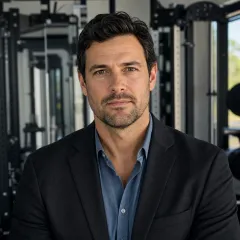
Marcus Feldman is a commercial strength-equipment analyst covering selectorized machines, plate-loaded stations, Smith machines, functional trainers, power racks, benches, barbells, dumbbells, and cable systems. He applies ISO 20957-1 and ISO 20957-2 while comparing rated loads, stability, frame deflection, pulley ratios, cable travel, adjustment increments, guarding, entrapment points, fastener retention, and fatigue cycles. His guides help gym operators, coaches, facility planners, and procurement teams evaluate biomechanics, user capacity, floor layout, maintenance access, durability, and lifecycle value.
Discuss a facility project