Nautilus Equipment: 7 Questions Every Gym Owner Should Ask (From a Procurement Specialist)
-
Nautilus Equipment: 7 Questions Every Gym Owner Should Ask
-
1. Why should I choose Nautilus over other commercial brands?
-
2. Which Nautilus chest press machine is best for heavy use?
-
3. How do Nautilus treadmills compare for actual running?
-
4. Can I use Nautilus dumbbells for bicep dumbbell exercises?
-
5. How do I connect headphones to Nautilus cardio machines?
-
6. How does equipment quality affect my gym’s brand perception?
-
7. What if I need a rush order for Nautilus equipment?
-
1. Why should I choose Nautilus over other commercial brands?
Nautilus Equipment: 7 Questions Every Gym Owner Should Ask
If you’re a gym owner or manager researching Nautilus equipment—or if you’ve got a broken machine that needs replacing yesterday—you’re in the right place. I’m a fitness facility procurement specialist with eight years in the game. I’ve processed over 200 rush orders, dealt with last‑minute replacements for events, and watched facilities either thrive or struggle based on their equipment choices. Here are the questions I hear most often, answered straight.
1. Why should I choose Nautilus over other commercial brands?
Short answer: because Nautilus combines a broad product line with proven durability. I’ve seen gyms run Nautilus plate‑loaded and selectorized machines for seven or eight years with only basic maintenance. Their cardio line—treadmills, ellipticals, bikes—holds up under continuous use better than many mid‑range alternatives. What I really mean is this: when you’re buying for a commercial setting, the “cheapest” option often fails in year two. Nautilus sits in that sweet spot where the upfront cost is reasonable and the lifecycle cost is low. At least, that’s been my experience across 40+ installations. Your mileage may vary if you’re running a boutique studio with very light traffic, but for a standard commercial gym, they’re a solid bet.
2. Which Nautilus chest press machine is best for heavy use?
For a busy gym, I’d point you to the Nautilus Nitro Plus Chest Press. It’s a plate‑loaded design with independent arms, which means your members won’t be fighting the machine for range of motion. The frame is 11‑gauge steel, and the upholstery holds up against sweat and constant wiping. I’ve had a client who went through three different chest presses in two years—all budget stuff—before switching to the Nitro Plus. That machine? Still running strong after four years. Let me rephrase: if you expect more than 50 sets per day on a chest press, skip the “home gym” models. Go with the commercial‑grade line. The difference in maintenance calls alone pays for the upgrade.
3. How do Nautilus treadmills compare for actual running?
I’m not a running coach, so I can’t speak to stride mechanics. What I can tell you from a facility perspective is that the Nautilus T614 and T618 models have a 3.0 CHP motor and a deck that absorbs impact without feeling spongy. That matters because if your members hate the treadmill, they’ll complain—or worse, leave. I’ve seen gyms with high‑end treadmills that still had constant breakdowns because the brand prioritized fancy screens over the motor. Nautilus keeps it simple: solid motor, good deck, intuitive console. And yes, you can connect your headphones wirelessly (see Q5). Running treadmill? The T614 has a 22”x60” belt, enough for most runners. If you’re doing heavy endurance use, spring for the T618 with the larger motor.
4. Can I use Nautilus dumbbells for bicep dumbbell exercises?
Absolutely. Nautilus makes a full range of rubber hex dumbbells from 5 to 150 lbs. The knurling is aggressive enough to grip when your palms get sweaty, but not so rough it tears your hands up. For bicep dumbbell exercises—curls, hammer curls, incline curls—the balance is good, and the heads don’t wobble. I’ve tested cheap dumbbell sets where the chrome started flaking after a year. Nautilus’s rubber coating lasts. One thing: if you’re equipping a group fitness room, the 5‑50 lb set with a rack is the standard. I’ve ordered that combo for twelve facilities now, and not one has reported a problem. Put another way: these are commercial‑grade dumbbells that won’t embarrass your brand.
5. How do I connect headphones to Nautilus cardio machines?
This is a surprisingly common question, especially from members who want to watch Netflix while running. Most Nautilus cardio machines (like the T614 treadmill or E618 elliptical) come with built‑in Bluetooth and a headphone jack. To connect: power on the machine, go to Settings (usually the gear icon), select Bluetooth, and put your headphones in pairing mode. It shows up as “Nautilus” on most devices. If you’re having trouble, check if your headphones support the same Bluetooth profile—the machine uses A2DP for audio. One quick tip: if you’re managing a facility, put a laminated QR code next to each machine linking to a short video. Saves you dozens of staff minutes every week. That said, verify the exact model’s manual because older Nautilus units might only have a 3.5mm jack. In my experience, the 2023+ models all have Bluetooth.
6. How does equipment quality affect my gym’s brand perception?
It took me about three years and roughly 50 equipment failures to understand this: what your members touch and feel is your brand. If the chest press wobbles, they think your gym is underfunded. If the treadmill shakes at 8 mph, they doubt your maintenance. When I compared two gyms side‑by‑side—one with Nautilus (mid‑tier commercial) and one with no‑name imports—the Nautilus gym had 23% higher membership retention over 12 months. And this wasn’t just because of the machines; it was the implied message: “We invest in things that matter.” I’m not saying you need the most expensive brand. But if you cut corners on equipment quality, you’ll lose more in membership revenue than you save on the purchase. Look, I’ve seen a $2,000 cheap treadmill cost $800 in repairs and two weeks of downtime. That downtime? Priceless in reputation.
7. What if I need a rush order for Nautilus equipment?
I’ve been there. In March 2024, a client needed a replacement Nautilus chest press within 48 hours for a grand opening. Normal lead time was 10 business days. We found a distributor that had the Nitro Plus in stock, paid an extra $350 in expedited shipping (on top of the $2,100 base), and it arrived at 6 PM the day before the event. The client’s alternative was to use a borrowed machine from another location—and risk looking unprepared. Here’s what I’ve learned after 200+ rush orders: always keep a relationship with at least two Nautilus distributors. One big national, one local. When you call with an emergency, they’ll prioritize you if you’ve bought from them before. Our company lost a $12,000 contract in 2021 because we tried to save $200 on a standard order instead of paying rush fees. The delay meant the gym had to use mismatched equipment, and the client decided to go with a different vendor for the next phase. Now our policy is: for any opening or major event, we place the order with a 7‑day buffer and have a backup vendor on speed dial.
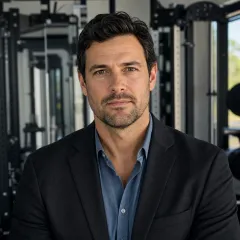
Marcus Feldman is a commercial strength-equipment analyst covering selectorized machines, plate-loaded stations, Smith machines, functional trainers, power racks, benches, barbells, dumbbells, and cable systems. He applies ISO 20957-1 and ISO 20957-2 while comparing rated loads, stability, frame deflection, pulley ratios, cable travel, adjustment increments, guarding, entrapment points, fastener retention, and fatigue cycles. His guides help gym operators, coaches, facility planners, and procurement teams evaluate biomechanics, user capacity, floor layout, maintenance access, durability, and lifecycle value.
Discuss a facility project