Stop Buying Equipment for Your Gym Based on Hype (Here’s How to Choose)
-
First, Let’s Call Out the Obvious Mistake
-
Scenario A: You’re Building a Pure Commercial Gym (High Traffic, Heavy Use)
-
Scenario B: You’re a Mid-to-Upscale Gym (High Service Expectations, Mixed Equipment Needs)
-
Scenario C: You’re Equipping a Home Gym or a Small Studio (Low Traffic, Personal Use)
-
How to Know Which Scenario You’re In
First, Let’s Call Out the Obvious Mistake
If you’ve ever walked into a commercial gym and thought, “Wow, that Nautilus plate loaded hack squat looks amazing,” you already know the feeling. The shiny chrome, the bio-mechanical design, the promise of a better squat. It’s tempting to just buy it.
But here’s the thing: buying a piece of equipment—whether it’s a Nautilus T618 treadmill or a set of 100 lb adjustable dumbbells—without a plan for your specific situation is how you end up with a machine that collects dust. Or worse, breaks down in month six because it wasn’t right for the traffic in your facility.
There’s no universal “best” equipment. It all depends on who’s using it, how often, and under what conditions. This guide is built like a decision tree, helping you figure out which scenario you’re in and what equipment makes sense for you.
Scenario A: You’re Building a Pure Commercial Gym (High Traffic, Heavy Use)
This is the classic scenario. You’re opening or outfitting a gym that will see 300-500+ members per day. The equipment needs to survive years of abuse. Here, the choice is less about features and more about durability and serviceability.
For strength training, I’d go with a selectorized line for the core machines (chest press, lat pulldown, leg press). The reason? Less cable friction, fewer moving parts on the stack, and easier for members to adjust. The Nautilus selectorized line is a solid bet here—it’s been around forever for a reason. For plate loaded pieces, like a hack squat or a Smith machine, look for a frame that’s welded, not bolted. Bolted frames loosen up over time in high-traffic gyms. I’ve seen it happen.
For cardio, a Nautilus T618 treadmill is a good middle ground. It’s not the top-tier commercial model (that’s the T700 series), but it’s built to handle moderate commercial use—think 4-6 hours of run time daily. If your gym is open 18 hours and packed, step up to a commercial-grade model from brands like Life Fitness or Precor. But if you’re a mid-volume gym, the T618 gives you value without the premium price tag. I’m not sponsored by any of them—I just know what’s held up in the facilities I’ve worked with.
One thing I learned the hard way: don’t skimp on the warranty. We didn’t have a formal process for tracking warranties on our plate loaded machines. Cost us when a cable snapped on a lat pulldown after 11 months. The manufacturer covered the part, but labor? That was on us. Now I always ask: “What’s the labor warranty, and who does the repairs?”
Scenario B: You’re a Mid-to-Upscale Gym (High Service Expectations, Mixed Equipment Needs)
This is tricky. Your members expect quality, but you don’t have the volume of a big-box gym. You might have 150-250 members, but they pay a premium. Here, the equipment needs to feel good and look good, but you can’t afford to replace everything every three years.
For strength, consider a mix. Put the heavy-use, popular machines (like the chest press and lat pulldown) in selectorized for consistency and ease of use. For the machines that get less traffic—like a hack squat or a niche cable attachment—go with plate loaded. It’s cheaper, and honestly, the serious lifters prefer them anyway. A Nautilus plate loaded hack squat is a great pick because it’s easy to load and unload, and the foot platform is comfortable for different body types. I’ve seen these hold up well in this setting.
For dumbbells, this is where you need to be careful. A set of adjustable dumbbells (like 100 lbs each) can save you floor space, but they’re not always ideal for a gym where people expect a “real” dumbbell rack. If your gym has a full rack of fixed dumbbells, great. But if you’re tight on space, the adjustable models are a smart trade-off. Just make sure they’re the kind with a quick-change mechanism—not the ones where you have to screw and unscrew collars (ugh).
Here’s a personal story: Back in 2022, I was advising a client who wanted to save money. They bought a set of adjustable dumbbells from a generic brand. Within six months, the locking mechanism on two of them failed mid-set. (Imagine a 70 lb dumbbell suddenly coming apart during a dumbbell lateral raise. Dangerous.) We ended up having to buy replacements from a reputable brand. That mistake cost them about $400 in returns and lost credibility with members. Now I always say: for dumbbells, don’t cut corners.
Scenario C: You’re Equipping a Home Gym or a Small Studio (Low Traffic, Personal Use)
This is the most common scenario for our readers. You’re a personal trainer setting up a studio, or you’re a fitness enthusiast building a home gym. Your budget isn’t infinite, and you need equipment that does multiple things well.
For the home gym, I’d prioritize a solid power rack, a quality Olympic barbell, and a set of adjustable dumbbells. The Nautilus adjustable dumbbells up to 100 lbs are a good fit here. They’re not as fast to switch as some competitors, but the build quality is solid. And for a home gym, you’re not rushing between sets—you have time.
For a small studio, you need to maximize space. Consider a functional trainer (a cable machine) over a lat pulldown machine. It gives you more exercise options (rows, lat work, chest flyes, tricep pushdowns). If you’re teaching classes or running small group sessions, space is king. A Nautilus Smith machine is also a good option for a studio—it’s safer for solo work, and you can do squats, presses, and rows on it. It’s not a replacement for a barbell, but it’s a compromise that works.
One thing I see people mess up: they try to do too much with cheap equipment. A $300 treadmill is a disaster waiting to happen. I’d rather you buy a used commercial treadmill (like a used Nautilus T618 from a closing gym) than a new home-grade one. That’s been my experience with the T618 review—it’s a solid machine, but I’ve only tested it in moderate commercial use. In a home gym, it would probably last you a decade if you maintain the belt. (Don’t quote me on that exact number, though.)
How to Know Which Scenario You’re In
This is the part where I help you figure it out. Ask yourself these three questions:
- How many people will use the equipment daily?
If it’s over 100, go with Scenario A. If it’s under 20, you’re in Scenario C. In between? Scenario B. - What’s your pain point with other equipment?
If your members complain about equipment being down, you might be under-spec’ed. If they complain about options, you might need more variety, not necessarily more durability. - Can you handle repairs in-house?
If you have a maintenance guy (or you’re handy), you can take more risks. If not, invest in brands with solid service networks. Nautilus has a decent service network, but it’s not nationwide like Life Fitness. Check your area.
Bottom line: there’s no single answer. The right equipment for your gym depends on who’s using it and how. But don’t let that stop you from making a decision. Pick a lane, buy for that scenario, and move on. Overthinking it is worse than making a reasonable choice.
Pricing note: Prices for commercial equipment vary wildly. For reference, a new Nautilus plate loaded hack squat runs around $2,000 - $3,500 (based on 2024 quotes from a few dealers; verify current prices). Adjustable dumbbells up to 100 lbs are typically $300 - $600 for a pair. Always check with your local dealer for current pricing.
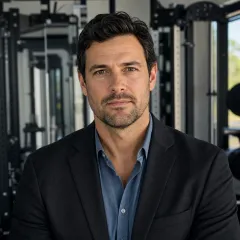
Marcus Feldman is a commercial strength-equipment analyst covering selectorized machines, plate-loaded stations, Smith machines, functional trainers, power racks, benches, barbells, dumbbells, and cable systems. He applies ISO 20957-1 and ISO 20957-2 while comparing rated loads, stability, frame deflection, pulley ratios, cable travel, adjustment increments, guarding, entrapment points, fastener retention, and fatigue cycles. His guides help gym operators, coaches, facility planners, and procurement teams evaluate biomechanics, user capacity, floor layout, maintenance access, durability, and lifecycle value.
Discuss a facility project