Nautilus Workout Machine vs Nautilus Exercise Cycle: Which Should You Buy First?
I work in quality and brand compliance for Nautilus commercial equipment. Before any unit ships to a gym, fitness center, hotel, or community facility, it passes through our review process—roughly 200 units a month across both strength and cardio lines. In Q1 2024, I rejected just under 2% of first deliveries over specification issues that would likely have become a repair call later. I mention that because none of what follows is a brochure opinion.
The question I hear most from operators—especially from smaller facilities—is a financing question as much as a fitness one: “I can't buy everything this year. Should I buy a Nautilus workout machine or a Nautilus exercise cycle?” I understand why. Both are expensive. Both are good. Most operators assume the decision comes down to brand or price when it really comes down to how each machine works mechanically and how it ages under real use.
For a useful comparison, I use three dimensions:
- Construction type—how each machine creates resistance, because that predicts what will need service.
- Wear patterns—what actually fails after months of commercial use.
- Floor economics—what each piece of equipment contributes to the space it occupies.
The short version is this: there is no universal “better” purchase. There is only a better fit for the kind of use your floor will actually see.
Heavy Doesn't Mean Complicated
A selectorized or plate-loaded Nautilus workout machine does something very reliable: it moves weight against gravity. There's no motor, no brake, no console brain, and no rotating drivetrain. The main components are a steel frame, weight stack, pulleys, cables, pivoting arms, and pads. That's essentially it. Commercial strength machines get their price from materials and engineering, not from component count.
An exercise cycle is different. Whether upright or recumbent, it has moving mass in the flywheel, a braking system that creates resistance, a drive mechanism connecting the pedals to that flywheel, crank arms, and electronic components in the console. Those parts have to work together with tight tolerances. The machine feels smooth when those tolerances are right. When they start to drift, the smoothness goes away.
Side by side, the strength machine looks like the higher-risk purchase. It's heavier, and users can be rough with it. But from a mechanical standpoint, it's the simpler unit. That fact drives almost every other comparison in this article.
What the Service Logs Show: Nautilus Exercise Cycle Parts vs. Strength Machine Parts
The first surprise for most buyers is the same one I had years ago. I assumed the heavy equipment—the machines that get loaded, slammed, and dropped—would generate more repair activity. That's not what I've observed in facility reviews. It took me a few years and a lot of equipment audits to understand why. Strength equipment can absorb abuse because it has fewer precision components to knock out of alignment. If the frame is welded correctly and the cables are inspected, the machine keeps going.
Cycles are different in a specific way. The contact and adjustment points take regular punishment. In commercial settings, the Nautilus exercise cycle parts that tend to show up in service orders are the practical ones: seat-post clamps, seat adjustment pins, pedal cages and straps, brake or resistance units, drive belts, and console connections. These are not catastrophic failures, and they're rarely signs of poor manufacturing. But they're real, and they're more frequent than what I see on strength frames.
Strength machines have their own list; it just tends to be shorter. Cables stretch, pulley wheels wear, pads degrade under aggressive cleaning chemicals, and selector pins can stick. Some of that is preventable by an attentive staff. The key difference is volume. A Nautilus workout machine will usually run for long stretches with nothing more than a visual check and occasional lubrication. A cycle will ask for small maintenance touches more often.
That doesn't mean cycles are a bad investment. It means their operating budget should include scheduled maintenance. Plan for it from day one, and the cost is manageable. Ignore it, and small issues turn into machines sitting offline during peak hours.
Floor Space: A Cardio Row Is Not a Strength Circuit
The third dimension isn't mechanical at all. It's about what the floor is being asked to produce.
A commercial exercise cycle fits in a smaller footprint and can be arranged in dense rows. Strength machines need more clearance around them—not just for the frame, but for the user, the load path, and safe access. The same 1,000 square feet might hold ten to twelve cycles or six to seven strength stations. Those numbers shift with layout and product selection, but the general rule holds: cardio packs more usable stations into less space.
That's not the whole story, though. A cardio workout is often 20 to 40 minutes. A strength session is longer, especially when rest periods are included. A cycle row can process more people per day, but a strength area can support higher-value coaching, personal training, and measurable progression. If your revenue depends on training rather than membership volume, raw station count matters less.
Small Facility, Different Priority
If you run a smaller facility, the typical “buy everything” advice never made sense to me. You need equipment that earns its floor space quickly. Here's how I'd prioritize:
- For a boutique studio or personal training gym: start with a Nautilus workout machine. It anchors the training experience, makes progress measurable, and supports the kind of long-term member relationships small gyms depend on.
- For a hotel gym, community center, or general membership facility: start with a Nautilus exercise cycle. It's approachable for a wide range of users, takes less space, and gives you more stations for the same budget.
- For an established gym replacing aging cardio: replace the cardio first. Old cycles create more service interruptions than missing strength machines do.
I started my career running a small personal training studio before moving into the manufacturing side of this industry. I remember which equipment vendors treated a two-machine order like a real order, and I remember which ones didn't. The vendors who took me seriously then are the ones I trusted when the studio grew.
Small doesn't mean unimportant. It means potential.
I'd give the same advice to anyone buying equipment today: ask the supplier to explain what will eventually wear out, which parts are replaceable, and what the maintenance schedule looks like. A manufacturer or dealer that can't answer those questions hasn't thought enough about what happens after the sale.
Most mature gyms eventually need both strength and cardio. The real decision is which one comes first, and that depends on your space, your members, and the kind of use you expect. That isn't a weak answer. It's the honest one.
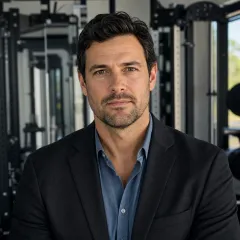
Marcus Feldman is a commercial strength-equipment analyst covering selectorized machines, plate-loaded stations, Smith machines, functional trainers, power racks, benches, barbells, dumbbells, and cable systems. He applies ISO 20957-1 and ISO 20957-2 while comparing rated loads, stability, frame deflection, pulley ratios, cable travel, adjustment increments, guarding, entrapment points, fastener retention, and fatigue cycles. His guides help gym operators, coaches, facility planners, and procurement teams evaluate biomechanics, user capacity, floor layout, maintenance access, durability, and lifecycle value.
Discuss a facility project