I Used to Buy the Cheapest Gym Machines. After 200+ Rush Orders, I've Changed My Mind
When I first started ordering gym equipment for commercial clients, I figured one machine was basically interchangeable with the next. Same pressing pattern, similar frame, similar adjustable pads. Why pay more when the spec sheet looked identical? In my first year, I made the classic rookie error: I let a low quote on a plate-loaded chest press win the project. Eight weeks after install, the guide rod bearings started grinding. Replacement parts took eleven days to arrive. After freight and a second service call, the money I'd saved was gone.
For context, I'm the procurement lead at a gym design-and-build firm. I've handled 200+ rush orders over the past nine years. Most of my work happens after someone's timeline collapses, which is exactly why I stopped buying machines the way I used to.
Here's my position: the most expensive machine in a commercial gym is the one that breaks at 6 p.m. on a Friday and can't be fixed for two weeks. I'd rather choose equipment with a documented parts channel than save money on a unit that looks great in the brochure but disappears after the sale.
The real cost of a broken machine
Commercial fitness is punishing. A floor that runs from 5 a.m. to 11 p.m., seven days a week, sees more use in a month than a home gym sees in a decade. That's why “commercial grade” should mean something specific: heavier duty cycles, replaceable wear parts, and a manufacturer who can explain how the frame is actually built. When a brand can't answer those questions, I walk away.
Rush jobs are my specialty, but I've stopped creating them. In March 2024, a client called at 4:30 p.m., 48 hours before a soft opening. A plate-loaded station had arrived with a bent frame. The discount brand couldn't cross-ship a replacement for two weeks. We found one at a dealer in another state, paid $800 for expedited freight, and installed it the morning of the opening. The alternative was explaining to investors why the strength zone looked like a storage room.
Since that delivery, our internal policy requires every major strength purchase to have a documented parts channel and a current manual. It sounds obvious, but you'd be surprised how often a cheaper product can't produce either.
Nobody calls me when a machine is running well. They call when a delivery is late, a pin won't seat, or a stack starts sticking. Those are the moments that separate a vendor from someone who's actually responsible for the building running.
Free weights aren't going anywhere. Machines are earning their space back.
I remember the shift clearly. Around 2020, a lot of designers were saying rows of machines were outdated. By 2023, many of those same designers were adding plate-loaded stations back because their floor plans didn't work without them. Commercial fitness changes faster than people expect. What looks like a new rule in one era often becomes a limitation in the next.
I still program free weights. If a client wants arm development, a dumbbell overhead triceps extension is one of the first exercises I'll write, and no machine fully replaces that movement. What I stopped doing is treating free weights and machines as either/or. On a busy commercial floor, you need both.
Take the Nautilus incline chest press, which I spec often in high-traffic facilities. The seat and chest pad adjust quickly, the fixed pressing path is easy to teach, and the plate-loaded format lets members train hard without waiting for a spotter. It isn't competing with the dumbbell rack; it's absorbing the volume that would otherwise pile up on one bench at 5:30 p.m.
Why the official website is my first stop on a rush job
When a deadline shrinks, the temptation is to call the first reseller that says “in stock.” I've learned to slow down. One of the first places I check is the Nautilus gym equipment official website. It sounds unglamorous, but that's where I find product manuals, current model specs, footprint drawings, warranty terms, and authorized service options in one place. That matters when I need an answer on a Sunday night.
During our busiest quarter last year, a client changed an approved machine a few days before delivery. Instead of waiting for a salesperson to call back, we pulled the current model spec, matched the footprint, and confirmed the change ourselves. That access doesn't just make procurement more convenient. It changes the answer from maybe to yes.
I use the same filter there that I use anywhere else. Per FTC advertising guidelines (ftc.gov), claims should be truthful and substantiated with evidence. In gym equipment, the evidence is in the manual, the parts list, and the service plan. If those aren't easy to find, the product probably isn't ready for 200 people a day.
The small gear that saves an opening
The strength floor is only part of the story. I now include audio equipment when I review facility lists because music does real work in a big, echoing gym. For turf areas and group zones, I usually recommend a rugged bluetooth speaker: it needs to survive chalk dust, drops, and the occasional water bottle, and it needs enough battery to outlast a full class schedule.
The travel version of that question comes up more often than I expected. A manager flying to a second location asks: can you take a speaker on a plane? The short answer is yes for most Bluetooth models, but pack it in carry-on rather than checked luggage because of the lithium-ion battery. Check the airline's current battery policy before you fly. That's one less emergency for the opening team.
What about budget?
I hear the objection before I finish the sentence: “Easy for you to say, but we can't spend more.” Fine. I don't think every machine in a commercial gym needs to be brand-new or top-of-the-line. My point is that procurement should start with serviceability, not sticker price. A certified refurbished unit with available parts and manuals can beat a low-cost alternative that nobody can repair next year.
The gyms I've watched succeed treat equipment as infrastructure. They buy for the busiest hour of the busiest month, not for the brochure. They care less about impressing someone on day one and more about machines that still move on day 800.
After nine years and 200+ rush orders, I've changed my mind about what smart purchasing looks like. It isn't the lowest quote or the shiniest finish. It's the machine I can identify, service, and find parts for when something goes wrong—because in commercial fitness, something will eventually go wrong.
What was best practice in 2020 may not apply in 2025. The product mix has evolved, and I've evolved with it. But the fundamentals of running a commercial floor haven't changed: downtime is the enemy, and repairability is the answer. Buy for the 6 p.m. rush, not for the sales brochure.
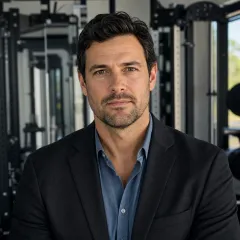
Marcus Feldman is a commercial strength-equipment analyst covering selectorized machines, plate-loaded stations, Smith machines, functional trainers, power racks, benches, barbells, dumbbells, and cable systems. He applies ISO 20957-1 and ISO 20957-2 while comparing rated loads, stability, frame deflection, pulley ratios, cable travel, adjustment increments, guarding, entrapment points, fastener retention, and fatigue cycles. His guides help gym operators, coaches, facility planners, and procurement teams evaluate biomechanics, user capacity, floor layout, maintenance access, durability, and lifecycle value.
Discuss a facility project