I Tried to Save $3,200 on Gym Equipment. Nautilus Support and a 27-Day Deadline Changed My Mind
At 7:42 a.m. on March 11, 2024, a freight truck pulled up outside the 2,400-square-foot shell I had signed a lease for eight days earlier. The driver held out a tablet. I signed. He lowered a long, heavy crate to the curb, asked if I needed any help moving it inside, and I said no.
That was the second mistake.
The first mistake happened six days before that, when I convinced myself the cheapest option was the smartest option.
Twenty-seven days to opening
I signed the lease on March 3. March 30 was our announced opening date. That gave me twenty-seven days to turn an empty commercial space into a working strength studio. I had the name, the logo, the liability insurance, the floor mats, and a growing list of people who had already paid for our first month of small-group training.
What I did not have was equipment.
I went to a local Nautilus equipment dealer first. Their quote covered what the space actually needed: a commercial rack, a proper bench, dumbbells, and a plate-loaded machine. The package came with delivery, assembly, and a warranty process that did not depend on me sending an email into a void. I remember nodding, taking the quote, and saying I would be in touch.
Should mention: the quote was not outrageous. It just was not cheap.
Then I found an online seller offering a package that looked almost identical, for $3,200 less. From the outside, saving $3,200 looked like good business. The reality is that the cheapest purchase often hides its real cost until you are standing in an empty gym with a deadline.
The weight rack for home gym I probably should have avoided
When I searched for a weight rack for home gym, I read about steel gauge, J-hook design, and weight capacity. The listing said 'heavy duty' and 'commercial grade.' I felt like I had done my homework.
The crate that arrived contained a rack that was not designed for what we were about to do with it. A home rack can handle a heavy set on a good day. A commercial rack has to handle heavy sets all day, every day, with strangers who do not always rerack the bar gently. Those are not the same product. They are not even in the same product category, but they look similar in a product photo.
The first sign of trouble came during setup. A bolt hole did not line up. Then the safety pin sat crooked. I fixed those things. The problem I noticed by day five was harder to fix: the rack moved at the top. Not a lot. Enough that I could imagine a heavy lifter catching a failed rep and feeling that wobble.
That is when I realized I had purchased a piece of equipment that would eventually injure someone. We had not even opened yet.
The exercise research tangent that did not help me buy equipment
While I waited for the delivery, I did what most trainers would do: I reviewed the exercise library I planned to coach.
If you search for incline dumbbell press muscles worked, you will find a clear answer. The incline angle shifts more of the load to the upper chest, the clavicular head of the pectoralis major. The front delts help. The triceps finish the press. It sounds simple until you are actually coaching it, because setup, grip width, and the angle of the bench all change how the muscles feel.
I also researched shoulder press vs military press. I wanted to know whether programming both was redundant. Most sources define military press as a stricter variation of the shoulder press, usually done standing with no leg drive and no leaning back. The shoulder press is the broader category. Knowing that distinction helped me plan workouts. It did nothing to help me choose between a rack built for a garage and a rack built for a facility.
That was the pattern. I was studying exercises instead of studying the equipment that would keep my clients safe. I knew the difference between an incline press and a flat press. I did not know the difference between commercial duty and home use.
The Nautilus support call that stopped the spiral
By March 16, I had a rack I did not trust, an opening date in fourteen days, and a lot of frustration. The online seller's support team was slow. I sent photos. I waited. I got generic replies. You'd think a written product description would prevent this kind of mismatch, but 'commercial grade' means almost nothing on some websites.
A colleague suggested I stop trying to repair the situation and look for a used commercial machine instead. That is how I ended up calling Nautilus support.
I called to check whether a used plate-loaded unit could fit our space and our training model. The person who answered did not treat it like a consumer complaint. He asked for the serial number, looked it up, and confirmed that the unit had been maintained. Then he emailed me the manual and told me what replacement parts would cost if we needed them down the road.
Until that call, I thought of Nautilus home gym equipment as something people put in their basements. I did not appreciate how different the commercial side is: the service network, the documentation, the willingness to answer a question from a nervous gym owner who was not even buying from them.
It changed how I evaluated every vendor after that. The equipment matters. The support behind it matters just as much.
What I actually paid for in the end
I went back to the original Nautilus dealer. The price was still $3,200 more than my online bargain. But this time I was not paying for the rack. I was paying for certainty.
The dealer gave me a written delivery window. He told me exactly which day his team would arrive, how long installation would take, and what they would do if something was damaged in transit. Did I believe every word? Not automatically. But the process felt different because there was a process.
Here is the thing about a deadline: when you have fourteen days left, 'probably' is not acceptable. The online seller probably would have sent replacement parts. Probably within two weeks. Probably after another round of photos and phone calls. Meanwhile, my opening date would pass. The rent would still be due. The people who prepaid would still show up.
That is what I was really buying. Not a slightly better rack. Not a brand name. I was buying the absence of a disaster.
Opening day and the lesson I still use
We opened on March 30, on schedule. The commercial rack did not wobble. The clients did not know about the chaos that happened two weeks earlier. I still kick myself for wasting eleven days trying to prove that a cheap quote could work in a commercial setting. If I had accepted the first quote, the extra money would have been spent anyway, and I would have saved a lot of sleepless nights.
A few things I now include in every equipment checklist:
First, ask what happens after the sale. A low price means nothing if the seller cannot answer a basic support question when something breaks. Second, understand the duty rating. If people will use it every day, buy equipment that is rated for that. Third, when a date matters, treat a written delivery guarantee as part of the product.
When people ask me about incline dumbbell press muscles worked or shoulder press vs military press, I can talk all day. Those decisions matter for programming. But the decision that almost cost me my business was not about exercise selection. It was about choosing equipment without considering what happens when the equipment fails.
These days, I pay a little more for certainty. Not because I like spending money, but because uncertainty is more expensive than any markup I have ever seen.
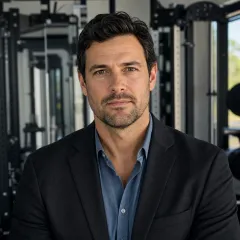
Marcus Feldman is a commercial strength-equipment analyst covering selectorized machines, plate-loaded stations, Smith machines, functional trainers, power racks, benches, barbells, dumbbells, and cable systems. He applies ISO 20957-1 and ISO 20957-2 while comparing rated loads, stability, frame deflection, pulley ratios, cable travel, adjustment increments, guarding, entrapment points, fastener retention, and fatigue cycles. His guides help gym operators, coaches, facility planners, and procurement teams evaluate biomechanics, user capacity, floor layout, maintenance access, durability, and lifecycle value.
Discuss a facility project