What Searching “Nautilus Hack Squat Starting Weight” Taught Me About Buying Gym Equipment
I’m not a trainer. I know that sounds odd for someone who spends all day talking about gym machines, but my job is procurement. I’ve managed equipment purchasing for a 42,000-square-foot fitness facility for the past seven years, and every invoice since 2018 has crossed my desk. We spend roughly $180,000 a year on equipment, so if you need a training program, you’re reading the wrong person. If you need to make an equipment budget work, keep reading.
In Q2 2024, our head strength coach sent me a two-line email: “Looking at a Nautilus hack squat. People keep asking about the starting weight.” The link underneath led to the query that’s now burned into my search history: nautilus hack squat starting weight.
It looks like a simple spec question. It isn’t. That one phrase sent me down a rabbit hole that changed how we evaluate strength equipment. Not because the answer was hard. Because the question was aimed at the wrong thing.
The question that was never about a number
Let me explain why people search that phrase. A plate-loaded machine doesn’t tell you its starting point. On a selectorized leg extension, you see the stack. You slide the pin. There’s no mystery. With a hack squat, you’re looking at an empty steel carriage that you load yourself. If you’ve never used one, you have no idea what that carriage weighs when it’s empty.
So “starting weight” is a fair thing to ask. But is the question really about kilograms? Not exactly. What they’re really asking is: Can I handle this thing before I put plates on it?
The problem? I went looking for a number and got three different answers in two days. One dealer said the empty carriage is roughly 100 pounds. Another said “around 110, maybe.” The third said, “I don’t want to guess—let me send the current spec sheet from Nautilus.” I’m not 100% sure the first two were wrong; they just didn’t care about precision. The third dealer asked a better question first: “Who is the machine for—your main floor or your heavy lifters?”
That’s when I realized the real issue.
The mistake was already on our floor
We already owned two selectorized leg machines. Both were quality units—a Nautilus leg curl and a seated leg extension. Nothing wrong with the machines. Something was wrong with their placement. During a 17-day audit in Q2 2024, I tracked usage. The seated leg extension tucked near our plate-loaded area got 21 interactions. The same model, positioned near a high-traffic circuit zone, got 58.
Same machine. Same maintenance schedule. Same price.
The expensive one wasn’t the machine with the bigger tag. It was the one collecting dust.
That stung, because I had originally argued for the tuck-away location. Sounded logical: keep the “hardcore” equipment together. In practice, it meant the people who needed that leg extension most—newer members, older adults, clients following a knee-friendly plan—never walked past it. They weren’t avoiding the exercise. They were avoiding the room.
I went back and forth for two weeks on whether to buy the plate-loaded hack squat at all. On paper, it made sense: performance athletes like it. My gut said it would make the strength room look more serious. But the data suggested something else: the machines that got used were the ones that felt visible and approachable. Not the ones that looked impressive in a sales brochure.
Part of me still wants equipment decisions to feel simple. Another part has stared at too many utilization sheets. Finance wins.
The surprise wasn’t the price difference between the two vendors we’d shortlisted. The surprise was realizing that location and perception decide return on investment just as much as build quality. To be fair, that’s common sense in retail. For some reason, gym buyers treat equipment like it’s immune to foot traffic.
The hidden cost of “cheap” quotes
I see the same pattern in vendor quotes. One bid comes in lower by $2,700. Looks like a win. Then you add freight, assembly, and the fact that our loading dock is a loading dock in name only—and the “cheap” quote is $600 higher than the one that included everything. That’s not a vendor problem. That’s a procurement process problem. We were comparing machines by unit price, not by total cost of getting them used.
Nothing about that is unique to Nautilus, by the way. We shortlisted Nautilus because the lineup covered both selectorized and plate-loaded strength in one order. That’s an advantage. But it doesn’t mean every machine in that catalog belongs in every gym.
Why was the treadmill invented? (And why it matters)
Somewhere in the middle of this, a newer trainer asked me a question out of nowhere: why was the treadmill invented? I almost laughed it off. Then I looked it up, because I was curious.
The first treadmill wasn’t a fitness machine at all. In 1818, a British civil engineer named William Cubitt invented a tread-wheel for English prisons. Prisoners spent hours stepping on it, powering grain mills or water pumps. It was punishment—hard, monotonous, and deliberately pointless. It took more than a century before doctors figured out how to use the same concept to diagnose heart problems. Cardiologist Robert Bruce built his famous treadmill protocol around it in the 1960s. Only later did the treadmill become an ordinary piece of cardio equipment.
Why do I care? Because the hardware stayed similar while the purpose changed completely. A machine isn’t good or bad on its own. It’s good for someone, for some setting, for some goal.
That’s the same lesson hiding behind the hack squat question.
What I’d tell someone buying a Nautilus hack squat
Okay, before the deeper answer, the direct one. If you’re searching for the starting weight of a Nautilus hack squat: for a plate-loaded model, the starting resistance is the weight of the unloaded carriage. Don’t hold me to a single number—spec sheets vary by generation and model—but across the units we evaluated, the carriage sat in the 100 lb / 45 kg neighborhood. The more important spec is whether you actually want that machine on your main floor.
And here’s the reason this matters: an empty carriage that heavy is a gate, not a problem. It’s perfect for a lifters-only room where clients load plates without blinking. It’s wrong for a general fitness floor where the 50-year-old new member is just trying to get through a first session without feeling embarrassed.
So my buying process now looks like this:
- Define the actual user before you define the SKU. Pull check-in data, age mix, session types. Who should be able to use this machine comfortably on day one?
- Design for visibility. If a machine isn’t visible from a main walking path, it gets skipped. This is the #1 cause of “nobody uses our new equipment” in my experience.
- Balance selectorized and plate-loaded deliberately. Selectorized pieces like a Nautilus leg curl or seated leg extension belong where most members train. Plate-loaded pieces belong where your experienced lifters train. Mixing the two is fine—mixing them in the same zone is how you intimidate the exact people you bought them for.
- Ask your vendor what not to buy. The rep who said “you don’t need that for this demographic” earned our trust. The one who agreed with everything got the courtesy of a second look, then a no.
Granted, that last one sounds odd. It shouldn’t. A vendor that sells everything can’t pretend every product fits every facility. If they do, they’re not consulting. They’re just printing invoices.
We didn’t end up with the exact order we started with. We trimmed a second plate-loaded toy our coach wanted and used the savings on a better layout, new selectorized leg equipment, and one hack squat in the high-performance corner. And that hack squat gets used by the members we intended it for. The seated extension got moved out of the intimidating zone.
The price we paid wasn’t the price tag. The real cost of any piece of equipment is measured in the people who actually use it.
That’s the one spec that matters.
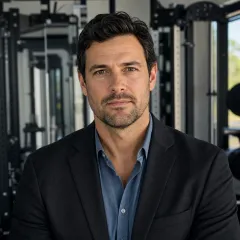
Marcus Feldman is a commercial strength-equipment analyst covering selectorized machines, plate-loaded stations, Smith machines, functional trainers, power racks, benches, barbells, dumbbells, and cable systems. He applies ISO 20957-1 and ISO 20957-2 while comparing rated loads, stability, frame deflection, pulley ratios, cable travel, adjustment increments, guarding, entrapment points, fastener retention, and fatigue cycles. His guides help gym operators, coaches, facility planners, and procurement teams evaluate biomechanics, user capacity, floor layout, maintenance access, durability, and lifecycle value.
Discuss a facility project