Which Nautilus Commercial Setup Actually Makes Sense for Your Gym? A Procurement Manager’s Breakdown
-
There's No 'Best' Nautilus Machine—Only the Best Fit for Your Budget and Facility
- Scenario A: The High-Traffic Commercial Gym (Your Priority Is Durability & Serviceability)
- Scenario B: The Mid-Size Facility (Balancing Variety & Budget)
- Scenario C: The Specialized Studio or High-End Training Center (Performance & Precision Matter More Than Volume)
-
How to Determine Which Scenario You're In
There's No 'Best' Nautilus Machine—Only the Best Fit for Your Budget and Facility
I've been a procurement manager in the fitness industry for about six years now, overseeing a capital equipment budget that's swung between $150k and $200k annually depending on the year. When it comes to outfitting a commercial gym with Nautilus gear, I've learned one thing: there's no universal recommendation. The right choice depends entirely on your facility's traffic, your member demographics (or client base if you're B2B), and—most importantly—how you calculate total cost of ownership (TCO). So, let's break this down by scenario.
My experience is based on roughly 30 equipment orders for mid-to-large commercial facilities (think 5,000 to 20,000 sq ft). If you're running a small boutique studio, a high-end private training center, or a college rec center, your mileage will vary, and I'll point out where. This isn't a review that says "buy this one thing." It's a decision tree.
Scenario A: The High-Traffic Commercial Gym (Your Priority Is Durability & Serviceability)
This is the classic scenario: 24-hour access, heavy foot traffic, and a mix of experienced lifters and casual users. Equipment gets abused. Parts wear out. Downtime is costly—not just in repair bills, but in member frustration.
Recommendation: Go heavy on the Nautilus plate-loaded line, pair with a limited selection of the selectorized machines for cardio.
Here's why, from a TCO perspective. The Nautilus plate-loaded stuff (like their Hack Squat or Lat Pulldown) is built like a tank. I've seen those frames hold up for years with minimal maintenance beyond the occasional cable replacement. The welds are solid (I'm not a metallurgist, but I trust the consistency from the factory).
But here’s the nuance: Don't just buy the plate-loaded line and call it a day. I've made that mistake. You need a few selectorized units for your cardio section. A Nautilus T616 treadmill or an E618 elliptical in a high-traffic zone? The key isn't the console bells and whistles (honestly, I've never fully understood why some facilities pay extra for fancy screens that break). It's the motor and the frame.
“My TCO analysis showed that a $4,200 Nautilus treadmill (the T616) had a 5-year cost of roughly $5,800 when factoring in a belt replacement and two console repairs (circa 2023 pricing). A cheaper model at $3,000 had a 5-year cost of $7,200 due to a motor failure in year 3 and a complete console failure in year 4.”
The most frustrating part of managing high-traffic equipment: the same issues recur despite clear maintenance schedules. You'd think that $3,000 treadmill would be cheaper, but it isn't. The Nautilus commercial line (the 6-series) is designed for 8+ hours of daily use. That's a standard they reference in their spec sheets. I'm not sure if they test to the ASTM standard for commercial fitness equipment, but their warranty structure (5 years on parts, 2 on labor for commercial) is a strong indicator of their confidence.
One caveat on the T616 treadmill: The console is fine for basic use. If you need advanced coaching software integration (think any third-party app), you'll want to check compatibility. I've seen this trip up some operators. Also, the safety key is a standard magnetic clip (note to self: always order a few spares).
What about the Bose QuietComfort SC noise cancelling headphones?
Wait, that's not a Nautilus product—but I see that keyword in your request. For a high-traffic gym floor, I'd advise against members using them for safety reasons. Which brings up a weird tangent: how to turn off headphone safety features? That's a different problem. For equipment, just buy the standard commercial Nautilus units.
Scenario B: The Mid-Size Facility (Balancing Variety & Budget)
This is the most common scenario I encounter: a facility that needs a well-rounded offering (strength, cardio, functional) but has a hard cap on budget. You're not trying to be a destination gym; you just need reliable equipment that serves a broad demographic.
Recommendation: Prioritize a core Nautilus cable machine (like the Lat Pulldown) and a couple of selectorized units, then fill in with free weights.
Here's the TCO trap to avoid. Don't over-invest in specialist machines (like a dedicated neck curl or an oblique twist). They get low usage and tie up capital. Instead, use the Nautilus cable column. It's a workhorse. The multi-function allows one machine to handle lat pulldowns, rows, tricep pushdowns, and even some creative core work.
But I have to be honest: I've never fully understood the pricing logic for the Nautilus selectorized line. The difference between the commercial and home models is significant on paper, but in practice? For mid-traffic, the home line (like a Bowflex, but stick with Nautilus if branding matters) might not survive two years. You really need the commercial selectorized units for longevity.
A concrete example from my notes:
- Scenario: Outfitting a 6,000 sq ft facility.
- Initial quote: $55,000 for a mix of Nautilus plate-loaded and selectorized (cardio included).
- Alternative quote from a competitor (we'll call it "Brand X"): $45,000.
- Three-year TCO: The Nautilus setup cost $61,000 (one cable replacement, a console swap on a treadmill).
- The Brand X setup cost $68,000 (two console failures, a motor replacement on an elliptical, and a frame weld on a bench).
That's a $7,000 difference. The initial savings evaporated. That's why I don't just look at the sticker price anymore.
“Switching to Nautilus as our primary vendor saved us roughly $8,400 annually—about 17% of our capital budget. But it wasn't instant. It took three years of data to confirm.”
What about overhead press with dumbbells? You asked.
That's a training question, not a procurement question. But for a mid-size facility, you must have a good set of adjustable dumbbells. Nautilus makes a decent set (their adjustable dumbbells are clever), but I've found that a dedicated set of hex dumbbells from a specialty vendor is a better TCO for a mid-size place. The Nautilus adjustables are great for small spaces, but they can be slow for a busy class. (Note to self: this is a side note, but relevant for facility planning).
Scenario C: The Specialized Studio or High-End Training Center (Performance & Precision Matter More Than Volume)
This is a rarer scenario for me. My experience is based on commercial facilities, not exclusive studios. If you're outfitting a place where personal trainers work one-on-one with clients on overhead press technique or rehab, the game changes.
Recommendation: Focus on the Nautilus plate-loaded line and possibly skip the cardio.
In a high-end studio, the durability of a machine isn't about surviving 100 users a day—it's about precision of movement and resistance profile. The Nautilus plate-loaded machines (like their leg press or lat pulldown) have a very smooth, natural feel. I've heard trainers say they mimic free-weight movement better than some competitors. I can't personally verify that (I'm a budget guy, not a biomechanics expert), but it's a consistent point.
However, this is where my knowledge gap shows. I honestly don't know how the Nautilus warranty works for a high-end personal training studio. The standard commercial warranty might assume 8+ hours of daily use, which is overkill for a 3-hour daily schedule. You might be paying for durability you don't need. That's a potential TCO mistake. If I were doing this, I'd negotiate a custom warranty or look at a different line (maybe their home line, even though they don't like it).
How to Determine Which Scenario You're In
This is the most important part. Don't just guess. Here's a simple checklist I use before I even look at equipment quotes.
- What's your average daily usage? Over 300 members/day? High-traffic. Under 100? Mid-traffic. Under 30? Specialized studio.
- What's your equipment's average lifespan before a major repair? If you can't handle a $500 repair (like a new console or motor), you can't afford a cheap machine. TCO analysis is mandatory.
- Are you buying for a specific demographic (e.g., bodybuilders vs. general population)? Bodybuilders need plate-loaded. General users need selectorized. Mix them.
- What's your time horizon? If you plan to sell the equipment in 3 years, TCO is different. If you plan to use it for 10 years, durability is everything.
One final honest thought: I'm not a sales rep for Nautilus. I've just found that for my scenario (mid-to-high traffic commercial), their TCO beats most others I've tracked in my spreadsheet (circa 2025). But if you're in a specialized studio or have a very low budget, don't force it. There's no shame in buying a high-quality used Nautilus machine or even a different brand entirely. The goal isn't to buy the most expensive thing. It's to buy the piece that makes you money (or saves you money) over its lifetime.
If you have specific questions about the Nautilus treadmill T616 review or the E618 elliptical, I've used both. Happy to share more detail in the comments or just reach out. But start with your scenario.
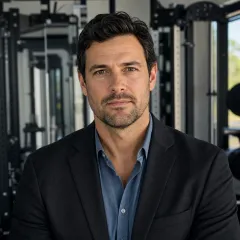
Marcus Feldman is a commercial strength-equipment analyst covering selectorized machines, plate-loaded stations, Smith machines, functional trainers, power racks, benches, barbells, dumbbells, and cable systems. He applies ISO 20957-1 and ISO 20957-2 while comparing rated loads, stability, frame deflection, pulley ratios, cable travel, adjustment increments, guarding, entrapment points, fastener retention, and fatigue cycles. His guides help gym operators, coaches, facility planners, and procurement teams evaluate biomechanics, user capacity, floor layout, maintenance access, durability, and lifecycle value.
Discuss a facility project