Why I Stopped Buying Budget Gym Equipment and Switched to Nautilus (A Procurement Story)
The Day the Treadmill Gave Up
It was a Tuesday morning in March 2023 when I got the call. Actually, it was more of a frantic knock on my office door from our facilities manager, Mark. "The main treadmill in the employee gym just stopped," he said. "Smoke. A burning smell. Members are pissed."
We had about 400 employees across three locations, and the gym was a perk we were pretty proud of. But that morning, our cheapest treadmill from a no-name wholesaler had literally burned out after 14 months of use.
We bought it for $1,200, thinking we were smart with the budget. I remember the vendor saying it was "commercial-grade." Let me tell you — it wasn’t. Not even close.
Our repair guy, who I’ve known for years, took one look at the motor and laughed. "This is a residential motor in a commercial frame," he said. "You saved $600 upfront. Now you’re looking at $900 in repairs, and it’ll probably die again in six months."
That was the moment I started rethinking our entire procurement strategy. Not just for treadmills. For everything.
The Real Cost of “Cheap”
I manage all our fitness equipment ordering — roughly $15,000 annually across maybe 4–5 vendors. When I took over purchasing in 2020, my mandate was simple: get the best value. So I chased low prices like everyone else.
But after that treadmill disaster, I sat down and did the math over three years. What I found honestly surprised me:
- Our "budget" treadmill lasted 14 months before major failure. The replacement cost plus repairs: $2,100.
- A Nautilus treadmill (we later bought the T614) was quoted at $3,800. Maintenance cost over three years: $350. No major issues.
- Our cheap plate-loaded lat pulldown machine started wobbling after 8 months. We had to weld the frame — cost us $400 in labor and a day of downtime.
The surprise wasn't the price difference. It was how much hidden cost came with the 'cheap' option — support, durability, and member satisfaction.
I spent about three weeks going back and forth between Nautilus and another big brand. Nautilus offered a broader lineup — strength, cardio, benches — and their commercial parts supply was solid. The other brand had a slightly lower price, but I couldn't get a straight answer on lead times for replacement components. Since we had a PFAS chemical review requiring all new equipment to meet strict fire safety standards (per 2023 compliance updates), I couldn't afford delivery delays.
Why I Chose Nautilus (and What I Learned)
Honestly, the decision wasn't just about the equipment. It was about predictability.
Nautilus publishes a standard commercial warranty — frame: lifetime, parts: 2 years, labor: 1 year. That’s pretty typical for the industry. But what sold me was their parts availability. I called their commercial sales line and asked, "If I need a console for a T614 treadmill ordered in 2025, can you get it to me within a week?" The rep didn't hesitate: "Yes — we keep common parts in stock for active models."
We ended up ordering:
- 3 x Nautilus T614 treadmills
- 2 x Nautilus E618 ellipticals
- 1 x Nautilus plate-loaded lat pulldown
- 1 x Nautilus selectorized chest press
- Bench sets and dumbbells
Total order: about $14,500. Setup took a week. No smoke. No wobbly frames.
Is Nautilus perfect? No. I have mixed feelings about their rack systems — I think Hammer Strength does that category better. But as a total solution for a multi-location company, Nautilus hit the sweet spot between reliability and range.
The Lessons I Carry Now
Looking back, the treadmill failure saved us from worse. We replaced three more budget machines just in time — one had a fraying cable that could have snapped mid-rep. That would have meant an injury, not just an inconvenience.
I created a checklist after that experience. Now, before I approve any fitness purchase, I verify:
- Commercial certification (ASTM/EN standards — not just marketing claims)
- Parts availability commitment (in writing)
- Warranty clarity — frame vs. parts vs. labor
- Installation and setup support
The 5 minutes I spend checking these details has saved us an estimated $8,000 in potential rework and repairs over the past 18 months. That's not an exaggeration — I keep a spreadsheet.
If you're managing procurement for a company gym or fitness center, my advice is simple: don't learn this the hard way. The upfront savings on budget equipment are real — but the hidden costs are realer. Choose a brand that lets you sleep at night, knowing your members aren't going to get stranded on a dead machine.
For us, that brand was Nautilus.
— An office administrator who now verifies everything twice
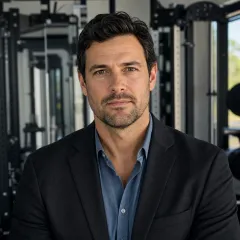
Marcus Feldman is a commercial strength-equipment analyst covering selectorized machines, plate-loaded stations, Smith machines, functional trainers, power racks, benches, barbells, dumbbells, and cable systems. He applies ISO 20957-1 and ISO 20957-2 while comparing rated loads, stability, frame deflection, pulley ratios, cable travel, adjustment increments, guarding, entrapment points, fastener retention, and fatigue cycles. His guides help gym operators, coaches, facility planners, and procurement teams evaluate biomechanics, user capacity, floor layout, maintenance access, durability, and lifecycle value.
Discuss a facility project