Why I Won't Buy Another Leg Press Without Checking the Starting Weight First
Why I Won't Buy Another Leg Press Without Checking the Starting Weight First
I manage equipment purchasing for a 400-person company across three locations. When I took over in 2020, I thought I knew enough about fitness gear to get by. I was wrong.
In my experience, the single biggest mistake commercial buyers make isn't picking the wrong brand—it's not verifying the details that matter to your actual users before you sign the PO. And the one I see most often? Ignoring starting weights and power requirements on supposedly 'standard' equipment.
Let me explain.
My Trigger: The $4,000 Leg Press That Nobody Used
In early 2023, I ordered a Nautilus plate-loaded leg press for our main gym. Everything checked out—durable frame, commercial bearings, decent price. What I didn't verify was the starting weight. Turns out, that model's starting resistance was 135 lbs. For a gym full of people who primarily do bodyweight and light dumbbell work, that was a non-starter. The machine sat idle for six months before I sold it at a loss.
Everything I'd read about selecting strength equipment said 'focus on durability and adjustability.' Nobody mentioned that if the baseline is too high for your population, durability doesn't matter. The conventional wisdom is to trust the spec sheet. In practice, I found that specs are meaningless if they don't match your actual user base.
Three Details That Changed My Approach
After that mistake—and a few others I'll get to—I developed a pre-purchase checklist that has saved us roughly $8,000 in potential rework. Here are the three most important items:
1. Starting weight is not a trivial spec.
It's tempting to think that a leg press is a leg press. But the difference between a model starting at 70 lbs and one starting at 135 lbs is the difference between a machine that gets used and one that collects dust. For reference, a Nautilus leg press like the Nitro model starts around 80 lbs (based on publicly available specs, January 2025; verify current models). That's usable for most beginners. The heavier plate-loaded versions? Not so much. Check the starting weight against the average strength level of your members.
2. Self-powered treadmills are not a shortcut.
Our facilities manager was dead set on a self-powered treadmill for a satellite office. 'No electrical work needed,' he said. 'Plug-and-play.' What he didn't realize is that self-powered treadmills require a minimum user weight to operate consistently—typically around 100-120 lbs—and they produce inconsistent resistance at lower speeds. A standard treadmill with a dedicated circuit costs about $300-500 to install (based on quotes from three electricians, January 2025) but provides a predictable experience for everyone. The Nautilus T614, for example, is a motorized commercial model that doesn't suffer from these issues. The 'small upfront savings' from skipping electrical work often turns into a constant stream of member complaints.
3. 'Universal' equipment isn't universal for your population.
I don't mean adjustability. I mean base specs like seat height range, handle placement, and cable travel. A cable crossover that's perfect for tall users might be unusable for someone under 5'4". We learned this when we bought a 'commercial-grade' cable tower and our shortest employee couldn't reach the lowest pulley. The solution was a Nautilus selectorized model with a wider adjustment range—but only after eating the return shipping. Test-fit before you buy, or at minimum, get the adjustability specs from the manufacturer and compare to your user height percentiles.
Why I Think Buyers Get This Wrong
There's a misconception in procurement that premium equipment is inherently 'better' for everyone. It's tempting to think that a heavier, more durable machine is always the right choice. But that advice ignores the nuance of who's actually using it. A machine that's too heavy to start is a machine that's not durable—it's just idle.
In my experience, the 'buy once, cry once' mentality applies to quality, not specs. Spend more on metal and bearings. Don't spend more on resistance ranges your members can't use.
How I'd Do It Differently Now
If I were starting my purchasing role today, here's my process:
- For strength equipment: Get the minimum starting weight for every plate-loaded and selectorized machine. Compare it to the average strength level of your top 20% of users (or your staff). If there's a gap, find a different model.
- For cardio: Self-powered or motorized depends on your power infrastructure and user profile. If you have a reliable circuit and average users over 120 lbs, motorized is safer. Self-powered is for specific niches (outdoor, no-electricity locations) and should never be a default choice.
- For cable systems: Measure the vertical range of the handles. If it doesn't cover at least 80% of your user height range, keep looking.
Five minutes of verification beats five days of correction. The 12-point checklist I created after my third mistake—the one that includes starting weights, power requirements, and adjustability ranges—has saved us an estimated $8,000 in potential rework. That's not an exaggeration. One wrong leg press cost us sale price minus used-equipment resale plus shipping. Two wrong cable towers cost us return freight and a pissed-off employee who waited three months for functional equipment.
The Dissenting View
I know what some of you are thinking: 'But my members are advanced. They want heavy starting weights.' That's fair. If you run a strength-focused facility with experienced lifters, a 135-lb starting weight leg press is probably fine. But the problem is assuming that's the default. Most commercial gyms—and definitely corporate fitness centers—have a mix of users. Catering to the top 10% while alienating the middle 50% is not a winning strategy.
Another objection: 'We can just add a sign advising users to start lighter.' That's impractical on a plate-loaded machine where the carriage itself weighs a certain amount. You can't 'adjust' the starting resistance on most plate-loaded leg presses without adding plates—which is backward. The machine should work for the user, not the other way around.
A Final Thought
I'm not saying Nautilus or any other brand is perfect. But I've found that their spec sheets are generally accurate and their commercial models offer a good range of adjustability—whether it's the plate-loaded line for serious lifters or the selectorized line for general fitness. The key is matching the specific model to your population, not assuming one SKU fits all.
If there's one thing I want you to take away from this, it's that the cheap lesson is the one you learn from other people's mistakes. The expensive lesson is the one you learn from your own. I've paid for the expensive lesson. You don't have to.
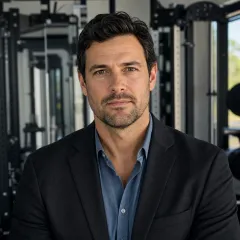
Marcus Feldman is a commercial strength-equipment analyst covering selectorized machines, plate-loaded stations, Smith machines, functional trainers, power racks, benches, barbells, dumbbells, and cable systems. He applies ISO 20957-1 and ISO 20957-2 while comparing rated loads, stability, frame deflection, pulley ratios, cable travel, adjustment increments, guarding, entrapment points, fastener retention, and fatigue cycles. His guides help gym operators, coaches, facility planners, and procurement teams evaluate biomechanics, user capacity, floor layout, maintenance access, durability, and lifecycle value.
Discuss a facility project