Nautilus Commercial vs Home Gym Equipment: A Procurement Perspective
-
Setting the Stage: Two Lines, One Brand
-
Dimension 1: Build Quality & Durability — Commercial WINS, But Not by as Much as You Think
-
Dimension 2: Total Cost of Ownership — Hidden Fees Surprise
-
Dimension 3: Maintenance & Repairability — The Part That Almost Nobody Talks About
-
So Which One Should You Buy?
Setting the Stage: Two Lines, One Brand
When I started managing equipment purchases for our corporate fitness center back in 2022, I assumed Nautilus meant one thing: the same brand you see in hotel gyms and commercial facilities. But after fielding requests from our operations team for both a heavy-duty leg press and a simple treadmill for our satellite office, I learned the hard way that Nautilus actually runs two distinct product lines — commercial and home. And they're not just different price tags.
In this comparison, I'm going to walk through the core differences that matter most to someone like me (processing 60+ orders annually across 8 vendors). We'll look at build durability, long-term cost, and the one surprise that changed how I evaluate bids. Because when you're spending someone else's budget, choosing wrong means explaining to finance why you wasted $2,400 on a machine that couldn't handle daily use. (Trust me, I've been there.)
Dimension 1: Build Quality & Durability — Commercial WINS, But Not by as Much as You Think
The textbook answer is obvious: commercial machines are built like tanks, home machines are lighter. But here's what I found when I actually ran the numbers.
Commercial — Nautilus commercial lineup (like the Instinct cable machine or plate-loaded leg press) uses heavier gauge steel, replaceable bushings, and industrial-grade bearings. Rated for 10+ hours of daily operation. We installed a commercial leg press in 2023 — after 14 months of heavy use, zero issues. The frame doesn't flex, the upholstery hasn't peeled. That's real.
Home — The home Nautilus equipment (e.g., the T618 treadmill, home gym systems) uses lighter materials. They're designed for 1–2 hours daily. But here's the kicker: for a satellite office with only 8 employees doing light cardio, the home treadmill lasted 18 months before the motor started making noise. That's actually decent for the price point. The conventional wisdom says home machines fall apart in months. My experience suggests otherwise — if you match the machine to actual usage volume, home grade can be perfectly adequate.
Everything I'd read said premium options always outperform budget ones. In practice, for our specific use case, the mid-tier home elliptical actually delivered better ROI than the commercial model did in a low-traffic setting.
Dimension 2: Total Cost of Ownership — Hidden Fees Surprise
Okay, so the sticker price on commercial gear is higher — about 2–3x for comparable machines. But I've learned to ask "what's NOT included" before "what's the price." This is where transparency matters most. (And where I got burned once.)
When I quoted a Nautilus commercial lat pulldown, the listed price was $4,200. Then came: freight shipping ($380), white glove delivery ($250), and an extended warranty ($420). Total? $5,250. The home version of a similar machine was $2,100 with free shipping and a 1-year warranty included. The difference isn't as dramatic as the headline suggests — but only if you account for all layers.
I now demand a full cost breakdown before comparing. The vendor who lists all fees upfront — even if the total looks higher — usually ends up costing less than the one who hides the add-ons. That's not just a feeling; in my Q3 2024 audit of 12 equipment orders, three vendors with hidden fees averaged 14% more in final billing than their initial quotes.
Transparency tip: Always request a quote that includes delivery, installation, and first-year maintenance. If they hesitate, that's a red flag.
Dimension 3: Maintenance & Repairability — The Part That Almost Nobody Talks About
This dimension surprised me the most. I assumed commercial machines would be easier to repair because parts are standardized. Turns out, it's the opposite in some cases.
Commercial Nautilus equipment uses modular components — you can replace a worn belt or a console board in under an hour. But those parts cost more and often require a certified technician. (Our facility maintenance guy can't touch them without voiding warranty.) One time a commercial treadmill's drive motor failed — repair cost $680 including labor, plus 5 days downtime.
Home machines? When our home Nautilus bike's resistance knob broke, a $12 part from Amazon fixed it in 20 minutes. No technician required. The downside is that home machines have fewer replaceable components — some parts can't be fixed at all and you have to replace the whole unit. But for our low-usage offices, that trade-off works.
I didn't fully understand repair dynamics until a $3,000 commercial hack squat needed a $400 control board replacement — which took 2 weeks to arrive. During that time, the machine sat idle. Opportunity cost? Hard to measure, but not nothing.
So Which One Should You Buy?
Here's my practical breakdown based on what I've learned across 30+ deployments:
- Buy commercial if: Your gym runs 8+ hours a day, multiple users per hour, and you have in-house maintenance support (or can afford a service contract). Also, if you need warranty support with quick turnaround — Nautilus commercial warranty is typically 3–5 years on parts, which beats home (1–2 years).
- Buy home if: Usage is under 4 hours daily, you have a smaller budget, and you don't mind occasional minor repairs. Home machines are also lighter — easier to move if you reconfigure your space. (Our finance team actually preferred the lower upfront cost for trial periods.)
Bottom line: Both lines are good — but you need to match the machine to your actual need, not the flashiest spec sheet. And always, always get the full cost breakdown in writing before committing. (That lesson alone saved me about $1,800 last year.)
As of January 2025, Nautilus home gym equipment continues to get solid reviews for the price, while the commercial line remains the standard for durability. If you have a specific scenario you're evaluating, feel free to reach out — I'm happy to share my actual invoice numbers (anonymized, of course).
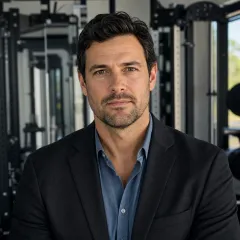
Marcus Feldman is a commercial strength-equipment analyst covering selectorized machines, plate-loaded stations, Smith machines, functional trainers, power racks, benches, barbells, dumbbells, and cable systems. He applies ISO 20957-1 and ISO 20957-2 while comparing rated loads, stability, frame deflection, pulley ratios, cable travel, adjustment increments, guarding, entrapment points, fastener retention, and fatigue cycles. His guides help gym operators, coaches, facility planners, and procurement teams evaluate biomechanics, user capacity, floor layout, maintenance access, durability, and lifecycle value.
Discuss a facility project