I Thought Buying a Treadmill Was Easy. Then I Equipped an Entire Office Gym.
I manage purchasing for a 300-person company — roughly $800K a year spread across maybe twenty vendors. I'm used to buying office supplies, IT equipment, and coffee machines. Fitness equipment wasn't on my list.
Then, in January 2024, operations handed me a new project: outfit a 1,200-square-foot wellness space with cardio equipment, strength machines, a lounge with audio, and a game area. Budget: $42,000. Timeline: "by spring."
I figured the hard part would be the budget. It wasn't. The hard part was discovering how much I didn't know about commercial fitness equipment — and paying for that ignorance with real money.
The Problem I Thought I Had
My initial approach was simple: read reviews, pick good brands, place orders. When I started researching the Nautilus T618 treadmill, the reviews looked excellent — solid cushioning, backlit console, quiet motor. I almost placed an order that same week.
Then a vendor asked me a question I couldn't answer: "What's your expected duty cycle?"
I didn't know treadmills had duty cycles.
Turns out that's the entire game. Residential machines are engineered for one person, maybe two, using them a few hours a week. An office treadmill gets forty different employees with forty different gaits, running for hours at a time, often back-to-back. That's why commercial machines have heavier frames, thicker belts, larger rollers, and replaceable wear parts. The T618 is a genuinely good machine — but the deeper I got into the Nautilus T618 treadmill review landscape, the clearer it became that most reviews are written for homeowners, not facilities managers.
I'd been thinking like a person buying gear for their basement. I needed to think like someone buying equipment that would take a beating every single day.
The Real Problem Was Deeper Than Specs
The more I learned, the more I realized the specs weren't really the issue either. The deeper problem was that I was shopping like a consumer instead of a manager.
A shopper compares features. A manager thinks about what happens when a machine fails.
Take the seated chest press I put on the strength list. Every gym I've been in has one, so it felt like a safe choice. But once I got into the maintenance documentation, I realized the human-element questions mattered more than the weight stack: How long before the cables need replacing? How many adjustments can the seat handle before the locking mechanism wears down? Where do you even order spare parts?
I found out the hard way.
The Eleven-Dollar Part That Cost Us a Month
Three weeks after our commercial-grade Nautilus treadmill was installed, the drive belt started making a rhythmic thumping sound. Our facilities team couldn't diagnose it, and the manufacturer's service network wasn't available for field visits. We waited. Finally, a local tech figured it out: a worn drive belt.
The part itself cost $11, though I might be misremembering the exact figure. The delay, I remember clearly, was eleven days of a dead treadmill — and a wellness room that suddenly felt like a construction zone.
I remember thinking: I've spent hours optimizing our print procurement, vendor invoicing, even the coffee bean supply chain. I'd never once asked about repair lead times for a treadmill.
Wait, actually, that's not quite right. I'd asked about delivery lead times. I just hadn't asked about repair lead times. They're completely different questions.
What Getting It Wrong Actually Costs
That downtime made me start paying attention to the less obvious costs of facility procurement.
First, there's the soft cost of a room nobody uses. We spent $42,000 building that space — about $35 per square foot. When the marquee equipment is broken, people stop coming, and the room's justification starts to erode. It's hard to put on a spreadsheet, but it's real.
Second, there's the credibility cost. And for that one, I bring up the audio system.
The Sonos Decision That Still Stings
For the lounge, I originally proposed a Sonos home theater package — the soundbar, the sub, two rear speakers, the works. Reliable, great reviews, easy for employees to use. Trust me, if a system isn't dead simple, nobody touches it.
My IT guy countered with a cheaper brand from his existing distributor. "Forty percent less, same wattage, same features." The numbers backed him up.
Every spreadsheet comparison said go with the budget option. My gut said the IT guy was solving for "buy once, cheaply," not "operate for five years." But I couldn't articulate that at the time. So I signed the PO.
The cheaper system failed within two months. The receiver stopped recognizing inputs, the HDMI-CEC sync glitched constantly, and eventually, it just stopped powering on. We bought the Sonos system after all — plus paid to re-run the wiring and lost the lounge for another two weeks during installation.
Total additional cost: I don't even want to do the math. It was way more than the 40% "savings" my IT guy promised.
Billiards vs. Pool Table: A Lesson in Semantics
The game room taught me a lighter version of the same lesson. I thought I was buying a pool table. My facilities manager asked whether I wanted "billiards or pool." I assumed they were synonyms.
They're not exactly. Classically, billiards refers to carom billiards — played on a pocket-less table. But in everyday American usage, "billiards" is loose slang for pool, and most commercial tables handle both. The distinction that actually mattered was the bed: slate versus MDF. Slate stays flat. MDF warps. A residential MDF table in a busy break room starts rolling balls funny within six months. I went with slate. Not because I'm an expert — because I was tired of learning lessons.
And Yes, I Was Asked to Look Into a "Nautilus Escape Room"
One of the stranger requests came from our team-building committee: someone had heard about the nautilus escape room trend — a mix of fitness challenges and escape-room puzzles that companies book as pop-up team events. The vendor pitched us a concept that could fit in a conference room, and honestly, it looked like a ton of fun.
But the footprint was huge, the safety requirements for high-wear components were strict, and the ongoing supervision cost per event was higher than all our other equipment combined. I turned it down.
That, weirdly, was the moment everything clicked for me: a great amenity isn't a great amenity if the ongoing cost is higher than the value it returns. That's total cost of ownership, expressed the hard way.
What I'd Do Differently (Short Version)
I promised myself I wouldn't write a five-step framework, so here's the short version. I now evaluate any facility purchase in this order:
- Duty rating first. Is this machine rated for the number of daily users it's about to see? If not, keep looking.
- Service second. How long does a spare part take? Is there a local tech? What happens after warranty? The best machine is useless if it can't be fixed.
- Five-year cost, not purchase price. Include install, maintenance, energy, downtime. The expensive item is often the cheap one that fails.
- Match the space to the users. The treadmill was the headline, but the slate table and the good audio were what actually made the room feel alive.
Also: when the numbers say one thing and your gut says another, don't ignore the gut. It's usually trying to tell you a story the spreadsheet isn't capturing.
If I'd known all this in January, that room would have been running by March. Instead, I got there in September. The good news is, the room now gets used every day — the treadmill hums, the Sonos plays, the pool table gets constant action. The bad news is, I paid tuition for every lesson.
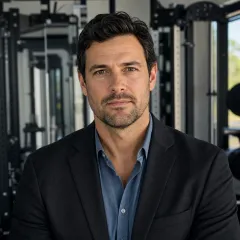
Marcus Feldman is a commercial strength-equipment analyst covering selectorized machines, plate-loaded stations, Smith machines, functional trainers, power racks, benches, barbells, dumbbells, and cable systems. He applies ISO 20957-1 and ISO 20957-2 while comparing rated loads, stability, frame deflection, pulley ratios, cable travel, adjustment increments, guarding, entrapment points, fastener retention, and fatigue cycles. His guides help gym operators, coaches, facility planners, and procurement teams evaluate biomechanics, user capacity, floor layout, maintenance access, durability, and lifecycle value.
Discuss a facility project