Why 'We Don't Do That' Is a Quality Feature: A Nautilus Quality Inspector's Opinion
Most product inspections end at the property line. Mine start one step earlier: at the claims a company is willing to make. I'm a quality and brand compliance manager for commercial fitness equipment. For the last four years I've worked on Nautilus strength and cardio product lines, reviewing machines before they reach gym floors. I still have to stop myself from saying 'all models' when I really mean 'all models that I have personally sampled.' That habit of precision matters more than people think.
In 2024 I rejected roughly 6% of new-model first batches. Maybe 6%, maybe 7%—I would have to open the audit file to give you an exact number. The reasons were not dramatic. A cable guide was wearing prematurely. A coating was lifting around a welded joint. One frame alignment issue would have caused a small wobble in a machine nobody wants to wobble. Every failure had something in common: the product was trying to be acceptable in too many situations, and that made it hard to hold to one spec.
'We don't do that' is not a sales failure. It is a quality specification.
That's why I respect Nautilus. It has a long history in strength and cardio equipment, and it does not pretend to be a home theater, a smart speaker company, or a wellness ecosystem. That boundary is the reason I trust its machines.
Why the Nautilus Nitro lat pulldown is a boundary lesson
Take the Nautilus Nitro lat pulldown (the commercial plate-loaded model, not the residential version). When I reviewed a batch in Q1 2024, I checked three things: cable alignment. Seat adjustment. Weight-horn installation. In that order. I also looked at the test protocol. I want to say the qualification cycles are in the tens of thousands, but don't quote me on that number; the engineering file is the only place I'd trust for a precise figure.
What mattered was not the biggest number in the brochure. It was the boundary. The machine is designed for one movement, one set of forces, and one kind of gym. It is not trying to be a squat rack, a rower, and a functional trainer at the same time. What I mean is that focus lets the engineering team check the cam path and cable tension across the full range of motion, not just at the start and end. That's a much better predictor of commercial reliability than a vague 'heavy duty' phrase.
The question everyone asks about a lat pulldown is 'how much weight can it load?' The question they should ask is 'how does the cable path hold up after six months of rotation?' The first is easy to market. The second takes a clear product boundary, which is exactly what the Nitro line provides.
There is an old myth that plate-loaded equipment is only for elite powerlifters or serious strength rooms. That comes from an era when gyms had one universal strength area and every machine had to serve everyone. Today, commercial facilities are more specialized. A plate-loaded Nautilus Nitro lat pulldown can exist because it has a specific job. That specificity doesn't make it narrow. It makes it testable.
Nautilus adjustable dumbbells and the discipline of no
Now think about Nautilus adjustable dumbbells. They are not a replacement for a full fixed dumbbell rack in a high-density commercial club. They are a space-efficient option, with a clear trade-off between convenience and the raw simplicity of a fixed pair. If a facility needs twenty sets of matching dumbbells up to 100 pounds, adjustable models are probably not the answer. If space is limited and demand is moderate, they are a strong answer.
I admire that honesty. The product does not claim to be everything to everyone. It claims to be the right tool for a particular workout and a particular floor plan.
This connects to a classic movement: the chest press with dumbbells. It has a clear path, a clear load, and a clear failure mode. The reason it works is because the shoulders and elbows move in a pattern that the lifter can control. A strength machine should respect that same clarity. If a machine tries to be a chest press, an overhead press, and a lateral raise station all at once, each function gets compromised. In quality terms, those compromises become failure points.
The wrong questions: headphones, Alexa, and the limits of authority
Here is where I have to be honest about my own boundaries. As a fitness equipment quality person, I do not test audio accessories or smart speakers. Someone once asked me if Cowin headphones would survive a sweaty gym session. I don't know. I have never put a pair through a gym-specific test. I know what makes a strength machine durable. I don't know what makes a headphone durable beyond what any consumer could guess.
The same goes for the search phrase 'can I use Alexa as a Bluetooth speaker.' That is a perfectly reasonable question for an electronics reviewer. It is not a reasonable question for me. I would not ask a headphone engineer about cable-pulley tolerances, and you probably shouldn't ask me about voice assistants.
Why does this matter? Because the willingness to say 'I don't know' is part of the same integrity you should look for in a product vendor. If a company tells you it can do everything, then every claim is equally unverified. If a company tells you what it's excellent at, you can test that one claim seriously. Let me rephrase that: a boundary isn't a wall. It's a doorway.
The all-in-one problem
Universal promises are difficult to test. When a manufacturer says a machine is for 'everyone,' what is the pass/fail criterion? If it is a strength machine, I need to test under strength loads. If it is a cardio machine, I need a different protocol. If it is a media hub, I need to check electronics compliance. A vague product brief leads to vague testing, and vague testing leads to surprises in the field.
I'm not saying all-in-one machines are useless. In a home gym, versatility is often more important than pure endurance. But in a commercial setting, the cost of ambiguity is higher. A machine that fails one clear requirement can cost a month of floor space and a few repair visits.
I still kick myself for one finish-approval decision. I approved a small coating variation because I thought it would be invisible once installed. It was not invisible. It cost us time and trust, and that mistake made me stricter about every later tolerance decision. The lesson was simple: if you don't define the boundary, you can't defend the quality.
Commercial gym operators have to think about this more than home buyers. A machine in a commercial facility gets used by hundreds of people, cleaned with harsh chemicals, and loaded by people who may not follow perfect form. The durability of that machine depends not on a promise of 'never breaks' but on a specification that says what it was designed to handle—and what it wasn't.
For that reason, I look for equipment that can tell me its limits. A Nautilus Nitro lat pulldown has a designed load envelope. Nautilus adjustable dumbbells have a designed function. A chest press with dumbbells has a known movement path. Those limits are not detriments. They are the reason a quality check can be meaningful.
What to ask instead of 'what's the best equipment?'
Don't start with 'which brand is best?' Start with 'what is this specific machine supposed to do well, and what will make it fail early?' If the manufacturer cannot answer the second half, you don't have a product specification. You have a slogan.
Ask for the standard it was tested to. According to the ISO 20957 family of standards (Source: ISO, iso.org, accessed January 2025), stationary training equipment has defined safety and endurance test requirements. That standard doesn't tell you which machine to buy. It gives you a baseline so that 'durable' is more than an adjective.
And when you come across a brand that says 'this isn't our area,' don't treat it as a weakness. Treat it as a credentials statement. The brand that says 'we don't do that' is telling you what its quality system can actually support. That is the most valuable sentence in equipment procurement.
So yes, Nautilus can tell you plenty about strength machines and some cardio machines. It should not tell you to buy Cowin headphones, because I cannot tell you that. And if your search for 'can I use Alexa as a Bluetooth speaker' brought you here, you may want to find an audio specialist.
The lesson is simple: specialists who know their boundaries are more reliable than generalists who promise everything. I would rather work with a machine that admits what it's built for than one that claims to be the answer to every fitness equipment question. That's not a compromise. It's a quality control plan.
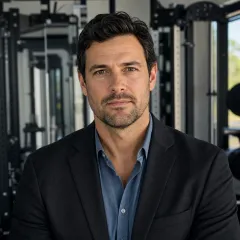
Marcus Feldman is a commercial strength-equipment analyst covering selectorized machines, plate-loaded stations, Smith machines, functional trainers, power racks, benches, barbells, dumbbells, and cable systems. He applies ISO 20957-1 and ISO 20957-2 while comparing rated loads, stability, frame deflection, pulley ratios, cable travel, adjustment increments, guarding, entrapment points, fastener retention, and fatigue cycles. His guides help gym operators, coaches, facility planners, and procurement teams evaluate biomechanics, user capacity, floor layout, maintenance access, durability, and lifecycle value.
Discuss a facility project