Used Nautilus Equipment: What a Quality Inspector Checks Before You Buy
-
Used Nautilus Is Still a Good Investment—If You Check These Four Things First
-
The Nautilus Xpload Leg Press: Frame Alignment Is the #1 Killer
-
Nautilus Exercise Cycle Parts: More Available Than You'd Expect
-
Weight Bench with Weights: Watch the Bench, Not the Plates
-
The Lat Pulldown Machine Tutorial That Doubles as an Inspection
-
Where This Checklist Doesn't Apply
Used Nautilus Is Still a Good Investment—If You Check These Four Things First
Used Nautilus equipment can still be a smart purchase for a commercial gym in 2025, provided you inspect four things before you commit: frame alignment on plate-loaded machines like the Xpload leg press, selector pin wear on weight stacks, linear bearing condition on all cable-driven stations, and console/cable integrity on exercise cycles. Most buyers who get burned skipped the linear bearing check because it means pulling two bolts and getting your hands dirty. Skipping it costs roughly $800 to $1,200 in parts and labor within six to eighteen months.
I sit on the other side of these transactions. I'm the quality and compliance manager at a Midwestern commercial fitness distributor, and I review 200+ pieces of equipment a year—Nautilus Xpload leg presses, selectorized stations, T614 treadmills, e618 ellipticals, the whole catalog. I rejected about 12% of first deliveries in 2024 for tolerance problems. This is the checklist I run through before any used unit gets resale approval.
Nautilus dominates our used inventory—roughly a third of the floor is Nautilus—and there's a good reason. The Xpload frames are built from 11-gauge steel welded on jigs that haven't materially changed since the mid-2000s. The frames don't usually die. The parts attached to the frames do.
One note: my numbers are based on audits of roughly 200 commercial units. Maybe 180, I'd have to check the log. The pattern has been consistent regardless.
The Nautilus Xpload Leg Press: Frame Alignment Is the #1 Killer
The Xpload leg press is a workhorse in commercial gyms. Gym owners assume the simplicity means there's little to check. There are exactly three failure points I look at.
The first is frame alignment. During our Q1 2024 audit, we placed a used Xpload leg press next to a brand-new one for a client's expansion. Side by side, the used carriage sat about 3mm off center. On its own you'd never see it. But that 3mm meant the linear bearings on the left rail were wearing at twice the rate of the right side. The machine was only two years old and already needed $600 in bearing work.
Check alignment first: set the carriage halfway down the rails and measure the gap between the carriage and the rail on both sides. Anything over 2mm means either a tweaked frame or uneven bearing wear. Negotiate accordingly.
Then check the bearings directly. Remove the carriage shroud—it's two bolts—and stroke the carriage through a full range, slowly. Grinding or lateral play means the bearings are done.
Finally, check the plate horns. Load a single plate on each horn and slide it down. The horn shouldn't flex. Bent horns are the tell-tale sign the machine took an impact during transport.
Nautilus Exercise Cycle Parts: More Available Than You'd Expect
The first question gym owners ask about a used Nautilus exercise cycle is whether parts still exist. As of January 2025, the answer is yes. Nautilus maintains a commercial parts catalog that covers cycles back to the early 2010s. I ordered a replacement flywheel brake for an older cycle last month and got it in six business days. That's not something you can say about every commercial brand, and it's why we still list used Nautilus cycles.
That said, not every repair is worth making. I recently helped a client evaluate a lot of six Nautilus cycles where the console ribbon cables had minor corrosion. The seller offered a 20% discount—about $3,200 off—and the risk was intermittent console failures across all six units. I kept asking myself: is $3,200 worth eighteen months of callbacks? We passed. They found a cleaner lot a month later.
For a single used cycle, focus on three things:
- Console wiring. The ribbon cable between the console and the flywheel housing develops corrosion or crimps. If you spot any, budget $150–200 for a replacement.
- The flywheel brake. Spin the flywheel and listen. A failing brake makes a grinding, metallic sound.
- The belt. Replace it proactively. It's a $40 part if you're handy, $120 with labor, and ignoring it will strand the machine mid-winter. At least, that's been my experience with commercial cycles running three to five hours daily. If you're putting a cycle in a hotel fitness room with light use, the risk is much lower.
Weight Bench with Weights: Watch the Bench, Not the Plates
Benches are the quiet liability of a fitness floor. A weight bench with weights looks too simple to fail. That's exactly the problem.
To be fair, benches don't fail dramatically. They fail slowly. A J-hook sitting 2mm out of spec will eventually let a loaded bar slip during racking. That's a sudden catastrophe rooted in a slow tolerance problem.
I check three things on any bench. First, the welds at the J-hooks. They absorb every heavy rack. Hairline cracks are common on benches over eight years old. Tap the welds with a wrench—a dull thud, rather than a clean ring, means a crack. Second, the seat adjustment ladder. If the seat post has any play when clicked into place, the ladder is worn. It's a $75 part on Nautilus benches. Third, sit on the upholstery and shift your weight with your eyes closed. You'll feel foam delamination even when the vinyl looks new. New vinyl over bad foam is a classic reseller move.
The plates themselves are usually the least interesting part of the deal. Rubber bumpers with cracks mean they were stored outside at some point. But steel plates are steel plates. Spend your inspection time on the bench.
The Lat Pulldown Machine Tutorial That Doubles as an Inspection
This next section serves your trainers and your purchasing at the same time. The correct lat pulldown form is also a five-step functional test for any used cable station:
- Set the seat so your knees tuck under the thigh pad with feet flat. The pad should lock with zero vertical play. No rattle.
- Grip the bar slightly wider than shoulder-width, palms forward. Watch the cable path as the bar rises. If it jerks sideways, a pulley is misaligned.
- Pull the bar to your collarbone, driving your elbows toward your ribs. This is the moment of truth: the cable should travel with zero catching. A single catch indicates a frayed cable or rough pulley—budget $100–150 for a cable replacement.
- Control the eccentric. If the stack drops suddenly at the start, the selector pin is binding. It's a $20 part, but good to know.
- Repeat for five slow reps. Grinding against the guide rods means a misaligned stack or bent rods.
The cues—chest up, elbows down, controlled stretch—are exactly what your trainers will tell your members. The fact that they double as inspection tests isn't a coincidence. A machine that moves correctly for a proper lat pulldown is fundamentally sound.
Where This Checklist Doesn't Apply
My experience is grounded in commercial facilities—roughly 200 gyms and athletic clubs across the Midwest, from 2,000-square-foot studios to 30,000-square-foot university centers. If you're buying a single machine for your home garage, this checklist is arguably overkill. The tolerance issues that matter at 500 workouts a week don't matter at three.
I also can't speak to pre-2000 Nautilus units or international shipping. Vintage Nautilus is a different ecosystem, with its own parts network and its own quirks. You'd want a specialist in that era of equipment.
None of this is meant to scare you off. There are good deals in used Nautilus equipment—we sell plenty ourselves. But an informed buyer gets the best price, and I'd rather spend ten minutes explaining what to check than deal with mismatched expectations later. An informed customer asks better questions and makes faster decisions—and, if I'm honest, that makes my side of the desk easier too.
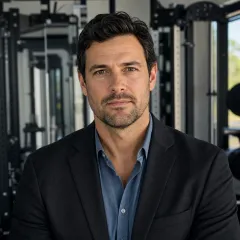
Marcus Feldman is a commercial strength-equipment analyst covering selectorized machines, plate-loaded stations, Smith machines, functional trainers, power racks, benches, barbells, dumbbells, and cable systems. He applies ISO 20957-1 and ISO 20957-2 while comparing rated loads, stability, frame deflection, pulley ratios, cable travel, adjustment increments, guarding, entrapment points, fastener retention, and fatigue cycles. His guides help gym operators, coaches, facility planners, and procurement teams evaluate biomechanics, user capacity, floor layout, maintenance access, durability, and lifecycle value.
Discuss a facility project