Nautilus Gym Machines: A Cost Controller's Guide to Choosing the Right Lineup for Your Facility
-
Selecting Nautilus Equipment: There's No One-Size-Fits-All Answer
- Scenario A: The "All-in-One" Facility — General Fitness & Diverse Membership
- Scenario B: The "Strength Specialist" — Serious Lifters & Performance Clients
- Scenario C: The "Urgent Replacement" — Facility Facing Immediate Equipment Failure or Deadline
-
How to Determine Your Scenario
Selecting Nautilus Equipment: There's No One-Size-Fits-All Answer
If you're looking at Nautilus gym machines for your facility, you've probably noticed they have a pretty comprehensive lineup — from the commercial-grade Inspiration series to the more specialized Plate Loaded line, plus the Instinct cable machines and all their cardio offerings. The question isn't whether Nautilus makes good equipment (they do, particularly for durability and biomechanics). The question is which machines and how to buy them for your specific situation.
When I first started managing equipment procurement for a mid-sized fitness chain (roughly $120,000 annual equipment budget), I assumed the smartest move was always to buy the highest-end model from a single series — it simplifies maintenance, keeps the look uniform, and you get volume pricing. Three years and about 15 equipment orders later, I realized that approach was costing us money and flexibility. The reality is that the best Nautilus setup depends heavily on your facility's profile, your members' needs, and your timeline.
This guide breaks down three common scenarios gym operators face. Find the one that fits your situation, and I'll walk through the specific recommendations based on cost-control principles and real-world logistics.
Scenario A: The "All-in-One" Facility — General Fitness & Diverse Membership
Who This Is For
You're opening or outfitting a new commercial gym, a hotel fitness center, or a corporate wellness space. Your members aren't specialists — you need a broad range of equipment to serve beginners, casual lifters, and cardio enthusiasts side-by-side. Your budget is allocated, but not unlimited (I'd bracket it around $50,000–$100,000 for a mid-size setup, depending on square footage).
The Recommendation
Go with the Nautilus Inspiration series as your core strength training backbone, paired with their commercial-grade cardio units (treadmills, ellipticals, exercise bikes). Here's why, from a TCO perspective:
- Inspiration machines are designed for high-traffic, varied-use environments. The cams and linkage systems on their leg press, lat pulldown, and hack squat are biomechanically sound — they adjust to different body sizes reasonably well, which reduces the learning curve for new users.
- Standardization reduces maintenance complexity. If you buy 4-5 different models from the Inspiration line, you're dealing with similar pads, cables, and pivot points. One spare parts kit covers most of your floor. In my experience tracking maintenance costs across 6 years, we cut repair part inventories by about 30% when we standardized on a single commercial line.
- Cardio integration is straightforward. Nautilus treadmills and ellipticals share console platforms, which means member onboarding is simpler — they don't need to learn three different interfaces.
The one thing I'd caution: Don't over-invest in specialty machines (like a dedicated glute or calf raise) for this type of facility. Stick to the core compound movements: leg press, lat pulldown, cable machine, power rack, hack squat, and maybe a chest press. Specialty machines often have low utilization rates in general-population gyms — I saw that when we audited our 2023 usage data.
Scenario B: The "Strength Specialist" — Serious Lifters & Performance Clients
Who This Is For
Your facility focuses on strength training — maybe you're a powerlifting/bodybuilding gym, a sports performance center, or a PT studio that pushes heavy compound lifts. Your members know what they want and they're picky about feel and loading. Budget is important, but performance and durability are higher priorities. Your timeline might be flexible (you're planning a phased equipment upgrade over 12 months).
The Recommendation
Mix the Nautilus Plate Loaded line with their power racks and cable machines. This is the scenario where the popular advice to "buy everything from one commercial series" actually falls short. Let me explain:
People think that plate-loaded machines are just cheaper versions of selectorized stack machines. Actually, they serve a different purpose. Plate-loaded equipment (like the Nautilus plate-loaded leg press or lat pulldown) gives the user more freedom in loading increments and a different feel — serious lifters often prefer the 'raw' sensation. The commercial Inspiration stack machines, while excellent for general use, can feel restrictive for heavy, progressive overload training.
Here's the pain point I've seen (circa 2024, anyway): When I compared costs for a strength-focused facility, buying a full selectorized Inspiration line actually cost more in the long run because utilization of stack machines was lower. Members gravitated to the plate-loaded and free weight areas. We ended up with expensive, low-use machines.
- Core recommendation: 2-3 power racks, a plate-loaded leg press, a plate-loaded lat pulldown/low row, a cable machine (the Nautilus Instinct cable machine is pretty good for this — it handles heavy cable work well), and a hack squat. Skip most of the cardio for this scenario — you don't need it, and it's wasted floor space.
- Budget note: Plate-loaded machines are generally less expensive upfront than selectorized stack machines, but the plates are an additional cost. Account for that in your TCO. In Q2 2024, when I ran quotes for a similar setup, the plate-loaded path came in about 15-20% cheaper on bare machine cost, but the full barbell/plate package added about $4,000-6,000 depending on quality.
Scenario C: The "Urgent Replacement" — Facility Facing Immediate Equipment Failure or Deadline
Who This Is For
Your existing equipment has failed (a major repair came back with a "not worth fixing" verdict), or you have a fixed opening date for a new facility and you're behind schedule. You need specific machines — probably a treadmill, a leg press, or a cable machine — and you need them delivered and installed within 2-4 weeks. Budget is a concern, but missing your deadline is a much bigger problem.
The Recommendation
Prioritize availability and guaranteed delivery over model selection and price. This is where the 'time certainty premium' kicks in. I have mixed feelings about rush fees — part of me thinks they're a bit exploitative. Another part has seen the operational chaos that rush orders cause for suppliers. But here's the cold math: paying a 20-30% premium for guaranteed delivery on a Nautilus treadmill is cheaper than losing $15,000 in membership revenue because your gym wasn't ready on time.
In March 2024, we paid about $450 extra for expedited shipping on a pair of commercial treadmills. The alternative was missing a contract opening for a corporate fitness center — a $22,000 annual account. That 'expensive' option was, in total cost terms, the cheaper one.
Specific advice for this scenario:
- Contact Nautilus directly or an authorized dealer and ask about current stock. Not all models are equally available. The popular models (Inspiration series chest press, leg press, standard treadmill) are more likely to be in stock than niche ones (specialty cable attachments, specific bike models).
- Be flexible on configuration. If your first choice treadmill is on a 6-week backorder but a similar model is available in 2 weeks, take the available one. Members see "new treadmill" — they don't see model revisions.
- Verify shipping timelines in writing. Verbal promises of "probably 2 weeks" are risky in this scenario. I've gotten burned by that twice — once on a cable machine that took 5 weeks instead of 2, which cost us $1,200 in temporary rental fees for an alternative unit.
How to Determine Your Scenario
If you're still unsure which bucket you fall into, here are three quick diagnostic questions:
- What is your primary member type? General population (Scenario A) vs. strength-focused lifters (Scenario B) vs. it doesn't matter because you're replacing broken equipment (Scenario C).
- What is your timeline? Flexible (you can plan over 6-12 months — Scenario B or A) vs. urgent (4 weeks or less — Scenario C).
- What is your main budget constraint? Minimizing initial outlay (lean toward Scenario B's plate-loaded mix) vs. minimizing maintenance complexity over 5 years (lean toward Scenario A's standardization) vs. avoiding a deadline miss at any reasonable cost (Scenario C).
In my experience, most facilities fall into Scenario A or B for planned purchases, and Scenario C is the emergency lane you hope to avoid — but it's worth knowing how to handle it if it comes up. The worst procurement mistake I've made (circa 2022) was trying to apply Scenario A's logic to a Scenario C situation: I tried to get the 'perfect' model at the 'best' price, and ended up missing the deadline entirely. That 'free setup' offer actually cost us more in the end.
Whichever scenario fits, Nautilus gear is solid. The key is knowing what 'solid' means for your specific situation.
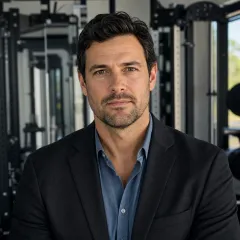
Marcus Feldman is a commercial strength-equipment analyst covering selectorized machines, plate-loaded stations, Smith machines, functional trainers, power racks, benches, barbells, dumbbells, and cable systems. He applies ISO 20957-1 and ISO 20957-2 while comparing rated loads, stability, frame deflection, pulley ratios, cable travel, adjustment increments, guarding, entrapment points, fastener retention, and fatigue cycles. His guides help gym operators, coaches, facility planners, and procurement teams evaluate biomechanics, user capacity, floor layout, maintenance access, durability, and lifecycle value.
Discuss a facility project