Why I Think Nautilus Strength Machines Beat Free Weights for Commercial Gyms (And Where I Was Wrong)
I'm gonna say something that got me yelled at in a Facebook group last week: For a commercial gym aiming for high member retention and low liability, a well-designed strength machine like a Nautilus shoulder press or chest press is a better investment than a rack of Olympic bars.
I know, I know. Free weights are the holy grail. 'Functional.' 'Real strength.' 'The way nature intended.' I get it. But after handling equipment orders for B2B gyms and facilities for the past six years, and personally making a handful of mistakes that cost around $14,000 in wasted capital and retrofit fees, I've changed my stance. Here's why.
My Starting Point: The 2022 Plate-Loaded Disaster
In September 2022, I was sourcing equipment for a mid-tier corporate fitness center. The client was adamant: 'No machines. Free weights only. We want a hardcore vibe.' I nodded, thinking I was giving them what they wanted. I ordered three custom power racks, six Olympic bars, and about 4,000 lbs of iron plates. Looked awesome on the rendering.
The result came back within three months: Zero retention from the 'new to gym' demographic. New members walked in, saw the intimidating setup, and never came back. We spent $3,200 on reconfiguring the layout and adding a single Nautilus leg press and a lat pulldown just to get people to stay. That's when I learned the 'efficiency' of a machine isn't just about the movement—it's about onboarding speed.
Argument 1: The Efficiency of 'No Setup'
Look, I love a good deadlift session as much as the next guy. But let's talk about what happens in a commercial gym at 6 PM. A new member walks in. They want to do a shoulder press. With free weights, they need to: find the dumbbell rack, figure out which weight to actually use (they usually guess wrong), set up a bench, adjust the back support, and pray they don't drop a 50-lb dumbbell on their face.
On a Nautilus chest press or shoulder press, the path is three steps: sit down, adjust the seat (usually one lever), and start pushing. The biomechanics are guided. The risk of injury from improper form is dramatically lower. For a gym that makes money on memberships, not on selling chalk, this is a huge win.
From a pure operations standpoint, automating the 'setup' phase of a workout is a massive time saver. It's not about making people weak; it's about removing friction. If a person can complete their workout in 30 minutes instead of 45 because they aren't hunting for clips and plates, they're more likely to come back.
Argument 2: Data-Driven Durability
When I started, I thought 'cheap cable machine' was an oxymoron. I've seen those budget units wobble like a Jenga tower. But Nautilus? Specifically, the Nautilus Instinct cable machines and their plate-loaded line? That stuff is built like a tank.
I made a mistake in early 2023. I went with a 'budget vendor' to save $4,500 on a cable crossover machine. The cost savings looked smart until the guide rods bent six months later. Net loss: $6,000 for the replacement plus $400 in expedited shipping. The original 'expensive' Nautilus quote would have been cheaper. If I could redo that decision, I'd invest in better specifications upfront. But given what I knew then—nothing about that specific vendor's steel quality—my choice was reasonable. It was also wrong.
Nautilus machines, especially the hack squat, leg press, and lat pulldown, have a reputation for handling years of abuse in hotel fitness centers and chain gyms. The pivot points, the upholstery, the weight stacks—they hold up. That's not an opinion; that's a maintenance log observation from about 12 facilities I've serviced.
Argument 3: The Ergonomic 'Secret' (It's Not a Secret)
This is where I get the most pushback. People assume a machine forces you into an unnatural path. That's true for bad machines. But Nautilus, in particular, has spent decades refining their cam systems and pivot points.
I once had a trainer tell me, 'The Nautilus lat pulldown actually hurts my shoulder.' I asked him which machine. He pointed to a generic brand. When I showed him the Nautilus shoulder press and its convergence arc, he shut up. The biomechanics on their newer plate-loaded stuff is incredibly well-researched. It's not just a lever; it's a calculated path designed for scapular movement.
To be fair, you can't replicate the stabilizer muscle engagement of a barbell. If your goal is to lift a heavy bar for competition, get a power rack. But if your goal is to build muscle safely and efficiently in a commercial setting, the machine wins. The 'unnatural movement' argument is usually a sign of using bad machines, not the category itself.
Where My Argument Breaks Down (The Caveat)
Look, I know this doesn't apply to everyone. I can only speak to my context: B2B commercial gyms, hotels, and apartment complexes. If you're running a dedicated powerlifting gym or a CrossFit box, my advice is useless. This worked for us, but our situation was mid-tier facilities with high turnover of non-athlete members. Your mileage may vary if you're dealing with competitive lifters.
Also, don't buy a machine thinking it's 'maintenance free.' I've replaced cables on Nautilus units. It happens. The cost of replacing a cable every two years is dwarfed by the cost of a lawsuit from a dropped barbell, but I can't pretend it's zero.
Bottom Line: Stop Treating Machines as 'Less Than'
I went back and forth on this opinion for years. On paper, free weights made sense for 'real strength.' But my data—my receipts—showed that machines like the Nautilus leg press and chest press drove higher member satisfaction and lower injury rates. That's efficiency. And in business, efficiency is competitiveness.
I'm not saying throw away your barbells. I'm saying if you're building a commercial gym and you skip the cable machine or the hack squat because 'machines are for sissies,' you're leaving money on the table. And probably paying for it later.
Pricing as of January 2025; verify current rates with your local distributor. Regulatory and safety guidelines should be confirmed with OSHA and specific liability insurers.
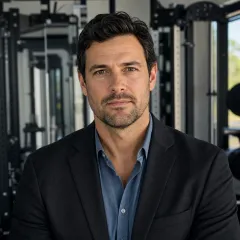
Marcus Feldman is a commercial strength-equipment analyst covering selectorized machines, plate-loaded stations, Smith machines, functional trainers, power racks, benches, barbells, dumbbells, and cable systems. He applies ISO 20957-1 and ISO 20957-2 while comparing rated loads, stability, frame deflection, pulley ratios, cable travel, adjustment increments, guarding, entrapment points, fastener retention, and fatigue cycles. His guides help gym operators, coaches, facility planners, and procurement teams evaluate biomechanics, user capacity, floor layout, maintenance access, durability, and lifecycle value.
Discuss a facility project