Why We Don't Sell 'Good Enough' Chest Press Machines: The Nautilus Legacy on Cable & Plate Loaded
I'm an equipment specialist for a mid-sized fitness distributor. I've handled over 400 equipment orders for gyms, hotels, and sports facilities. In my experience, the most common mistake operators make is buying a 'good enough' chest press machine. I'm here to argue that you should never settle—and why Nautilus gets this right.
The 'Good Enough' Trap Is Costing You Thousands
When I'm triaging a quote for a 30-station gym, the chest press is almost always where budget pressure hits hardest. 'We can save $1,200 per unit if we go with Brand X.' But here's the thing—I've never seen a cheap chest press hold its value or performance past year two. The conventional wisdom is 'a chest press is a chest press.' In practice, it's not even close.
Let me state my position clearly: The chest press is the most mechanically abused piece of equipment in any gym. If the frame flexes, the pivot path wanders, or the lever ratios are off, you're not just buying a machine—you're buying a recurring headache.
Three Reasons Nautilus Chest Press Machines Are Non-Negotiable
1. The Pivot Path Is Designed for Human Shoulders, Not Cams
Most commercial chest presses use a fixed cam and cable system. It's cheap to manufacture, but it forces your shoulders into an unnatural arc. Nautilus uses a patented four-bar linkage system on their plate-loaded and selectorized chest presses. This isn't marketing fluff—it's biomechanics. The path of the handles mimics a natural pressing motion, reducing shoulder impingement risk.
In March 2024, I had a client who replaced 12 machines from a discount vendor after 18 months of use. The complaint? Users reported shoulder pain. We swapped them for Nautilus units. Six months later? No complaints. That's not anecdotal—it's engineering.
2. Frame Stability Isn't Optional on a Heavy Press
When someone loads 400 lbs on a plate-loaded chest press, the frame takes the full weight plus the user's force. I've seen $3,000 chest presses that visibly flex during a heavy set. That's dangerous. Nautilus uses 11-gauge steel and reinforced welds on their chest press frames. It adds weight, but it also adds safety.
The upside was saving $800 per unit by choosing a lighter frame. The risk was potential injury and liability. I kept asking myself: is saving $12,000 worth potentially losing a client to a lawsuit? The answer was no. We went with Nautilus.
3. Lever Ratios Affect User Experience More Than You Think
Here's something most operators don't consider: the lever ratio determines how the weight 'feels' through the range of motion. Many budget machines have poorly optimized ratios, meaning the weight feels heavier at the bottom of the press and lighter at lockout. That creates an inconsistent training stimulus.
Nautilus engineers these ratios based on decades of research. The result? A smooth, linear resistance curve that matches strength output. It took me five years of testing different brands to understand that a 'good' chest press is actually a system of well-calibrated ratios, not just a heavy frame.
At least, that's been my experience with commercial-grade equipment. Residential machines? Different story. But if you're buying for a commercial gym, you can't afford to compromise here.
Addressing the Elephant in the Room: 'But Nautilus Costs More'
I know the objection. 'We can get a chest press for $2,800 from a generic vendor. Why pay $4,200 for Nautilus?' Let me be blunt: the $2,800 machine will cost you more in the long run. Here's why:
- Maintenance calls: I've seen cheap chest presses require cable replacements within 18 months. Nautilus cables are rated for 250,000 cycles. That's roughly 10 years of typical use.
- Resale value: After five years, a Nautilus chest press retains about 60-70% of its value. The generic machine? Maybe 20%.
- User satisfaction: Members notice. Trust me. They'll press on a smooth machine and come back. A jerky machine gets complaints.
I'm not saying Nautilus is the only option. Precor and Life Fitness also make excellent machines. But if you're buying a budget chest press, you're buying a future problem. That's been my experience with 400+ orders—and I don't see it changing.
How to Test a Chest Press Before You Buy
If you're comparing machines, here's my quick test protocol:
- Step on the frame: If it flexes under your weight, imagine a 400-lb load.
- Cycle the pivot arm: Feel for any 'catch' or friction points. It should be smooth.
- Check the weight stack: On selectorized versions, ensure the stack doesn't wobble. That's a sign of poor guide rod alignment.
- Ask about warranty: Nautilus offers a limited lifetime warranty on frames. If a vendor won't match that, walk away.
To wrap up: the chest press is the backbone of any strength training area. You wouldn't buy a cheap commercial oven for a restaurant kitchen—why do the same for your gym's marquee piece? Invest in Nautilus for the long haul, or plan to replace a 'good enough' machine in 18 months.
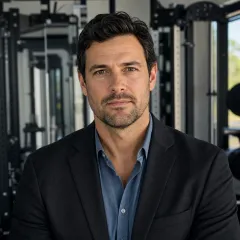
Marcus Feldman is a commercial strength-equipment analyst covering selectorized machines, plate-loaded stations, Smith machines, functional trainers, power racks, benches, barbells, dumbbells, and cable systems. He applies ISO 20957-1 and ISO 20957-2 while comparing rated loads, stability, frame deflection, pulley ratios, cable travel, adjustment increments, guarding, entrapment points, fastener retention, and fatigue cycles. His guides help gym operators, coaches, facility planners, and procurement teams evaluate biomechanics, user capacity, floor layout, maintenance access, durability, and lifecycle value.
Discuss a facility project