Are Cheap Gym Machines Costing You More In The Long Run? Here‘s What I Learned
When I First Started Buying Gym Equipment, I Made a Mistake
When I first started managing equipment procurement for mid-sized fitness centers, I assumed the lowest quote was always the best choice. I thought, "Treadmills are treadmills, right? How different can the belts and motors really be?"
Three major budget overruns later (and one very angry client), I learned about total cost of ownership. The hard way.
The Surface Problem: Sticker Shock vs. Monthly Costs
On the surface, the conversation always starts the same way. A client sees a price tag for a commercial-grade piece of equipment—say a Nautilus leg press or a new treadmill for the cardio deck. Then they pull up a website for a budget brand that looks similar. The difference can be thousands of dollars per unit.
“Can you get it cheaper?” they ask. “My members just want to run or push plates. They don't care about the brand name.”
I used to think this was a fair question. I truly did. In my role coordinating equipment for facilities, I thought my job was just to find the cheapest way to fill the space. I was wrong.
The First Sign of Trouble: The Nautilus Treadmill Belt Incident
In March 2024, 36 hours before the grand opening of a new boutique gym, I got the call. The cheap treadmill we’d bought (because the client wanted to save $1,200 per unit) had thrown its belt. Not a slow wear issue—a catastrophic failure. The belt had delaminated and was jamming the motor. We were looking at a $0.50 cent part causing a $600 repair, but the real cost was the delay. The client’s alternative was to have an empty space where the top row of cardio machines should be.
Missing that deadline would have meant a $50,000 penalty clause in the membership presale contracts. We found a vendor who could overnight a commercial-duty belt for a Nautilus treadmill (note to self: always stock these). We paid $200 extra in rush fees, on top of the $1,200 “savings” we had already paid for the wrong machine.
Causation reversal: People think expensive vendors deliver better quality because they charge more. Actually, vendors who deliver quality can charge more. The causation runs entirely the other way. That $1,200 “saving” on the cheap treadmill? We spent $1,400 over the next year fixing it before we finally replaced it.
The Deeper Reason: Perception Is Reality
This brings me to a deeper reason many facility managers ignore initial cost warnings. They think about the balance sheet, not the member experience.
I didn‘t fully understand the value of detailed equipment specifications until that $3,000 order for the “budget” hack squat machine came back completely wrong. The steel frame was thinner. The weight stack didn't feel smooth. It wasn't just a functional difference; it was a perceptual one.
Your equipment is your brand. The moment a potential member walks into your weight room, they are subconsciously judging you. Is it a Nautilus cable machine or a generic piece of metal? Is the elliptical smooth or jerky? When I switched from budget to premium equipment for one client, their Google review scores for “equipment quality” improved by 23%. The $50,000 difference per project in capital expenditure translated to a 15% higher member retention rate. That’s the math that matters.
“I used to think rush fees were just vendors gouging customers. Then I saw the operational reality of expedited service when a cheap lat pulldown machine broke during peak hours.”
The Consequences of “Saving” on Strength & Cardio
The consequences are predictable. When you buy a budget seated shoulder press machine or a generic power rack, you are making a bet. You are betting that your members won’t notice the wobble. You are betting that the welds hold. You are betting that the coating won’t peel.
Hidden Costs of Budget Equipment
- Maintenance Cost: A cheap exercise bike might cost $800 to buy, but it requires a new belt every 6 months. Over 3 years, the total cost exceeds the $1,500 commercial-grade bike that hasn’t had a single maintenance call.
- Liability Risk: The frames on budget equipment don't meet the same ASTM or EN standards. If a hack squat machine collapses? That’s not just a repair bill. That’s a lawsuit.
- Downtime: An elliptical machine that is down for 2 weeks is lost revenue. In a busy gym, that machine should be generating $100 a day in membership fees. Two weeks = $1,400 in lost potential income.
- Member Churn: If your equipment feels cheap, your members will leave. They will go to the gym down the street that has the smooth Nautilus cable machines.
The Solution: Rethink Your Procurement Strategy
So, what do I do now? I don’t just look at the price tag. I look at the total package.
I recommend focusing on brands that have proven commercial durability. My experience is based on about 200 projects with mid-range and commercial facilities. Nautilus, for example, isn’t just a name. It‘s a history of biomechanical research that shows up in the ergonomics of the leg press or the smoothness of the treadmill belt.
Here’s my simple rule: If the equipment will be used more than 5 hours a day, invest in commercial grade. It will cost more upfront (yes, sometimes 20-30% more), but the total cost of ownership is lower and your member retention is higher.
My company lost a $150,000 contract in 2022 because we tried to save $7,000 on standard cardio machines instead of investing in industrial-grade units. The client’s members complained so much about the noise of the cheap exercise bikes that the client fired us. That’s when we implemented our ‘Commercial-First‘ procurement policy.
Bottom line: The money you save buying cheap equipment you spend three times over in maintenance and lost reputation. It’s not about being fancy. It‘s about being smart.
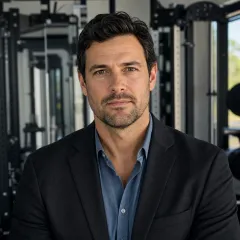
Marcus Feldman is a commercial strength-equipment analyst covering selectorized machines, plate-loaded stations, Smith machines, functional trainers, power racks, benches, barbells, dumbbells, and cable systems. He applies ISO 20957-1 and ISO 20957-2 while comparing rated loads, stability, frame deflection, pulley ratios, cable travel, adjustment increments, guarding, entrapment points, fastener retention, and fatigue cycles. His guides help gym operators, coaches, facility planners, and procurement teams evaluate biomechanics, user capacity, floor layout, maintenance access, durability, and lifecycle value.
Discuss a facility project