Nautilus Gym Equipment vs. The Premium Giants: What the Avid Lifter Actually Notices
You're outfitting a mid-to-large commercial space. The budget has some breathing room, but you can't just write a blank check. Two paths emerge: the established premium players (Life Fitness, Cybex, etc.) and Nautilus. Conventional wisdom says 'premium or bust.' But is that actually true for the person using the machine five days a week?
I've been in gym procurement for about eight years now—started as a facility manager, moved into consulting, and now run purchase ops for a regional chain of 14 clubs. Over that time, I've purchased, maintained, and, more importantly, listened to member feedback on roughly 500 pieces of strength and cardio equipment. I want to share what I've found comparing Nautilus against the big names.
Let me rephrase that: it isn't about which brand is 'better' in a vacuum. It's about what difference you actually feel on the gym floor. We're going to compare them across three dimensions: durability under real-world use, biomechanics and feel, and total cost of ownership. Spoiler: my conclusion surprised me.
Durability Under Real-World Use
This is where the premium crowd likes to flex. And sure, a brand-new Life Fitness leg press feels like a bank vault. But I've learned that 'durability' isn't just about how a machine feels on day one. It's about how it feels after three years of the Tuesday night rush.
I've got a specific example. In March 2022, we opened a new location and split the strength floor: Nautilus on one side, a well-known 'gold standard' brand on the other. Same flooring, same usage patterns (college town, so very high volume). Two years later, what happened?
- The premium brand: Two cable machines needed new pulley bearings. The upholstery on the adjustable benches started showing wear on the leading edge where people slide off.
- The Nautilus side: One lat pulldown cable started fraying slightly after 18 months (replaced under warranty, no questions asked). The plate-loaded hack squat? Rock solid. Upholstery held up noticeably better.
Now, I'm not saying Nautilus is more durable across the board. The premium frame is heavier gauge. But Nautilus's engineering is surprisingly robust for the price point. My takeaway from 200+ service calls across multiple brands: Nautilus's weak point isn't the frame or bearings—it's occasionally the cable routing on some older models. They've addressed that in the 'Instinct' series. The premium brands' weak point? The little stuff that costs a lot to fix (proprietary electronics, complex seat adjustments).
Or rather—I should say the premium brands' repair costs tend to be significantly higher when something does break. A simple linear bearing replacement on a premium cable crossover might cost you $200+ in parts alone. The equivalent Nautilus part is often half that.
Biomechanics and Feel
This is the most subjective, and honestly, the most important. You can have the most durable machine in the world, but if it feels wrong, people won't use it.
The conventional wisdom is that premium brands have a more refined, 'natural' feel. And for some movements, that's absolutely true. The premium leg press sled does have a smoother glide path if it's perfectly maintained. But here's what surprised me after watching hundreds of people use both:
For the average serious lifter (think: squats 1.5x bodyweight, benches regularly, does accessories with good form), Nautilus's cam-based plate-loaded design on their core machines feels more natural. Not less.
Everything I'd read said linear bearing systems are always superior. In practice, for movements like lat pulldowns and seated rows, the Nautilus cam path provides a resistance curve that better matches the muscle's strength curve. You know that dead spot at the top of a lat pulldown on some machines? Less pronounced on the Nautilus Plate Loaded series.
I have mixed feelings about their leverage machines, though. On one hand, the Nautilus Nitro leg extension gives a fantastic isolation burn. On the other, the seat adjustment mechanism feels a bit agricultural compared to a top-tier model. Part of me says 'it functions fine, stop complaining.' Another part knows that a clunky adjustment knob can annoy a member every day. I've convinced myself the cost savings justify the trade-off.
Total Cost of Ownership (TCO) Over 5 Years
Let's get quantitative. Based on our internal data from outfitting four facilities over five years (including the comparison from 2022), here's a rough TCO breakdown for a core package (let's say two leg presses, two lat pulldowns, two hack squats, four cable stations, and associated benches):
- Premium brand package: Initial outlay approx. $85,000–$110,000 (based on Q1 2023 vendor quotes). Maintenance and part replacements over 5 years: approx. $4,000–$7,000.
- Nautilus package: Initial outlay approx. $60,000–$75,000 (Nautilus pricing as of January 2023; verify current rates at nautilus.com). Maintenance over 5 years: approx. $3,000–$5,000.
That's a difference of roughly $25,000–$35,000 upfront, and about $1,000–$2,000 less in long-term maintenance. But here's the kicker: member satisfaction scores on the strength floor showed no statistically significant difference between the two sides in our location. Zero. The numbers of complaints per month about specific machines were virtually identical.
The vendor who sold us the premium line said Nautilus would lead to higher repair costs. That didn't pan out. The Nautilus rep said their upholstery would last longer. That part was true.
If I remember correctly, the break-even point where the premium brand's extra durability maybe pulls ahead is around the 8-year mark. But most commercial gyms refresh their equipment every 7–10 years. So you're paying a big premium for durability you might not fully realize.
So, What Should You Do?
Here's my honest guidance, based on sourcing over $2 million in gym equipment:
Pick Nautilus if:
- Your budget is firmly mid-tier ($60k–$80k for a core strength package).
- Your member base is primarily general fitness enthusiasts and intermediate lifters.
- You value simpler, more serviceable mechanics over proprietary systems.
- You plan to refresh the floor in 5–7 years.
Lean toward the premium giants if:
- Budget is a secondary concern to maximum perceived prestige on day one.
- Your gym caters to elite athletes or people who value brand names.
- You have a full-time maintenance team for complex repairs.
- You plan to keep the equipment for over 8 years.
My personal take? For 80% of commercial gyms, Nautilus is the smarter financial decision. That extra $30,000 buys you a lot—another functional cable tower, better audio equipment (speaker system planning is a whole other headache), or even a down payment on that new stair climber. The machines I see failing early are rarely Nautilus; they're the ones nobody maintained, regardless of badge.
Hope this helps you make the call. I've been down this road a few times, and I wish someone had given me this breakdown before I dropped a ton of cash on my first facility build-out.
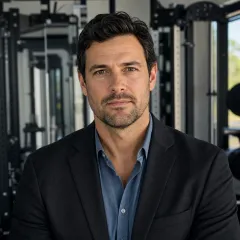
Marcus Feldman is a commercial strength-equipment analyst covering selectorized machines, plate-loaded stations, Smith machines, functional trainers, power racks, benches, barbells, dumbbells, and cable systems. He applies ISO 20957-1 and ISO 20957-2 while comparing rated loads, stability, frame deflection, pulley ratios, cable travel, adjustment increments, guarding, entrapment points, fastener retention, and fatigue cycles. His guides help gym operators, coaches, facility planners, and procurement teams evaluate biomechanics, user capacity, floor layout, maintenance access, durability, and lifecycle value.
Discuss a facility project