Nautilus Gym Equipment vs. The Generalist Approach: Why Specialization Beats 'One-Size-Fits-All' in a Commercial Gym
The Vendor Spectrum: Generalist vs. Specialist
When I took over managing equipment procurement for our office fitness center in 2022, I had a simple assumption: one vendor should be able to provide everything. Treadmills, racks, dumbbells, mats, signage—the works. It felt efficient. It felt tidy. It was, in hindsight, a costly lesson in the difference between a specialist and a generalist.
This isn't a debate about Nautilus versus Life Fitness or Precor (we're not going there). It's about the fundamental choice every admin buyer faces: Build your gym around a brand that knows one thing deeply, or split your budget across vendors who claim to know everything.
I've been on both sides. In our 2024 vendor consolidation project, I had to reconcile the 'everything provider' with the 'specialist-only' approach. Here's what I learned from the sorting process.
Mindshare vs. Product Catalog
A generalist vendor will show you a catalog that stretches across three zip codes. They have racks, they have bikes, they have foam rollers, they even have flooring. From the outside, this looks like convenience. The reality is that their mind is split across categories. They know a little about a lot. (Not that this is always a bad thing; sometimes you need a generalist for a one-off purchase of mats.)
Compare that to a specialist like Nautilus, whose entire identity—engineering, sales support, parts logistics—is built around one ecosystem: commercial-grade strength and cardio. When I call their support line about a cable machine not tracking smoothly, they don't ask me to 'check the model number' and then search a pdf library. They know their products. They've been making them since the 1980s.
I still kick myself for ignoring this difference the first time. I ordered a budget-friendly, all-purpose 'gym-in-a-box' package from a general vendor. The treadmill was fine. The leg press had a weld that failed within six months. The lat pulldown—the whole reason I'd ordered it—was so poorly designed that our taller employees couldn't use it without hitting the ceiling brackets. Replacing that single piece of equipment cost more in labor and downtime than the entire initial setup.
Real-World Comparison: The Strength & Cardio RFP
To make this tangible, let's look at a real-world comparison from our Q1 this year. We needed to outfit a new satellite office for about 45 employees. The RFP called for:
- 2 Treadmills
- 1 Exercise Bike
- 1 Leg Press
- 1 Lat Pulldown
- 1 Cable Machine
- 1 Power Rack
We got two final proposals: one from a 'total wellness solutions' provider (Generalist A) and one that was exclusively Nautilus equipment (Specialist B). Here's where the 'expertise boundary' came into play.
First reaction: Generalist A was about 12% cheaper on the line-item total. They promised 'commercial-grade' for everything. Nautilus was more expensive, but their proposal came with a biomechanics data sheet for the lat pulldown and an ergonomic justification for the cable machine's cable path. I remember thinking, 'Who reads that stuff?'
The frustration: The most frustrating part of vendor management is realizing that a low price often hides a very specific lack of expertise. The generalist's 'commercial-grade' treadmill had a motor that was, in their own words, 'rated for 6 hours of continuous use.' A commercial gym's peak hours can see 6 hours of use in a single morning, but for our small office with moderate usage, it might have been fine. But. The generalist's cable machine—the core interactive piece—had a stack that was not loadable (meaning you had to manually set the pins, a safety risk for a multi-user environment) and the pulleys were plastic. (Surprise, surprise).
When a Specialist Says 'No'
This is the part that sold me. During negotiations, I asked the Nautilus rep about bundling in some foam rollers and a few sets of kettlebells. His response: 'We don't do that. For those, I'd recommend (a specific local distributor). We focus on the machines.'
The vendor who said 'this isn't our strength—here's who does it better' earned my trust for everything else. That is the core of the expertise boundary philosophy. A generalist would have said 'sure, we can get those for you' and added a 30% markup on a cheap set from a third distributor. A specialist admits the boundary.
In my opinion, this is the single biggest differentiator. When a sales rep is unwilling to chase a $200 order for kettlebells (because it detracts from their core $20,000 machine sale), it signals they value the relationship over the transaction.
The Hidden Cost of 'One-Stop-Shop' Logistics
It's tempting to think that ordering from one vendor simplifies logistics. But the 'simple' advice of 'get it all from one place' ignores the nuance of parts support and service.
We ordered the Nautilus cable machine. It arrived on time. Six months later, a cable frayed. I called the generalist support line for a part. They didn't stock it. They had to 'contact the manufacturer.' That took 11 business days.
For the Nautilus machine, I called their parts line. They asked for the serial number, verified the shipping address, and the replacement cable was on a truck in under 2 hours. (This was back in August 2024, at least.) The difference in friction is massive.
Practical Advice: When to Choose Which
Based on my experience managing these relationships (processing about 40-60 equipment orders annually), here’s my rough guide for a commercial gym setup (not a home garage):
- Choose the Specialist (Nautilus, etc.) for: The 'core 4' that get heavy use—treadmills, cable machines, leg press, lat pulldown. These are biomechanically complex. You need the R&D. I'd argue you need the brand that has a specific stance on ergonomics.
- Choose the Generalist for: The 'peripheral' items—benches (simple), dumbbells (simple, though quality varies), storage racks, foam rollers, signage. You don't need a brand legacy for a mat.
Don't be afraid to split your orders. It creates a bit more administrative work on the front end (two purchase orders, two invoices, two deliveries), but the long-term reliability and parts support are worth the extra paperwork. Your CFO might prefer one invoice, but your facilities manager (and your users) will thank you for the machines that work.
That unreliable cable machine from the generalist? It made me look bad to my VP when HR complained about it being down for two weeks. The Nautilus machine? It's been running. Choosing a specialist isn't just about the product—it's about the safety of knowing you can get a part when you need it.
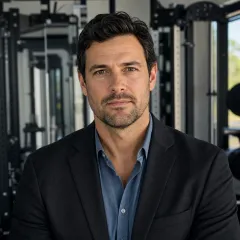
Marcus Feldman is a commercial strength-equipment analyst covering selectorized machines, plate-loaded stations, Smith machines, functional trainers, power racks, benches, barbells, dumbbells, and cable systems. He applies ISO 20957-1 and ISO 20957-2 while comparing rated loads, stability, frame deflection, pulley ratios, cable travel, adjustment increments, guarding, entrapment points, fastener retention, and fatigue cycles. His guides help gym operators, coaches, facility planners, and procurement teams evaluate biomechanics, user capacity, floor layout, maintenance access, durability, and lifecycle value.
Discuss a facility project