Nautilus Commercial Gym Equipment: How to Pick the Right Machines for Your Facility (A Buyer's Guide)
Let’s be honest: buying commercial gym equipment is a minefield. I’ve been on the operations side for a while now, handling orders for fitness facilities for the better part of a decade. In my first year (2017, a year I still have nightmares about), I made a classic mistake. I put in an order for a full suite of Nautilus strength machines for a new hotel gym, assuming their ‘commercial grade’ was a single, universal spec. It was not. The selectorized machines we got were fantastic, but the client’s space was far smaller than the footprint required for a full Smith machine and lat pulldown tower. We had to swap half the order. That error cost us roughly $1,200 in restocking fees plus a month-long delay for the hotel's grand opening.
The truth is, there’s no single ‘best’ Nautilus machine lineup. It depends entirely on your space, your users, and your budget. So let’s break it down by the three most common scenarios I see.
Scenario A: The High-Traffic Commercial Gym (Plate-Loaded vs. Selectorized)
If you're a commercial gym expecting hundreds of sweaty users a day, you need durability. This is where Nautilus has a solid reputation. The key decision here isn't just which machine, but which version.
Plate-loaded vs. Selectorized: Most buyers focus on the number of exercises a machine can do. The question everyone asks is, 'How many functions does this cable machine have?' The question they should ask is, 'How many athletes can use it in an hour without creating a bottleneck?'
For a busy gym, your go-to should be their selectorized line (like the Nitro series). The weight stack is pre-loaded, so users just pull a pin. It’s faster for circuits and reduces the heart-attack-inducing sight of someone dropping a 45-pound plate on their toe. For a hotel or corporate fitness center where usage is lighter, plate-loaded machines (like their Inspira series) are often a better fit. They look more impressive, take up less floor space per station, and can be slightly cheaper upfront (circa $1,500-$3,000 less per station, based on 2024 pricing).
I once consulted for a CrossFit box that wanted a Nautilus hack squat for their warm-up area. The owner insisted on the plate-loaded version because 'that's what the athletes are used to.' They had a mis-load about a week later—a dropped plate cracked the footplate’s polymer guard. The repair cost $400 and took 6 weeks. In a high-traffic, chaotic environment, selectorized is almost always safer. It’s a durability trade-off.
Scenario B: The Rehab or Senior Center (Cardio and Low-Impact Strength)
This scenario is about biomechanics, not bragging rights. If your users are in physical therapy or are older adults, the smooth, natural movement of Nautilus machines becomes the star of the show.
Their commercial exercise bikes, like the U516, are a classic here. They use a heavy-duty, self-powered generator that provides consistent resistance and a very natural feel. Most buyers focus on the console programming. The better question is: What is the step-through height? For a senior center, a pedal height of less than 10 inches from the floor is critical for easy mounting and dismounting. Similarly, for their leg press and hack squat machines, the range of motion is incredibly smooth. It’s one of the few brands where the quadriceps-to-glute engagement feels genuinely isometric across the whole movement.
I dodged a bullet once when I almost ordered standard elliptical pedals for a clinic. Was one click away from ordering a model with a 12-inch stride. The physical therapist on staff stopped me just in time. She needed a 6-inch stride for initial rehab after hip surgery. Nautilus makes a variable-stride model (the E816), which we ended up getting. That machine has been in daily use for 18 months without a single maintenance call—which, for a rehab setting, is a huge win.
Look, if you’re not serving a rehab population, this entire section might not apply to you. And that’s okay. It’s about knowing your users.
Scenario C: The Home Garage Gym (Budget vs. New)
This is the most common question I get: 'Can I get commercial Nautilus quality for my home setup?'
The answer is: sometimes, yes, you can, but you have to be realistic. Buying Nautilus brand new for a home gym is rarely a cost-effective move. A new, commercial-grade lat pulldown machine can run $4,000-$6,000. You can get a perfectly functional but less durable home unit for under $1,500.
So, the budget approach? Buy used. I’ve personally seen a used Nautilus leg press and a power rack for sale on CL for $2,500 total. They were 15 years old, the paint was chipped, but the frames were solid. The seller just wanted to reclaim the space. If you’re handy, you can often repack the bearings and replace the cables for under $200. The foam grips, sure, they might be a bit flattened. But that’s a $50 fix. The steel and the framing are still commercial-grade, decades later.
Here’s the counter-intuitive part: if you find a used Nautilus machine that’s a model from 2008-2012, buy the lat pulldown or row machine. The cores of those machines—the pulleys and the pivot points—were built to last. The cardio equipment from that era, like the elliptical consoles, were notorious for dying (the LCDs were not up to modern standards). But the strength frames? They’re practically bulletproof. So don't buy a used old elliptical; do buy a used old leg press.
The vendor who told me 'we don't refurbish Nautilus lat pulldowns from 2010, but there's a guy two towns over who does' earned my trust for everything else. That’s the kind of honesty you want in a used-market scenario.
How to Tell Which Scenario You're In
Still not sure? Here’s a quick gut check. Ask yourself these three questions:
- Who is my primary user? Is it a 20-year-old powerlifter, a 60-year-old rehab patient, or a hotel guest?
- What’s my floor space? If you have less than 400 square feet, stick to cable machines and a power rack. If you have 800+ sq ft, go for the selectorized circuit.
- What’s my maintenance budget? If it’s $0, buy new, commercial-grade. If it’s tight, buy used plate-loaded.
There’s no single right answer. The right answer is the one that fits your specific situation. And hey, if you make a mistake, you’ll probably end up with a funny story to tell your operations team later. I know I did.
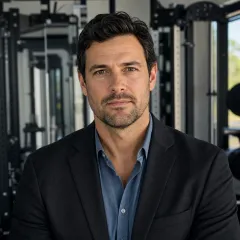
Marcus Feldman is a commercial strength-equipment analyst covering selectorized machines, plate-loaded stations, Smith machines, functional trainers, power racks, benches, barbells, dumbbells, and cable systems. He applies ISO 20957-1 and ISO 20957-2 while comparing rated loads, stability, frame deflection, pulley ratios, cable travel, adjustment increments, guarding, entrapment points, fastener retention, and fatigue cycles. His guides help gym operators, coaches, facility planners, and procurement teams evaluate biomechanics, user capacity, floor layout, maintenance access, durability, and lifecycle value.
Discuss a facility project