5 Mistakes I Made When Buying Gym Equipment for Our Club (And How to Skip Them)
If you've ever had to outfit a gym from scratch, you know the feeling. You're staring at a spreadsheet with a six-figure budget, and every line item feels like a gamble.
My name's Tom. I've been handling procurement for a mid-sized fitness chain in the Midwest for about four years now. In that time, I've personally made enough mistakes to fill a small warehouse—and I've documented every single one. This isn't a theoretical guide. This is a checklist I wish someone had handed me before I signed my first order.
Here's what I'll cover in this post: the five most common (and expensive) mistakes I made, and the simple steps you can take to avoid them. This is directly applicable if you're ordering for a new facility or doing a major renovation.
1. Ignoring the Floor Layout and Zone Planning
The mistake: I ordered equipment based on what looked good in a catalog. The Nautilus T618 treadmill? Looks great. The plate-loaded hack squat? Definitely a crowd-pleaser. But I failed to consider how they'd fit together in an actual 3,000-square-foot space.
In September 2022, I had a shipment of six T618 treadmills delivered, and we realized the stride path created a bottleneck in the cardio zone. We had to move two of them to a different area, which meant re-running power cables and disrupting the flow (think about people entering and exiting the machine). That mistake cost about $1,200 in floor rework and a 3-day delay in opening.
What to do instead:
- Draw a zone map first. Sketch your floor plan to scale. Mark where the power outlets are (this is huge for treadmills and ellipticals).
- Define traffic lanes. You need a minimum of 36 inches of clear space between the back of a machine and the next zone. Seriously, measure it.
- Check the footprint specs. The Nautilus T618 has a footprint of roughly 82” x 37”. That doesn't seem huge until you realize you need 6 feet of clearance behind it for safe dismount. Plan for the operational space, not just the machine's dimensions.
I now use a simple grid on a whiteboard. Before I finalize any order, I place cardboard cutouts on the grid to simulate the machines. It feels low-tech, but it catches layout problems that a 2D drawing on a computer screen might miss.
2. Buying the “Top of the Line” for Every Station
The mistake: I assumed that the most expensive piece of equipment in a category was automatically the best for our club. Spoiler: it isn't.
Take the leg press. I ordered the Nautilus plate-loaded hack squat (great machine, by the way) for every strength zone because I thought it was the 'premium' choice. What I didn't account for was the plate-loaded hack squat's learning curve. It's an excellent machine for experienced lifters, but for the average member—the 40-year-old who just wants to get in and out—it can be intimidating. We had members walk right past it to the selectorized leg press.
I have mixed feelings about this approach. On one hand, you want the 'cool' factor to attract members. On the other, you need equipment that 80% of your members will actually use. We ended up swapping out two plate-loaded hack squats for a more user-friendly lever-action leg press (circa 2023). The swap cost us $900 in shipping and logistics.
What to do instead:
- Know your demographic. If your club has a high percentage of beginners or older adults, prioritize selectorized or plate-loaded machines with simple movement patterns. The Nautilus cable machine is a fantastic all-rounder that almost everyone can use safely.
- Do a “20-60-20” rule. 20% of your strength equipment should be 'specialty' (like the hack squat or a power rack for serious lifters). 60% should be universal (selectorized chest press, lat pulldown). 20% should be 'rehab' or light-duty (like the exercise bike).
3. Overlooking the Maintenance and Service Contract
The mistake: I thought a warranty was a warranty. I basically glanced at the standard Nautilus warranty doc and thought, 'Looks good.' Then we had a Nautilus Instinct cable machine's cable fray after 14 months. The warranty covered the cable, sure. But the labor to replace it? The travel fee for the technician? The lost revenue while the machine was down for three days? That was all on us.
The most frustrating part of this situation: you'd think a commercial-grade machine would be exempt from the 'fine print,' but it isn't. After the third incident (a console issue on a T618), I was ready to throw in the towel on service contracts entirely. What finally helped was reading the warranty terms carefully and factoring in a 2-year service contract for the first batch of machines.
What to do instead:
- Read the excluded items. Most warranties don't cover wear-and-tear parts (cables, belts, upholstery). Budget 2-3% of the total order cost annually for replacement parts.
- Get a service contract quote upfront. Don't wait until the machine breaks. Nautilus offers a service contract option. I ignored it because the service contract cost seemed high—but it was still less than two emergency service calls.
- Check the technician availability. If your club is in a rural area, find out if a certified technician is within 60 miles. One of our locations had a 4-day wait for a technician (this was back in 2022). That downtime hurt our member retention.
4. Forgetting to Verify the Electrical Requirements
The mistake: I assumed all cardio machines just 'plug in.' This is the classic procurement error. In early 2023, I ordered a set of Nautilus T618 treadmills, which require a dedicated 20-amp circuit. My facility's wiring only supported 15-amp circuits in the cardio zone. We had to rewire the entire area.
The mistake affected a $32,000 order. Every single treadmill had the issue. The rewire cost $1,800 plus a 4-day delay. That's the moment I learned to check electrical specs before signing.
What to do instead:
- Get the spec sheet for every motorized piece. Treadmills, ellipticals, and exercise bikes often have specific voltage and amperage requirements. Look for 'dedicated circuit' in the fine print.
- Send the specs to your building's electrician. Don't interpret them yourself. Have a professional confirm that your existing wiring can handle the combined load. For the T618, you want a 20-amp dedicated breaker for each machine.
- Check the plug type. Some commercial machines have different plug configurations (twist-lock vs. standard). Getting this wrong means you're running extension cords, which is a safety hazard (and potentially a fire code violation).
5. Not Having a “Training Handoff” Plan
The mistake: I bought the equipment, installed it, and assumed my staff would figure it out. They didn't. The Nautilus plate-loaded hack squat and the lat pulldown machine have different seat adjustments and cable setups. My trainers were spending 5 minutes per member trying to show them how to use a machine. That wasted time adds up fast.
In my first year (2017), I made the classic mistake of thinking 'commercial gym equipment = intuitive.' It isn't. Even a simple machine like the Nautilus leg press has specific biomechanics (e.g., where to place your feet for different muscle activation). Members who don't get a good first experience don't come back. We caught this error when our trainer retention dropped because trainers were frustrated.
What to do instead:
- Schedule a training session with the vendor. Nautilus offers on-site training for new equipment. Use it. It costs a bit, but it saves weeks of guesswork.
- Create a 1-page quick-start guide for each machine. Laminate it and put it on the machine's rack. Include adjustments (seat height, pad placement) and 2-3 common exercises. For example, for the Nautilus cable machine, list: 1) High pulley for lat pulldown, 2) Mid-pulley for rows, 3) Low pulley for bicep curls.
- Assign a “machine captain.” Have one staff member be the expert on 3-4 machines for a month. They become the go-to person for questions. This rotates monthly.
A Few Things to Keep in Mind
Honestly, the industry has changed a lot since 2020. What was best practice then—like buying the biggest, baddest machine for every slot—has given way to a more strategic approach. The fundamentals haven't changed, but the execution has. You want to create a floor that feels inclusive, not intimidating.
One last thing: my experience is based on about 20 orders for mid-sized commercial clubs (3,000-6,000 sq ft). If you're working with a boutique studio or a large hospital wellness center, your experience might differ. Adapt this checklist to your scale and demographic.
Prices and specifications current as of January 2025. Verify with your vendor for current rates.
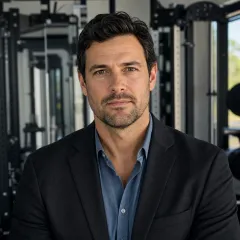
Marcus Feldman is a commercial strength-equipment analyst covering selectorized machines, plate-loaded stations, Smith machines, functional trainers, power racks, benches, barbells, dumbbells, and cable systems. He applies ISO 20957-1 and ISO 20957-2 while comparing rated loads, stability, frame deflection, pulley ratios, cable travel, adjustment increments, guarding, entrapment points, fastener retention, and fatigue cycles. His guides help gym operators, coaches, facility planners, and procurement teams evaluate biomechanics, user capacity, floor layout, maintenance access, durability, and lifecycle value.
Discuss a facility project