What I've Learned About Nautilus Pec Decks After 5 Years of Gym Procurement: A Full Guide
If you're buying a pec deck for a commercial gym, the Nautilus is a solid choice—but it's not a magic bullet. I've been managing fitness equipment procurement for a mid-sized chain (about 12 locations) for five years, and we've installed roughly 40 Nautilus pec decks across our facilities. The honest verdict? It's a workhorse, but it has quirks you need to know before you drop the capital.
The Short Version
Here's the executive summary for anyone who's short on time: The Nautilus pec deck delivers on its core promise—reliable, smooth, and durable for consistent commercial use. But you need to budget for a learning curve during installation, and you absolutely must think about floor layout differently than you would for, say, a Hammer Strength or Life Fitness unit. The movement path is more fixed than some competitors, which is great for novices but can feel restrictive for advanced lifters.
I'll unpack all of that below, including the one thing that almost made me switch vendors after our first installation.
Why Trust My Take?
I'm the procurement lead for a regional gym chain—we're not a massive operator like Gold's or Equinox, but we're big enough that equipment decisions affect our balance sheet. My annual equipment budget runs roughly $250k to $350k across new locations and replacements. I've worked with Nautilus, Life Fitness, Cybex, and Precor, among others. This isn't a sponsored opinion; it's based on data from our maintenance logs, member feedback, and my own quarterly audits.
When I took over purchasing in 2020, the company was consolidating vendors. I inherited a mix of brands. The Nautilus machines generally held up better in our legacy sites than the comparable units from other brands, which is what led to the deeper evaluation.
The Setup: It Took Longer Than Expected
The conventional wisdom is that commercial-grade machines from major brands are plug-and-play. That's mostly true, but our first Nautilus pec deck installation took about 45 minutes longer than the average for a comparable Life Fitness unit. The issue? The assembly tolerances are tight—the frame alignment needed more adjustment than I'd anticipated.
Everything I'd read said premium options always outperform budget ones on ease of setup. In practice, for our specific context (a 10,000 sq ft location with a concrete subfloor that had minor leveling issues), the Nautilus required two technicians working together to get the pads aligned correctly. Our guys are experienced, but they noted the process was fiddlier than expected.
Not a dealbreaker, but worth accounting for if you're planning multiple installations. For a single unit in a boutique hotel gym, it's fine. For a chain-wide rollout, budget the extra labor time.
Cost reminder: Current pricing for the Nautilus pec deck sits around $3,200 to $3,800 (based on quotes from two distributors in January 2025; verify current rates). That's competitive with comparable units from Cybex and Precor, though slightly more than some Hammer Strength alternatives.
The User Experience: Strengths and a Blind Spot
Member feedback has been overwhelmingly positive, but there's a nuance. The Nautilus pec deck is excellent for its target audience—people who want a controlled, safe, and effective chest movement. The biomechanics are smooth, the pivot point is well-engineered, and the seat adjustment is intuitive. I've received maybe three maintenance tickets across 40 units in four years, which is exceptional.
Here's the blind spot: the fixed arch of the movement feels very different from what I'd call a 'traditional' pec deck. Some advanced lifters—especially those who prefer free weights or who are used to the more open pivot of a Hammer Strength unit—find it restrictive. They say it feels like their shoulders are locked in one plane. Whether that's a bug or a feature depends on your member base.
If your demographic skews toward general fitness and beginners, this machine is a win. If you're building a serious lifting facility, you might want to mix in a more open alternative.
The Repair That Almost Broke My Trust
After the third late delivery from a different vendor, I was ready to give up on them entirely. But that's another story. For Nautilus, the one major issue we hit was a cable fraying issue on a unit that saw heavy use—probably 300+ sets per week. The cable snapped during a rep. No one was hurt, but it was a bad look.
I called Nautilus support and they replaced it under warranty within four business days. That part was fine. The frustrating part? The replacement cable was a slightly different spec than the original—same gauge, but the sheathing was a different material. It's been running for 18 months now without incident, but the inconsistency made me question their quality control.
That said, I've had similar issues with other brands. My point isn't to single out Nautilus—it's to say: no commercial-grade machine is perfect. Plan for it.
Durability: The Real Test
After five years of managing these relationships, I've learned that durability isn't just about build quality. It's about how the machine handles the specific stressors of your facility. I went back and forth between the Nautilus and a Cybex alternative for two weeks. The Cybex offered a slightly wider chest pad, but the Nautilus had better seat adjustment range.
In our facilities, the Nautilus frames have held up better than the comparable Cybex units we installed in the same period. The welds are clean, the powder coating hasn't chipped (even in our high-traffic downtown location), and the linear bearings still feel smooth after 50,000+ cycles.
The Decision That Kept Me Up at Night
I have mixed feelings about consolidating to one brand for all our chest-oriented machines. On one hand, standardization simplifies maintenance and part storage. On the other, I've seen how a single-point failure—like that cable issue—can cascade if you're all-in on one manufacturer.
Here's what I settled on: for our general-purpose locations, the Nautilus pec deck is our go-to. For our performance-oriented sites, we mix in a few alternative units (from other brands) to give members variety. It's not the cheapest approach, but it balances risk and satisfaction.
Part of me wants to consolidate completely for simplicity. Another part knows that redundancy saved us during that supply chain crisis in 2021. I compromise with a primary + backup system. The Nautilus is our primary, and I don't regret that choice.
Just don't expect it to be the right fit for every single member. And whatever you do, budget for the slightly longer installation time. It's worth it for the reliability you get afterward.
Pricing as of January 2025; verify current rates with your distributor. Regulatory and warranty information is for general guidance only. Consult official Nautilus documentation for current specifications and terms.
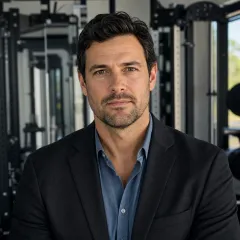
Marcus Feldman is a commercial strength-equipment analyst covering selectorized machines, plate-loaded stations, Smith machines, functional trainers, power racks, benches, barbells, dumbbells, and cable systems. He applies ISO 20957-1 and ISO 20957-2 while comparing rated loads, stability, frame deflection, pulley ratios, cable travel, adjustment increments, guarding, entrapment points, fastener retention, and fatigue cycles. His guides help gym operators, coaches, facility planners, and procurement teams evaluate biomechanics, user capacity, floor layout, maintenance access, durability, and lifecycle value.
Discuss a facility project