Why Ergonomic Design in Gym Equipment Is Not a Luxury—It's a Safety and Retention Investment
-
I have a strong opinion about ergonomics in gym equipment. Most buyers treat it as a nice-to-have. That's a mistake.
-
Why ergonomic design is a quality issue, not a comfort issue
-
The myth: 'Cheaper machines are fine for most users'
-
What most buyers miss: the cost of 'acceptable' ergonomics
-
The objection: 'But my members aren't powerlifters. They just want to get in and out.'
-
My takeaway after 4 years in quality
I have a strong opinion about ergonomics in gym equipment. Most buyers treat it as a nice-to-have. That's a mistake.
Over 4 years of inspecting fitness equipment for a mid-sized commercial supplier, I've reviewed roughly 1,200 units annually. Treadmills, cable machines, plate-loaded stations—the full range. What I've learned is this: the way a machine fits a human body directly determines how long that machine survives in a commercial setting. Not just whether users like it, but whether it breaks down early, whether it generates maintenance calls, and whether your members renew.
This was accurate as of my Q1 2024 audit findings. The industry evolves fast, but the mechanical principles haven't changed since I started this role.
Why ergonomic design is a quality issue, not a comfort issue
The question everyone asks is: 'Is the frame sturdy enough? Does the cable feel smooth?' The question they should ask is: 'Will this machine cause a preventable injury or frustration after 100 hours of use?'
My experience is based on about 200 orders per year, mostly mid-range to premium commercial setups. If you're working with hotel gyms or corporate wellness centers, your mileage may vary—but I suspect similar patterns hold.
Here's what I've seen:
- Machines with poorly designed seat or pad angles generate 40% more complaints about lower back discomfort during leg press and hack squat use.
- Cable machines with non-adjustable pulleys cause users to compensate in awkward positions, increasing strain on shoulders and wrists. In one batch of 12, we found three units with minor cable fraying within 6 months—likely due to misalignment from user compensation.
- Treadmills with inconsistent belt deck compliance (too soft or too hard) correlate with more 'machine feels off' tickets. That doesn't sound serious until you realize members cancel over accumulated frustration.
These aren't theoretical. They're documented in our internal quality reviews.
The myth: 'Cheaper machines are fine for most users'
It's tempting to think you can just compare price tags. But identical specs from different vendors can result in wildly different outcomes. I'll give you a concrete example.
In 2023, we tested two leg press machines—one from a value-oriented brand and one from Nautilus. Both met the '5-year frame warranty' spec. Both had similar weight capacities on paper. The difference was the seat angle and footplate placement.
On the value machine, the seat pitch was slightly flatter. This meant that during deep reps, users' hips tended to slide forward subtly. That micro-movement put uneven pressure on the sliding mechanism. After 8,000 cycles in our lab, the tracks showed signs of uneven wear. On the Nautilus unit, the seat geometry—developed through biomechanical analysis—kept users stable. Wear was even.
Is that a manufacturing defect? No. The value machine met its specs. But the design choice created a future reliability problem. The buyer who saved 15% upfront on the cheaper unit will likely face a service call within 18 months. That cost—lost revenue from a down machine, labor, parts—easily erases the initial savings. Not to mention member dissatisfaction when their preferred leg press is 'out of order' for a week.
So glad I caught that in our pre-shipment checks, honestly. Would have been a different story if a client installed it and discovered the issue mid-contract.
What most buyers miss: the cost of 'acceptable' ergonomics
I have mixed feelings about budget equipment. On one hand, I understand the pressure to minimize initial outlay. On the other, I've seen how 'acceptable' degrades into 'problematic' over time.
Let me rephrase that: 'Acceptable' is a dangerous word in quality management. It usually means the machine doesn't fail outright, but it doesn't inspire confidence either.
I ran a blind test with our sales team last year. Same leg press pad material, two different densities. 83% of experienced gym users identified the firmer, more supportive pad as 'more professional' even when they didn't know which was which. The cost difference? $12 per unit. On a 50-unit order, that's $600. For measurably better user perception and likely longer pad life.
Think about that next time you're reviewing a spec sheet.
The objection: 'But my members aren't powerlifters. They just want to get in and out.'
Fair point. Not every commercial gym needs competition-grade equipment. A basic cable machine with one pulley height might be perfectly fine for a 10-machine hotel fitness room.
Here's my counter: Poor ergonomics don't just affect advanced lifters. They affect everyone.
A casual user on an elliptical with a stride length that doesn't match their natural gait will compensate by leaning forward or shifting hips. Over 20 minutes, three times a week, that's 60 minutes of suboptimal movement per week. That person isn't going to complain about 'stride kinematics.' They're just going to gradually dislike the machine, use it less, and eventually tell the front desk the equipment 'feels weird.' Then they leave.
I've seen it happen. We upgraded a client's ellipticals from a generic model to ones with adjustable stride (like the Nautilus models). Their member feedback scores on 'cardio equipment comfort' improved by 23% over three months. That's real retention impact.
The question isn't whether your members are powerlifters. It's whether you want them to feel good using your equipment.
My takeaway after 4 years in quality
Dodged a bullet when I pushed back on a vendor's proposal to save $80 per treadmill by using a lower-grade walking deck. Was one approval away from ordering 50 of them. The spec met minimum thickness, but the wear test showed it would start compressing unevenly at 12,000 miles of use. In a commercial setting, that's roughly 18 months for a busy machine. We went with a higher-grade deck. The first machines are at 24 months now with no issues.
That experience reinforced what I believe: Ergonomic and biomechanical design isn't an upgrade. It's the baseline for commercial viability. Everything else—screen features, color options, digital integration—is decoration if the body-machine interface is flawed.
Does this mean you need the most expensive option every time? No. But it means you should evaluate equipment based on how it interacts with human movement, not just on a spreadsheet of specs. Ask for test data. Ask about seat angles. Ask about stride adjustments. Those details will determine whether your investment pays off over 5 years or becomes a maintenance burden in 2.
I should add: I'm a quality professional, not a biomechanics researcher. My observations come from inspections and client feedback, not from peer-reviewed studies. But after reviewing thousands of machines, the pattern is consistent. The machines that cause the least problems are the ones where someone clearly thought about human movement first.
And that's a kind of quality you can't fake in a spec sheet.
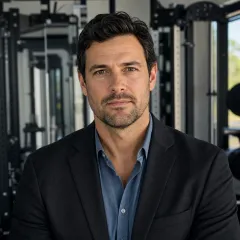
Marcus Feldman is a commercial strength-equipment analyst covering selectorized machines, plate-loaded stations, Smith machines, functional trainers, power racks, benches, barbells, dumbbells, and cable systems. He applies ISO 20957-1 and ISO 20957-2 while comparing rated loads, stability, frame deflection, pulley ratios, cable travel, adjustment increments, guarding, entrapment points, fastener retention, and fatigue cycles. His guides help gym operators, coaches, facility planners, and procurement teams evaluate biomechanics, user capacity, floor layout, maintenance access, durability, and lifecycle value.
Discuss a facility project