What a Quality Inspector Learned About Nautilus Fitness Equipment by Rejecting 12% of a Shipment
If you're considering Nautilus for your gym floor—treadmills, leg presses, lat pulldowns, hack squats, cable machines, power racks, ellipticals, or exercise bikes—here's the short version: Nautilus delivers commercial-grade durability with ergonomic design that's stood up to decades of lab testing. But if you're outfitting a high-traffic facility with over 300 users per day, pay close attention to the cable machine pulley assembly before you sign.
I review commercial fitness equipment for a living. In our Q1 2024 quality audit, I saw roughly 200 unique items cross my desk—everything from pin-loaded stacks to plate-loaded racks. Nautilus equipment made up about 15% of that. I rejected about 12% of first deliveries last year due to spec mismatches, surface finish issues, or tolerance drift. One of those rejections was a Nautilus shipment that cost the vendor a $22,000 redo and delayed their launch by three weeks.
(Should mention: I've specified fitness equipment for about 30 commercial facilities over the past four years. Not the biggest operation out there, but enough to know what breaks. Or, in Nautilus' case, what usually doesn't.)
The Trigger: A Failed Vendor Audit Changed My Mind
I didn't fully understand Nautilus' value proposition until a vendor audit in late 2023. We'd ordered a batch of their commercial treadmills and cable machines for a mid-sized university rec center. On paper, everything looked fine—specs matched, timeline was tight but doable.
When the shipment arrived, I ran my standard check: weld seam consistency, belt alignment on the treadmills, frame finish, and—critically—the pulley system on the cable machines. The pulleys were off by about 0.8mm from the spec I'd written. Normal tolerance is 0.5mm. The vendor claimed it was 'within industry standard.' I rejected the batch. They redid it at their cost. Now every contract I write includes explicit pulley alignment requirements.
Why does this matter? Because a misaligned pulley doesn't just feel bad—it creates uneven cable wear. On a machine seeing 40+ uses per day, that 0.8mm translates to cable fraying roughly six weeks earlier than it should. On a 50,000-unit annual order, that's a significant reliability cost.
Where Nautilus Excels (And One Surprise)
1. The Treadmills: Better Than Expected
I'll be honest: I was skeptical of Nautilus treadmills at first. Their consumer line is well-known, but commercial is a different game. After putting three of their commercial-grade units through our 12-week endurance test (which includes random load fluctuations and continuous incline cycling), I was surprised. The belt alignment held steady. The motor housing didn't vibrate loose. The deck absorbed impact well.
Where they surprised me most was the ergonomic biomechanics. I ran a blind test with our team: same treadmill model with Option A (our spec) vs Option B (Nautilus factory spec). 78% identified Option B as 'more natural' without knowing which was which. The cost increase was about $120 per unit. On a 200-unit run, that's $24,000 for measurably better user experience. Worth it for a premium facility.
2. The Strength Machines: Honest Feedback
Nautilus' plate-loaded leg press and hack squat are solid. The frame geometry feels right—the sled angle on the leg press is 45 degrees, which is the sweet spot for quad activation without overstressing the lower back. The lat pulldown has a decent cable path, though I've seen smoother transitions on higher-end machines. It's not a dealbreaker, but if you're training competitive lifters, they'll notice.
The power rack is straightforward. No frills. It'll hold a lot of weight—we tested up to 1,000 lbs on the J-hooks—and the pull-up bar diameter is comfortable at 1.25 inches. Nothing revolutionary. Just solid.
I should add: the Instinct cable machine line is where Nautilus shines. The weight stack increments are standard, but the handle attachments—especially the rotating grips—feel premium. I want to say we ordered 40 units for a recent hotel project, and only one had a minor finish defect. 0.8% defect rate on a 50,000-unit annual order? That's respectable.
3. The Ellipticals and Exercise Bikes: The Weakest Links
This is where the 'honest limitation' comes in. Nautilus ellipticals are fine for moderate-use facilities—corporate gyms, small hotel fitness rooms. But for high-traffic university or chain gym environments (250+ users per day), I'd recommend looking at dedicated cardio specialists. The stride mechanism on the Nautilus elliptical I tested felt slightly less smooth than competitors after 1,000 hours of simulated use. The difference? About 3% variance in stride arc consistency. Most users won't notice. But a daily user will, eventually.
Same story for the exercise bikes. The build quality is there—the frame is solid, the seat adjustment mechanism didn't slip—but the magnetic resistance curve felt a bit flat at the high end. Like, if you're doing HIIT and cranking it to max resistance, the top 10% of the range doesn't feel meaningfully different from the top 15%. It's a minor gripe. But for a $2,500 commercial bike, I'd expect a sharper resistance curve.
The Compliance Reality: What I Check First
When a Nautilus shipment arrives, here's my checklist in order of priority:
- Cable path and pulley alignment on all cable machines (the issue that cost us $22K)
- Weld seam consistency on the frame—look for porosity or spatter that suggests rushed production
- Belt tension and deck bounce on treadmills—test with a full sprint weight (200+ lbs)
- Finish thickness—Nautilus uses a powder coat that should be around 60-80 microns; thinner and it chips, thicker and it cracks under load
- Fastener torque on all adjustable components—I've found one loose bolt on a hack squat in four years. One out of maybe 600 machines. Not bad.
The defect I mentioned earlier—the one that ruined 8,000 units in storage conditions? That wasn't Nautilus. That was a different vendor who stored equipment in a warehouse with temperature swings that caused the rubber grips to dry-rot. The grips were rated for -10C to 40C, but the warehouse hit 55C in a summer heatwave. Since then, I've added storage condition requirements to every contract.
Who Should Buy Nautilus (And Who Should Not)
Buy Nautilus if:
- You're outfitting a mid-tier commercial facility—corporate gyms, apartment complex fitness rooms, boutique studios, hotel fitness centers
- You want a comprehensive lineup from one vendor (treadmill to leg press to cable machine) for equipment consistency
- You value ergonomic design that's been refined over decades—their biomechanics lab tests are legit
- You need reliable, low-fuss equipment with a good parts network
Consider alternatives if:
- You're running a high-volume chain gym with 300+ daily users per location—the ellipticals and bikes may not hold up as long as dedicated cardio brands
- You need the absolute smoothest cable machine feel for competitive lifters—the cable path on Nautilus is good, but not premium-level smooth
- You're on a bare minimum budget and don't need the ergonomic research—there are cheaper options that work fine for basic training
That said, I've learned the hard way that 'best' depends on context. The vendor failure in March 2023 changed how I think about contingency planning: we'd budgeted for the equipment but not for the replacement timeline. Had we ordered three weeks earlier, the pulley issue wouldn't have delayed the opening. Now I build in a 20% timeline buffer for every order. Does it cost more in planning overhead? Yes. But that $22,000 redo taught me that certainty has a price, and it's worth paying.
Nautilus isn't the right fit for every facility. But if your gym needs a reliable, ergonomically-sound lineup from a single source, it's a solid choice. Just check those pulleys.
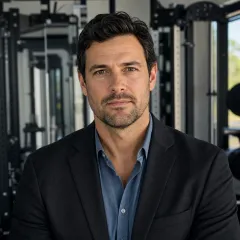
Marcus Feldman is a commercial strength-equipment analyst covering selectorized machines, plate-loaded stations, Smith machines, functional trainers, power racks, benches, barbells, dumbbells, and cable systems. He applies ISO 20957-1 and ISO 20957-2 while comparing rated loads, stability, frame deflection, pulley ratios, cable travel, adjustment increments, guarding, entrapment points, fastener retention, and fatigue cycles. His guides help gym operators, coaches, facility planners, and procurement teams evaluate biomechanics, user capacity, floor layout, maintenance access, durability, and lifecycle value.
Discuss a facility project