I Almost Wrecked a Gym Order by Trusting My Memory: A Nautilus Equipment Buying Story
I've been in charge of equipment purchases for commercial gyms since 2017. In that time, I've logged eleven significant mistakes, which adds up to roughly $38,000 in wasted budget. I'm not proud of that number, but I am proud of the checklist I now maintain. It's saved us from more than that.
In September 2022, I was replacing about half the strength floor in a 10,000-square-foot facility. The order was just over $47,000. It should have been straightforward. It almost wasn't.
The order that started with a wrong search
This sounds basic. It is basic. But the first thing I did was type "nautilus" into a search engine, and for 20 minutes I was looking at Nautilus headphones and an audio brand. There's a Nautilus that makes headphones and a Nautilus that makes gym equipment. On the surface, the logos can even look similar. I finally got to the official nautilus gym equipment website and told myself, "Okay, now the real work starts."
Honestly, I'm still not sure why those search results were so muddy. My best guess is that "nautilus" is a common word for shells, submarines, and too many unrelated companies. Either way, the lesson is simple: go straight to the source. Don't rely on a search engine for brand navigation.
The home vs commercial trap
For the strength floor, I wanted plate-loaded machines. The Nautilus site has a useful filtering system, but here's where I almost got burned. I spotted a "Nautilus 2" series, got excited, and put several items into my quote. When I checked the full product code, it turned out to be from the home lineup. The frame weight, finish, and warranty are different from their commercial-grade plate-loaded equipment. On the surface, the home and commercial versions look kind of identical. In the middle of a busy day, that nuance didn't register.
The machine I actually needed was in the "Commercial" section. If I'd chosen based on memory, the order would have been wrong. On a $47,000 order, that typo-level difference would have been an expensive embarrassment. I caught it because I made a new rule: before adding anything to the cart, copy the full product code and paste it into a separate tab. It's boring. It catches more errors than any clever tool I've tried.
Plate-loaded, selectorized, and a front-desk question
This part kept me up at night. I went back and forth between plate-loaded and selectorized machines for two weeks. Plate-loaded gives that raw, old-school strength gym feel. Selectorized is easier for people who don't want to load plates. For a gym with a mix of serious lifters and casual exercisers, I needed both.
What pushed me off the fence was a random conversation with one of our front desk staff. She asked, "What is a stairmaster?" She had seen the word in a training guide, but she'd only used ellipticals. It reminded me that my members don't live inside my head. The equipment has to work for experienced lifters and look approachable to everyone else. So I went with a plate-loaded rack for the squat area, a selectorized cable station for the main floor, and a dedicated leg press.
The barbell back squat is still the king of lower-body strength exercises. In my opinion, no machine can fully replace it. But that doesn't mean every member should be sent to the barbell. A plate-loaded leg press is a better first move for someone with mobility or low-back issues. It's the same idea: keep the classics, add the machines that make progress safer.
The 14 inches that almost ruined the layout
Here's the part that almost wrecked the whole order. I planned the strength floor around machines I had "used before." But when I looked at the final delivery schedule, I realized I'd never checked the actual footprint of one rack. I assumed it was about the same as the previous model. It wasn't. The new rack was 14 inches deeper and needed a 72-inch clearance in front of it.
When I caught it, I was standing in the empty space with a tape measure. The delivery was four weeks away. For a panic-stricken hour, I recalculated the layout again and again. It finally fit. But barely.
"You can't trust your memory. You can only trust the spec sheet."
I still kick myself for not checking that earlier. The Nautilus spec sheets on the website list dimensions, clearances, and weight capacity. I just didn't look until I was already deep in the process. Even after I placed the corrected order, I kept second-guessing. What if I'd missed another measurement? What if the plate-loaded leg press was too intimidating for the 6am crowd? The five weeks between hitting confirm and delivery were stressful.
The delivery and the payoff
The equipment arrived on a Thursday. Seeing the rack in place and the leg press against the wall, all the stress evaporated. There's something satisfying about a finished strength floor. The members noticed the new Nautilus area right away. "This looks like a real gym now," one woman said. That was the payoff.
But the real win was the checklist. Since that order, I've used it for three major purchases and about a dozen smaller add-ons. We've caught 18 potential errors before they turned into invoices. Most came down to product codes, clearance, and ordering the wrong version of a machine.
What I'd do differently
My experience is based on about twenty commercial equipment orders, mostly for mid-size gyms in the U.S. If you're outfitting a luxury spa or a tiny fitness studio, your list will be different. I can't speak to every situation. But the process is probably the same: verify the source, verify the product code, verify the space.
What was best practice in 2020 may not apply in 2025. The fitness equipment industry is changing faster than it used to. Nautilus, like most brands, keeps evolving its product lines. Smart gym floors are mixing plate-loaded, selectorized, cardio, and mobility tools in the same space. The fundamentals haven't changed—check dimensions, read specs, understand your clients—but the execution has transformed.
So, bottom line: if you're shopping on a nautilus gym equipment website, don't rush. Use the filter tabs, read the product codes, and question every assumption you make. And if you find yourself looking at Nautilus headphones while trying to research a leg press, stop and start over.
I keep the checklist in a shared folder. It's not fancy. The first page started as a joke: I used a board game template, with "Start" at the top and "Return to Start" three squares later. The joke still makes sense, because equipment buying is basically a board game. The dice don't matter. The checks do.
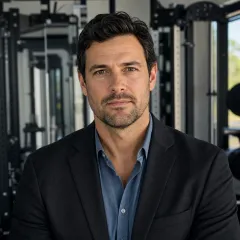
Marcus Feldman is a commercial strength-equipment analyst covering selectorized machines, plate-loaded stations, Smith machines, functional trainers, power racks, benches, barbells, dumbbells, and cable systems. He applies ISO 20957-1 and ISO 20957-2 while comparing rated loads, stability, frame deflection, pulley ratios, cable travel, adjustment increments, guarding, entrapment points, fastener retention, and fatigue cycles. His guides help gym operators, coaches, facility planners, and procurement teams evaluate biomechanics, user capacity, floor layout, maintenance access, durability, and lifecycle value.
Discuss a facility project