Nautilus Equipment FAQ: Answers for Gym Owners Who Need Them Fast
-
1. What is the starting weight on a Nautilus hack squat?
-
2. How much space do I need for a Nautilus Smith machine?
-
3. What are the best dumbbell exercises for a commercial gym floor?
-
4. How do I calculate how many treadmills my gym needs?
-
5. Snooker vs pool table size: which fits better in a club's entertainment area?
-
6. Are Nautilus machines worth the price tag?
In my role coordinating equipment orders for commercial fitness facilities, I've handled more than 200 rush orders over the past five years—often with a client calling 48 hours before their grand opening. This FAQ covers the questions I get asked most. No fluff, just the answers.
1. What is the starting weight on a Nautilus hack squat?
The starting weight isn't a single number. It varies by model and whether you're looking at a plate-loaded or selectorized version. For the Nautilus Hack Squat, most setups I've seen have a base resistance around 80 lbs before you add plates. But I don't have hard data on every current model—my experience is from about 200 commercial orders, so your spec sheet might say something different. If you're training beginners, that base resistance can be a lot, so consider the selectorized variation that starts lighter. Always verify with the manufacturer's spec sheet for the exact model you're buying.
2. How much space do I need for a Nautilus Smith machine?
Most Nautilus Smith machines have a footprint around 7' long by 3' wide, but you can't just multiply that. You need clearance for the bar path and room for users to step in and out. I recommend at least 8' x 5' of dedicated floor space, plus about 7' of ceiling height. I assumed standard clearance once and ended up moving the unit a few inches—annoying when it's bolted down. If you're planning a small studio, measure twice. Don't forget access for delivery, too. That's the kind of thing that kills a timeline.
3. What are the best dumbbell exercises for a commercial gym floor?
If you ask me, the best dumbbell exercises are compound movements that hit multiple muscle groups and are easy for new members to pick up quickly. Goblet squats, chest presses, bent-over rows, and overhead presses cover almost everything. They don't require much coaching and they get results. In our facilities, that's the core list we program. I'm not saying isolation moves don't have their place—they do—but if you're choosing which dumbbell exercises to teach your staff first, start with those four. They also work well in circuit training and don't take up extra space.
4. How do I calculate how many treadmills my gym needs?
There's no official treadmill calculator, but here's the formula I use: estimate your peak-hour member count, multiply by the percentage who'll actually want a treadmill (usually 10–20% in a typical fitness club), then divide by how many times one treadmill gets used per hour. For example, if 200 members show up during peak and 15% want treadmills, that's 30 people. If average workouts are 30 minutes, each treadmill handles 2 people per hour, so you need 15 machines. I wish I had tracked utilization rates more carefully when I started—it would have saved us from overbuying once. Your numbers may vary based on your member mix.
5. Snooker vs pool table size: which fits better in a club's entertainment area?
Snooker tables are much bigger: a full-size table is 12 ft x 6 ft, and you need at least 5 ft of cue clearance around every side. That means a room of 22 ft x 16 ft just for the table. Pool tables are more flexible—common 8 ft (2.44 m) or 7 ft (2.13 m) sizes work in a 16 ft x 12 ft space. If you're already packing in fitness equipment, you'll most likely go with a pool table. The same principle applies to your gym layout: don't just look at the equipment footprint; allow for user movement and emergency exits. That's a lesson we learned the hard way during a renovation.
6. Are Nautilus machines worth the price tag?
I have mixed feelings on premium fitness equipment, but for commercial environments, Nautilus earns its keep. The frames hold up, parts are easy to source, and you're buying into a support infrastructure. However, price transparency matters. I've learned to ask "what's NOT included?" before asking for a quote. Per FTC guidelines, any durability claims have to be substantiated—so if a salesperson says it'll last forever, ask for the spec sheet. The vendor who lists all fees upfront—even if the total looks higher—usually costs less in the end. Hidden delivery and installation fees are the enemy.
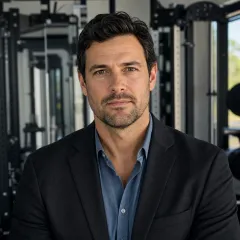
Marcus Feldman is a commercial strength-equipment analyst covering selectorized machines, plate-loaded stations, Smith machines, functional trainers, power racks, benches, barbells, dumbbells, and cable systems. He applies ISO 20957-1 and ISO 20957-2 while comparing rated loads, stability, frame deflection, pulley ratios, cable travel, adjustment increments, guarding, entrapment points, fastener retention, and fatigue cycles. His guides help gym operators, coaches, facility planners, and procurement teams evaluate biomechanics, user capacity, floor layout, maintenance access, durability, and lifecycle value.
Discuss a facility project