Nautilus Strength Equipment: A Procurement Manager's 7-Step Cost Checklist
-
Step 1: Lock down your machine list before you talk to any dealer
-
Step 2: Get SKU-level line-item quotes, not package pricing
-
Step 3: Calculate the delivered-and-installed cost
-
Step 4: Compare warranty terms side by side
-
Step 5: Check parts availability and lead times (the one everyone skips)
-
Step 6: Model the cost per machine per year
-
Step 7: Negotiate the package, but keep your line items
-
Common Mistakes I Still See Other Facilities Make
Seven years of tracking invoices for a 200-member fitness center taught me one thing: the price tag on a machine tells you almost nothing about what it actually costs. This checklist is for facility managers and gym owners who are looking at Nautilus strength equipment—especially the Nautilus preacher curl machine and the Nautilus chest press machine—and want to get through the buying process without paying for it twice.
There are seven steps, in the order I'd run them. Step 5 is the one most gym buyers skip, and it's the one that's cost me the most money over the years.
Step 1: Lock down your machine list before you talk to any dealer
Write out exactly what you're buying before you email anyone. Machine model, color, weight stack size, accessories. Not "a chest press." A chest press could mean a plate-loaded rack, a selectorized lever machine, or a cable-based press. They're different products with different price tags.
Before quoting, we specify:
- Exact model and configuration (e.g., selectorized vs. plate-loaded)
- Weight stack increments and total weight
- Footprint and required clearance
- User weight capacity
Why does this matter? Dealers price what you describe. Describe it precisely, and you get a number you can actually compare across vendors. We've received quotes for the "same" Nautilus machine that differed by $900, and the cheaper one ended up being a previous model year with a different weight stack. I only caught it because we had the model written down.
Step 2: Get SKU-level line-item quotes, not package pricing
"Can you quote us a package for the strength area?" is the worst way to ask. Every dealer defines "package" differently.
What I require from every quote now:
- Per-machine pricing at the model/SKU level
- Freight line item (not hidden in the machine price)
- Installation and assembly line item
- Warranty terms in writing, not "we'll take care of you"
Early on, we accepted a "full gym package deal" from a dealer who promised one-stop convenience. When I later audited the invoice line by line, the machine prices were 12–18% higher than the same models from a different dealer. We paid for convenience, and it wasn't cheap.
Step 3: Calculate the delivered-and-installed cost
Commercial strength equipment is heavy. A Nautilus chest press machine isn't a couch you can muscle through a lobby; it's a 500–700 lb crate that needs a truck with a liftgate and two movers who know what they're doing.
Here's the thing about freight: it varies wildly. We've seen the same equipment shipped to the same city for $180 on one quote and $640 on another. The difference is what the line actually covers. Ask these specific questions:
- Is this curb-side delivery or inside delivery?
- Does the quote include a liftgate?
- Does the driver unload the crates, or do we schedule that separately?
- Are crates and packaging included, or are they an add-on?
And if your facility is upstairs or has tight hallways, get a rigging quote before you commit. We paid $450 once to get a lat pulldown machine up a stairwell. The actual move took the crew 20 minutes. The rigging company charged a minimum, and we had no leverage to negotiate after the machine was already in the truck.
Step 4: Compare warranty terms side by side
Every dealer says their machines are "fully warrantied." That phrase doesn't mean much without a worksheet.
Commercial strength warranty terms usually come in three layers:
- Frame (typically 5–10 years on commercial Nautilus equipment)
- Parts (often 1–3 years)
- Labor (often 90 days to 1 year)
Two vendors can sell the same machine and both call it "warrantied," but one gives you 10-year frame, 3-year parts, 1-year labor, while the other gives you 5-year frame, 1-year parts, 90-day labor. That's not the same warranty. That's a different product at the same price.
Ask about wear items explicitly: cables, seat pads, grips, rollers. Several manufacturers list these as "normal wear" and exclude them from coverage. It's fair, but it should be in writing before you buy.
Step 5: Check parts availability and lead times (the one everyone skips)
Here's the step that's cost me the most money over the years.
When a machine is down at a commercial facility, it's not just a repair issue—it's a revenue issue. Every day the machine sits roped off with an "out of order" sign, you're losing the floor space that the machine is supposed to earn. So before you buy, ask the dealer:
- Are common parts stocked locally, or do they ship from a regional warehouse?
- What's the typical lead time for a cable or seat pad replacement?
- Does the dealer have in-house technicians, or do you coordinate with third-party repair?
- Is advance replacement available under warranty, or do you ship parts first, wait for approval, and then receive replacements?
A few years ago, we bought a Nautilus preacher curl machine from a dealer that wasn't an authorized service center. The machine was fine—it ran daily for years. But when a seat adjustment knob stripped, the part wasn't something the dealer stocked, and it took two weeks to arrive. Two weeks of a broken machine because I never checked parts flow before the purchase order.
That was a process gap, not an equipment failure. But the cost of that gap was real.
Step 6: Model the cost per machine per year
The invoice total doesn't tell you which option is cheaper. What matters is total cost over the machine's useful life, divided by how long you'll use it. That's the number to compare.
Here's a real example from our last Nautilus strength order:
- Machine price: $4,850 (plate-loaded chest press)
- Freight and delivery: $310
- Assembly and install: $285
- Contingency for parts/maintenance over expected 8-year life: $400
- Total: $5,845 / 8 years = $730 per year
The alternative quote we were weighing was a comparable machine at $3,900. But freight was $520, assembly was $400, and based on the warranty terms, we'd likely replace it after 5 years, not 8. That's $4,820 / 5 years = $964 per year.
The "cheaper" machine lost by $234 a year once you calculated the full cost.
And honestly, even after we signed the Nautilus order, I kept second-guessing the math. What if I missed a cost line? What if the frame didn't hold up under heavy commercial use? I didn't relax until the machines were installed and running. Four years later, they're still going strong, and the numbers have held up.
Step 7: Negotiate the package, but keep your line items
Once you have itemized quotes, use them. Dealers are more willing to negotiate when they know you're comparing.
A few things that have worked for us:
- Ask for a package discount on the machine subtotal. Dealers will often take 5–10% off a multi-machine order, and Nautilus commercial machines have enough margin to make it work.
- Ask about demo or display models. Dealers replace showroom inventory too. We bought a chest press machine that had been on a dealer's floor for six months and saved about 15%.
- Ask about trade-in. Some dealers give credit for old equipment regardless of brand, and a few will handle removal. We received $350 credit on a twenty-year-old plate-loaded machine once. It covered the freight on the new one.
- Get every negotiated line in writing before you approve. A verbal discount is just a voicemail until it's on the quote.
Common Mistakes I Still See Other Facilities Make
Signing the delivery receipt before inspecting the crates. If a crate looks damaged, write "damage noted on crate #3" on the Bill of Lading before you sign. Otherwise, the freight company points at your signature and says the machine arrived fine. Documenting a dented shroud this way got us a covered replacement part. Skipping it costs you hundreds in dispute resolution.
Forgetting the disposal line for old equipment. A 500-lb machine doesn't disappear on its own. If you're replacing old machines, ask whether the dealer will take them away. Some will, some won't. Those that won't still charge for removal—budget $100–200 per machine so it's not a shock.
No intake log. We didn't have a formal equipment intake process at our facility. It cost us twice when a part arrived damaged and nobody could find the delivery date or PO number quickly. The third time it happened, I created a simple log: date delivered, PO number, model, carrier name, condition notes, and photos. That log has saved us hours of email chasing and at least one warranty claim.
Buying Nautilus strength equipment is straightforward if you treat it as a process and not a quick purchase. Lock down your list, get line-item quotes, verify freight and warranty, check parts availability, model the real annual cost, and negotiate with actual numbers in hand. Do those seven things, and the machine that ends up on your gym floor is the one that makes financial sense—and is still working years later.
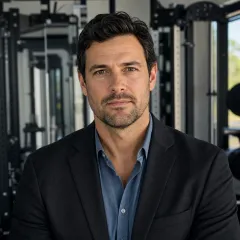
Marcus Feldman is a commercial strength-equipment analyst covering selectorized machines, plate-loaded stations, Smith machines, functional trainers, power racks, benches, barbells, dumbbells, and cable systems. He applies ISO 20957-1 and ISO 20957-2 while comparing rated loads, stability, frame deflection, pulley ratios, cable travel, adjustment increments, guarding, entrapment points, fastener retention, and fatigue cycles. His guides help gym operators, coaches, facility planners, and procurement teams evaluate biomechanics, user capacity, floor layout, maintenance access, durability, and lifecycle value.
Discuss a facility project