The Hidden Cost of Cheap Gym Equipment: A Nautilus Procurement Deep Dive
It was 11:42 PM when the front desk called. The leg extension machine had snapped a cable mid-set. The stack crashed down. Nobody got hurt, but the machine was out of service for eleven days.
Eleven days.
That machine was nine months old. We bought it because the quote was 40% lower than the commercial alternative—a Nautilus Leg Extension Leg Curl Machine. I remember running the numbers: same basic function, same weight stack, half the warranty. “Good enough,” I thought.
I was wrong.
The Problem You Think You Have: Price
I'm the procurement manager at a mid-sized fitness facility. I've managed our equipment budget—about $200,000 annually—for seven years. Look, I get the pressure to cut costs. Every quarter, someone asks, “Why can't we just get the cheaper one?” And yes, price matters.
But here's the thing: price is not the real problem. The problem is the way most gyms evaluate equipment purchases. They compare the sticker price, check the specs, and pick the lower number.
It's tempting to think you can just compare unit prices. But identical specs from different vendors can result in wildly different outcomes.
In my first year, I made the classic rookie mistake: I assumed “commercial” meant the same thing to every vendor. It doesn't. There's a reason ISO 20957-1 (2016) separates Class H (commercial) equipment from Class S (residential). Commercial machines are designed for continuous, high-intensity use. Residential machines are not. A cheap “light commercial” piece might survive a hotel gym. It won't survive a real training floor.
The True Cost: TCO and Why We Miss It
The real driver isn't the purchase price. It's total cost of ownership (TCO). That includes lifecycle, maintenance, downtime, and member experience.
In my experience, most budget overruns don't start with a single expensive machine. They start with a pile of small savings that each come with a hidden cost.
- Lifecycle: A commercial-grade machine is typically built for years of heavy use. A residential-grade machine rarely is.
- Maintenance: Standard parts, faster repairs, fewer surprises.
- Downtime: Every broken machine means lost member trust and empty floor space.
- Perceived quality: The equipment floor is your gym's handshake. It tells members how seriously you take training.
I know this because I've lived it. When we compared products for our strength floor, every spreadsheet said the budget option made sense. It was 15% cheaper, the specs looked fine, and the delivery time was shorter. But my gut said something was off. I couldn't name it at the time. So I listened to my gut and chose the Nautilus equipment. A few months later, another facility in our network ordered the budget unit. It failed within seven months.
What did my gut catch that the spreadsheet didn't? The details. The Nautilus Leg Extension Leg Curl Machine, for instance, uses a bilateral offset cam that maintains resistance through the entire range of motion. That sounds like marketing jargon, but it means members get a smoother, more consistent workout. A cheap machine may “technically” do the same exercise, but it wobbles, wears unevenly, and loses its resistance curve after a few thousand cycles.
Same with the Nautilus Preacher Curl Machine. It's a simple piece, but it's built to isolate the biceps without turning into a swinging contest. On a commercial floor, that stability isn't a luxury. It's a necessity.
There's also a human side to this. I've sat in meetings where we considered cutting “luxuries” like free wired Apple headphones at the front desk. But you know what members actually notice? They notice whether the leg press squeaks, the dumbbells wobble, and the rowing machine feels solid. None of the small perks matter if the main equipment feels cheap or broken.
What You Pay When You Cut Corners
After six years of tracking every invoice in our cost system, I found that 31% of our maintenance budget went to machines under two years old. Not because they were old—because they were underbuilt.
The repair ticket on that first broken leg extension machine was around $540. I want to say it was exactly $540, but don't quote me on that. What I remember clearly is the pattern: cheap machines failed more often, took longer to fix, and created more dissatisfied members.
Then there are the smaller mistakes. There was the time I skipped the final equipment inspection because we were rushing and “it's basically the same as last time.” It wasn't. A loose bolt on a leg press ended up costing $400 in labor and parts. The lesson: don't trust the spec sheet. Trust the build.
This applies to everything on the floor, not just big machines. Upper body workouts with dumbbells are a daily staple in most gyms. But cheap dumbbells can chip, roll unevenly, or leave a weird grip residue on members' hands. We replaced our old set with commercial-grade dumbbells, and our trainers immediately noticed clients could focus on the movement instead of adjusting their grip.
Cardio equipment is no different. Something as simple as knowing how to use a rowing machine safely becomes a retention issue. A quality rower with stable footplates and adjustable resistance makes it easier for trainers to teach and easier for members to learn. I can't quantify it, but our staff time spent correcting bad form dropped noticeably after we upgraded.
Downtime has a hidden cost too. When a machine sits broken for 11 days, you're paying for it twice: the repair bill and the empty space on the floor. Members don't renew because their favorite machine was always out of order.
A machine that can't be fixed isn't an asset; it's a liability.
The Fix: Buy for Lifetime, Not Sticker Price
So what do I recommend? It's not glamorous. Build a TCO spreadsheet. Track every machine's age, repair cost, and downtime. Calculate cost per use, not cost per purchase. Then compare commercial-grade options with a clear eye.
Here's a simple example. A $3,000 machine that lasts 10 years and gets used 20 times a day costs about $0.04 per use. A $1,800 machine that lasts 3 years and gets used 20 times a day costs about $0.08 per use—before you add repairs and lost goodwill. The numbers don't lie.
Nautilus works for us because the equipment is designed for the abuse of a commercial environment. The parts are standardized, the service process is straightforward, and the machines hold up. Is it always the cheapest? No. But in my opinion, it's usually the cheapest over a ten-year horizon.
Also, ask about parts availability and service lead time. A machine that can't be repaired quickly is worse than a machine that costs a little more upfront. And stick with a vendor that can prove their equipment's lifespan, not just quote a warranty.
Finally, don't underestimate the power of perceived quality. When a prospective member walks onto your floor, the equipment is your pitch. It says “we take training seriously” or “we bought whatever was cheap.” That impression sticks.
Look, I'm not saying budget options are always bad. They're riskier. And in a business where your equipment is your product, that risk shows up in your retention numbers.
If you ask me, buy the machine that makes members want to come back. Let the spreadsheet say whatever it wants. A lower lifetime cost wins every time.
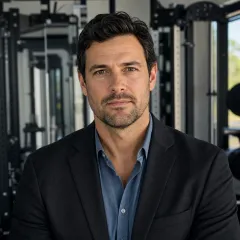
Marcus Feldman is a commercial strength-equipment analyst covering selectorized machines, plate-loaded stations, Smith machines, functional trainers, power racks, benches, barbells, dumbbells, and cable systems. He applies ISO 20957-1 and ISO 20957-2 while comparing rated loads, stability, frame deflection, pulley ratios, cable travel, adjustment increments, guarding, entrapment points, fastener retention, and fatigue cycles. His guides help gym operators, coaches, facility planners, and procurement teams evaluate biomechanics, user capacity, floor layout, maintenance access, durability, and lifecycle value.
Discuss a facility project