Why Your Gym's 'Cheapest' Equipment Quote Could Be Costing You More Than You Think
That 'Deal' on a Nautilus Hack Squat Machine? It Might Not Be a Deal at All.
In Q2 2024, I was comparing quotes for a new strength training zone. We're a mid-size commercial gym, not a massive chain, so budget was tight. I had a quote for a nautilus hack squat machine—a solid, plate-loaded unit—at a price that was 15% less than the other two bids. I almost pulled the trigger.
What I mean is, I was looking at the purchase price. That's the rookie mistake. The real cost of a piece of equipment—especially a high-traffic item like a hack squat or a seated shoulder press machine—isn't what you pay to get it in the door. It's what it costs you over the next five years. And that's where the surprise was.
Never expected the budget vendor's machine to be more expensive. Turns out, their 'cheaper' price tag was hiding a much more expensive reality. Let me explain.
The Deep Dive: What 'Cheap' Actually Costs
Most people in my role look at the invoice. They see a lower number for Vendor A vs. Vendor B and think they've won. But after tracking 40+ orders over the past 6 years, I've built a spreadsheet for this. The real cost has three layers.
Layer 1: The Obvious (but Misleading) Upfront Cost
This is the price on the quote. It's the headliner. But even this can be tricky. Did the 'budget' quote include delivery and setup? In our case, it didn't. That 'free setup' offer from another vendor actually resulted in $450 in hidden fees for a separate assembly team. The total upfront cost for the 'cheap' hack squat machine ended up being only 5% less than the premium option. The difference wasn't in the machine; it was in the fine print.
Layer 2: The Hidden Cost of 'Affordable' Components (The Treadmill Belt)
This is where most people get burned. A commercial nautilus treadmill belt, for example, is designed for 50,000+ hours of use. A 'cost-reduced' belt on a competitor's model? Maybe 15,000 hours. That's not an opinion; it's a function of the rubber compound, the seam strength, and the bearings.
To be fair, some budget brands will quote you a lower price. But when you're buying a nautilus treadmill belt or a replacement shoulder press machine component, you're buying a part that is built to a specific standard. A cheaper machine might use a non-standard belt size. That means your only replacement option is from the original manufacturer at a premium price. In my experience, this is a huge trap. We saw it with a Bowflex treadmill 10 we looked at—the replacement parts were nearly as expensive as the machine itself after two years.
Layer 3: The 'Unseen' Vendor Relationship
This is the subtlest layer. A low-price vendor often has a simple sales model: sell boxes. They don't have a service team. They don't offer preventative maintenance programs. If a seated shoulder press machine breaks, you're waiting on a third-party repair shop that might not know the equipment.
I should add that this isn't just about poor service. It's about timeline. When we had a cable snap on a budget plate-loaded lat pulldown, the downtime was three weeks. For our members using a nautilus hack squat machine or a chest press, three weeks is enough to cancel a membership. The cost of that lost revenue? Easily $2,000 to $3,000 in a single month. That's more than the savings on the original purchase price.
The Real Cost of 'Good Enough'
Let's zoom out. Over my career, I've tracked $180,000 in cumulative equipment spending. I've learned that a 'cheap' machine doesn't just cost you in repairs. It costs you in member experience. A wobbly seated shoulder press machine creates noise. A creaky hack squat machine feels unsafe. A Bowflex treadmill 10 might be fine for a home, but in a commercial setting, the drive motor can overheat in a single class.
The worst-case scenario? A delayed replacement. I've seen a gym keep a compromised hack squat machine on the floor for six months because the budget wasn't there to replace it (because they wasted it on the 'cheaper' option originally). That's not saving money. That's investing in risk.
Key Insight: The difference between a 'cost-effective' purchase and a 'cheap' purchase is often one year. The 'cheap' machine breaks in year one. The 'cost-effective' Nautilus machine runs strong into year five. The math is simple, but it takes time to see it.
The Short (But Necessary) Solution: Stop Buying by Price Tag
I'm not saying you need to buy the most expensive machine on the market. But if you're a B2B buyer, you need to stop thinking like a consumer. You don't buy a commercial truck based on the sticker price; you buy it based on its total cost of ownership (TCO). The same applies to your gym floor.
When I look at Nautilus, here's what I see: a company that has been making strength and cardio equipment for decades. They have a full lineup, from the nautilus hack squat machine to the seated shoulder press machine to their commercial treadmills. That product line breadth means they don't cut corners on a single component to hit a price point. They have a commercial-grade reputation to protect.
I'm not saying every Nautilus machine is perfect. But when we needed a nautilus treadmill belt for our T614, the part was in stock, standard-sized, and reasonably priced. That's the value of an established ecosystem.
The way I see it: if you're comparing a Nautilus hack squat machine against a budget brand, take a minute to calculate the TCO. Factor in the expected lifespan of the treadmill belt, the quality of the shoulder press machine's linear bearings, and the availability of service parts. Then look at the price difference again.
(Should mention: This worked for us, but our situation was a heavy-traffic commercial gym with 20,000 visits a month. If you're a small independent studio with 5,000 visits, your calculus might be different. You might not need the heavy-duty gear. But for any facility doing volume, the rule holds: cheap is expensive.)
In the end, the choice isn't between good and cheap. It's between smart and short-sighted.
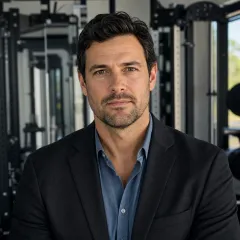
Marcus Feldman is a commercial strength-equipment analyst covering selectorized machines, plate-loaded stations, Smith machines, functional trainers, power racks, benches, barbells, dumbbells, and cable systems. He applies ISO 20957-1 and ISO 20957-2 while comparing rated loads, stability, frame deflection, pulley ratios, cable travel, adjustment increments, guarding, entrapment points, fastener retention, and fatigue cycles. His guides help gym operators, coaches, facility planners, and procurement teams evaluate biomechanics, user capacity, floor layout, maintenance access, durability, and lifecycle value.
Discuss a facility project