Nautilus Gym Equipment: A Budget-First Buyer's Guide for 2025
There's no single "right" way to buy gym equipment. I've been the procurement manager at a four-location fitness operator for eight years, handling roughly $350,000 in annual equipment spending. I've purchased everything from Nautilus plate-loaded strength machines to the T614 treadmill, negotiated through three full equipment cycles, and made enough mistakes to learn the difference between a good deal and a costly one.
What's the biggest mistake I've spotted in this role? Operators buying based on what's labeled "commercial-grade" or "top-rated" instead of what matches their actual usage patterns. So let me break this down by scenario, because the right answer depends on what kind of facility you're running.
Three Buying Scenarios
Your facility likely fits one of three categories:
- Scenario A — The Compact Studio: under 2,000 sq ft, client-based or small-group sessions.
- Scenario B — The Boutique Facility: 2,000–10,000 sq ft with a real membership base.
- Scenario C — The Full-Service Commercial Gym: 10,000+ sq ft with high-volume daily traffic.
Scenario A: The Compact Studio
If you're a personal trainer opening your own space, resist the sales rep who pushes you toward a full commercial package. The premium on commercial-grade machines only pays off when equipment runs ten or more hours a day. A studio clocking 20–30 client sessions daily simply doesn't hit that volume.
In this scenario, the Nautilus T614 treadmill is the sweet spot. It has solid cushioning and a motor that handles real use, while the price stays within reach for a growing business. We installed two at a satellite location in Q2 2024, and they've run without a single service call since. Pair them with a functional trainer, a power rack if your ceiling allows, and adjustable dumbbells—you've covered the vast majority of what your clients will actually use.
Here's what most people don't realize: "standard commercial packages" include machines you will not use. I've watched studio owners finance a full multi-station strength line and then touch only three of the eight pieces. That's not buying equipment; that's paying a premium to store things you don't need.
The counterintuitive call: don't go commercial grade at this scale. It'll take you 15 years to justify the premium, and by then the console technology will be outdated anyway. I weighed this myself when picking the T614 for that satellite location. The upside of a commercial treadmill was the frame warranty. The risk was spending roughly triple per unit on a machine that would sit idle most of the day. Is an extended frame warranty worth triple the upfront cost? Not when the T614 failure rate in our experience is under 2%.
Scenario B: The Boutique Fitness Facility
This is where most of our locations sit. You have enough members to need a real cardio zone, but not enough to justify a warehouse-scale strength floor. Your equipment list needs balance.
For cardio, a row of six Nautilus T614 treadmills plus three ellipticals works well. As of January 2025, the T614 lists in the low-to-mid four-figure range depending on promotions—verify current pricing with Nautilus, since it moves with the season. ACSM's 2024 Worldwide Survey of Fitness Trends consistently places functional fitness in the top ten, which lines up with what we see on our floor: members want strength that transfers to daily life, not just five more minutes on a treadmill.
Now the counterintuitive part: you probably need fewer ellipticals than you think. During our 2023 spending audit, I analyzed usage data across four locations. Treadmills ran at 70–85% of peak capacity. Ellipticals? 25–35% almost everywhere.
The assumption is that low elliptical usage means members don't want ellipticals. The reality is the opposite: low familiarity means members avoid them. Once they learn the movement, they use them. We posted a simple form guide next to our elliptical row and ran a staff-led "how to use elliptical" walkthrough twice a month. Utilization climbed noticeably—same machines, same floor, zero dollars spent.
On the strength side, this is where the overhead barbell press conversation comes in. It's one of the most requested movements from members in the 25–45 range. If you don't have a power rack with an Olympic bar and plates, you're giving them a reason to train elsewhere. You don't need a full plate-loaded line here. One solid rack, a multi-adjustable bench, and a few selectorized machines—lat pulldown, leg press, chest press—cover the majority of your base.
Scenario C: The Full-Service Commercial Gym
At 10,000+ square feet, the rules change. Your equipment runs 12+ hours a day through peak and off-peak cycles. Here, commercial-grade isn't a luxury—it's an operational requirement.
For strength, the Nautilus plate-loaded line earns its reputation. The hack squat, lat pulldown, and chest press are recognizable pieces that members trust. We built our strength zone in 2023 with a mix of plate-loaded and selectorized Nautilus equipment, and member feedback was overwhelmingly positive.
For the cardio deck, the T614 is the wrong call—and I say that as someone who just recommended it for two other scenarios. The belt and roller assemblies on a light-commercial treadmill wear faster under 12-hour daily traffic. A true commercial treadmill runs from $5,000 to $12,000 per unit as of January 2025, depending on manufacturer and configuration—verify current pricing with your distributor before budgeting. The upfront cost stings, but the maintenance interval is two to three times longer. That's the total-cost-of-ownership math that matters at this scale.
A couple of side notes for large operators. If your facility serves families, a kids' jungle gym corner can strengthen your value proposition—but it's a separate category with its own safety certifications, insurance implications, and vendor contracts. And if you're here because you searched "dolphin nautilus robotic pool cleaner," that's a pool equipment company, not a fitness equipment company. I get those mixed-up calls at least twice a year.
How to Tell Which Scenario You're In
Still unsure? Three numbers will place you:
- Training floor square footage. Under 2,000 = Scenario A. 2,000–10,000 = Scenario B. Over 10,000 = Scenario C.
- Peak-hour demand. If 3–4 machines serve your busiest hour, you're Scenario A. If you need eight or more treadmills to avoid wait times, Scenario B. If there's a 15-minute wait for the squat rack at 5 pm, that's Scenario C behavior.
- Annual equipment budget. Under $20,000 per year, skip commercial grade. Over $80,000, skimping on commercial grade is a mistake in the opposite direction.
Before you sign anything, get these in writing: warranty terms on wear items (belts, rollers, cables), what "included installation" actually covers, delivery timelines with on-site assembly, and common replacement parts pricing. Here's something vendors won't advertise: the "standard warranty" often excludes the exact parts that wear out first. Ask, and get the answer in the contract.
That kind of verification has saved us an estimated $18,000 in potential rework over the past two years. Five minutes of checking beats five days of correcting—especially when your facility's reputation rides on the equipment being there when members reach for it.
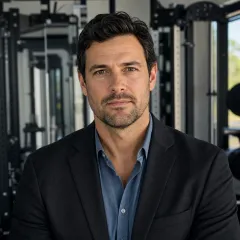
Marcus Feldman is a commercial strength-equipment analyst covering selectorized machines, plate-loaded stations, Smith machines, functional trainers, power racks, benches, barbells, dumbbells, and cable systems. He applies ISO 20957-1 and ISO 20957-2 while comparing rated loads, stability, frame deflection, pulley ratios, cable travel, adjustment increments, guarding, entrapment points, fastener retention, and fatigue cycles. His guides help gym operators, coaches, facility planners, and procurement teams evaluate biomechanics, user capacity, floor layout, maintenance access, durability, and lifecycle value.
Discuss a facility project