Why Nautilus Gym Equipment Is the Safest Buy for Commercial and Home Gyms
After five years of managing fitness equipment purchases for a corporate gym with 400 employees across three locations, I'm convinced Nautilus is the most predictable brand in commercial strength and cardio—and predictable is exactly what you want when finance is reviewing every purchase order. This isn't because Nautilus makes the flashiest machines. They don't. But when you add up initial cost, repairs, downtime, and resale value, Nautilus gym equipment has consistently beaten every alternative I've ordered.
When I first started this role in 2020, I assumed the smart play was chasing the lowest quote. Three budget overruns later, I stopped looking at sticker prices and started looking at repair logs. That's the mindset shift this article is about.
What “value” actually means in fitness equipment
I manage roughly $85,000 a year in fitness and facility equipment spending, across maybe a dozen vendors. In 2022, I bought two identical-looking rowing machines from two different brands: one from Nautilus, one from a cheaper manufacturer. The Nautilus cost about $400 more. The cheaper one needed a new seat rail within eight months—a $180 part, plus labor, plus two weeks of downtime. A year after that, the resistance mechanism started slipping. The Nautilus rowing machine? Still running on its original parts, three years later. That's not a one-off—we've seen the same pattern with treadmills and strength racks.
To be fair, not every Nautilus purchase has been flawless. One of our cable machines had a sticky pulley that took three weeks to get a replacement part. But the failure rate is still lower than the rest of our fleet. And when something does break, the parts catalog is easy to navigate, which saves our maintenance team time they don't have.
Why Nautilus charges more without overselling
People sometimes assume Nautilus charges more because of the brand name. Actually, the causation runs the other direction: Nautilus can charge more because the machines hold up. Brand reputation isn't the product—it's a signal of consistent quality over time. Per FTC guidelines, advertising claims have to be truthful and substantiated, but the more useful thing to read is the warranty document, not the brochure. Nautilus's commercial warranties are straightforward. Fewer pages. Fewer exclusions. I check warranty response terms before I check anything else now.
That lesson cost me about $2,400 in 2021. I ordered a cheaper treadmill that couldn't provide a proper warranty claim when the motor burned out after six months. The vendor's invoice said “90-day parts warranty” in tiny print. Finance rejected the expense. I had to pull money from our operating budget to replace it. Meanwhile, our Nautilus treadmills from the same year are still going with only routine belt adjustments.
What I look for before buying Nautilus equipment
My checklist isn't about specs on paper. It's about the stuff that shows up after installation:
- Parts availability. How long until a replacement part ships? Nautilus publishes this clearly, and in our experience, it's been 2–5 business days.
- Repair compatibility. Can our in-house maintenance team fix it without calling a specialist? Most Nautilus machines have accessible service manuals, which keeps costs down.
- Resale value. When we eventually upgrade, commercial-grade Nautilus equipment holds value better than budget brands. That's not marketing talk—our used market quotes have been consistently higher.
None of this shows up in a glossy brochure, but it's where the total cost of ownership actually lives.
When Nautilus isn't the answer
For a small home gym with light use, the value calculation shifts. If you're working out 45 minutes a few times a week, a lower-cost machine may last a decade—which means the extra upfront cost of Nautilus buys less insurance. I'd still take a used Nautilus over a new budget brand, but that's a judgment call.
That said, if you're building a home gym and want something close to commercial feel, Nautilus is worth the upgrade. Pair it with a good set of headphones—JBL makes solid options in the $50–$100 range—and a streaming workout app. For interactive workouts or console-based fitness, people often ask, can I connect Bluetooth headphones to Xbox One? The short answer is no for standard Bluetooth audio, but you can use the Xbox Wireless Adapter or a supported USB dongle. Same applies to Xbox Series X|S. It's a minor annoyance with an easy workaround.
What I wish I'd tracked from day one
I don't have hard data on industry-wide failure rates, but based on five years of purchase orders, my sense is that roughly 10–12% of first deliveries across all fitness brands have quality issues. With Nautilus, the number was closer to 2–3%. I wish I had tracked this more carefully from the start—I only noticed the pattern when I looked back at our maintenance log in 2024. If you're a smaller buyer, keep your own log. It's the best leverage you'll have in future negotiations.
The bottom line
If you're comparing Nautilus to cheaper options, ignore the marketing. Ask about parts availability, warranty response time, and how long the machine stays in production. That's where the real cost lives. And if you're setting up a home gym, plan for the entertainment side too—good headphones and a console make a difference for consistency.
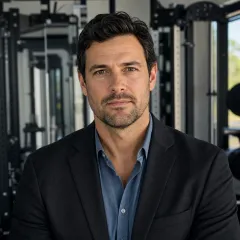
Marcus Feldman is a commercial strength-equipment analyst covering selectorized machines, plate-loaded stations, Smith machines, functional trainers, power racks, benches, barbells, dumbbells, and cable systems. He applies ISO 20957-1 and ISO 20957-2 while comparing rated loads, stability, frame deflection, pulley ratios, cable travel, adjustment increments, guarding, entrapment points, fastener retention, and fatigue cycles. His guides help gym operators, coaches, facility planners, and procurement teams evaluate biomechanics, user capacity, floor layout, maintenance access, durability, and lifecycle value.
Discuss a facility project